To create realistic fake brick and stone textures with foam, start by choosing the right foam density—lighter for carving and heavier for durability. Properly prepare your surface by cleaning, sanding, and repairing it to make sure of good adhesion. Apply foam with textured tools, carving cracks and surface details for authenticity. Finish with layered paints mimicking natural hues and seal for durability. If you continue, you’ll discover detailed tips to perfect your textured look and extend its lifespan.

Get decor and gifts delivered free with Prime
- Fast, free delivery on millions of items
- Prime Video, Amazon Music and more included
- Member-only deals all year
Key Takeaways
- Select appropriate foam density to balance detail, ease of carving, and durability for realistic textures.
- Properly clean and prep surfaces to ensure strong adhesion and authentic appearance of foam textures.
- Use textured tools and layering techniques to create realistic brick or stone surface patterns.
- Apply layered paints, washes, and sealants to enhance depth and achieve a natural stone or brick look.
- Regularly inspect and maintain foam surfaces with gentle cleaning and protective sealants for long-lasting results.
Popular right now

Vitamix Propel Series 750 Professional-Grade Blender, 4 Programs, Black

TCL 85-Inch QM6K Series QLED Mini LED 4K HDR Smart Google TV

LG 85-inch QNED75B Mini LED Smart TV Bundle with HDMI and CPS Protection Plan
As an affiliate, we earn on qualifying purchases.
Selecting the Right Foam Materials for Texturing

Choosing the right foam materials for texturing is essential to achieve a realistic and durable fake brick or stone finish. Foam density plays a vital role; lower-density foam is lightweight and easy to carve, but may lack durability, while higher-density foam offers strength and longevity. You should select foam that balances detail and resilience based on your project’s needs. Vetted adhesive selection is equally important—you want a strong, compatible adhesive that bonds well without damaging the foam. Hot glue works for quick fixes, but for larger projects, contact cement or foam-specific adhesives provide better adhesion and stability. By carefully considering foam density and adhesive options, you guarantee your textured finish will be both convincing and long-lasting.
Preparing Your Surface for Faux Brick and Stone Effects
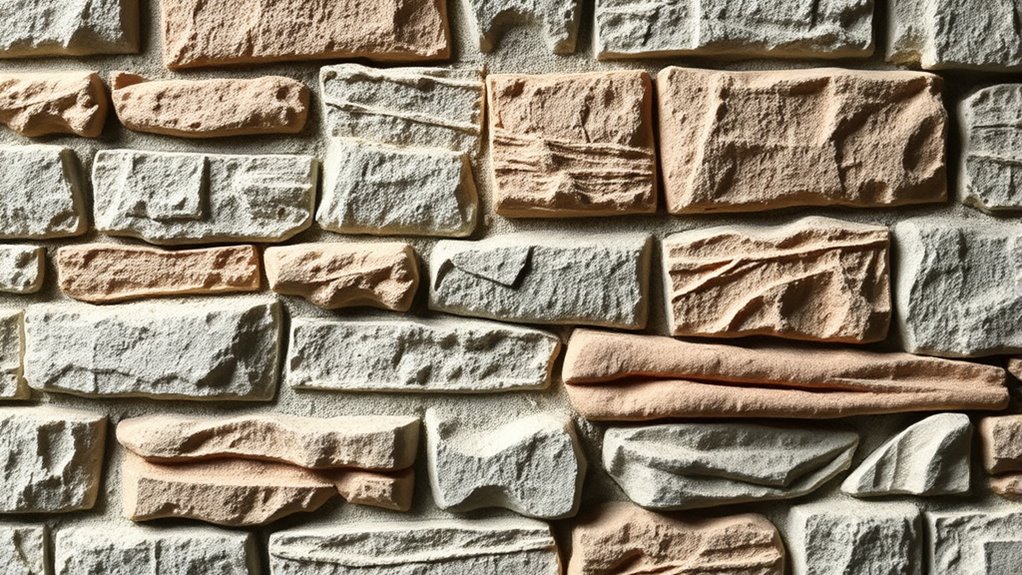
Before applying your faux brick or stone texture, preparing the surface properly guarantees the final result looks authentic and holds up over time. Start by thoroughly cleaning the surface to remove dust, grease, or debris, ensuring good adhesion. A clean surface also enhances color contrast, making the faux bricks or stones stand out vividly. If needed, sand rough areas to create a smooth, even base. Repair any cracks or holes to prevent imperfections from showing through the finish. Once cleaned and repaired, wipe the surface with a damp cloth and let it dry completely. Proper surface preparation sets the stage for a professional-looking faux finish that lasts, with vibrant color contrast and a seamless appearance. Additionally, understanding sound vibrations can inspire calming ambiance elements in your space, contributing to a more relaxing environment.
Techniques for Applying Foam Texture to Achieve Realism

To achieve a realistic foam texture for faux brick or stone, you need to apply the foam carefully and with purpose. Start by selecting the right tools—use palette knives, textured spatulas, or brushes to create varied surface patterns that mimic real masonry. When applying the foam, focus on consistent pressure to avoid uneven spots and add depth. Color matching is essential; mix shades that resemble natural stone or brick hues before applying the foam, ensuring a more authentic look. Use your tools to carve or stipple the foam, emphasizing cracks and surface irregularities. Take your time, layering different textures to build realism. Proper tool selection and thoughtful application are key to transforming foam into convincing brick or stone surfaces. Additionally, controlling the paint thickness and application technique can greatly influence the final textured appearance.
Painting and Finishing Tips for a Authentic Look

Once you’ve applied the foam texture, the next step is to bring the surface to life with realistic painting and finishing techniques. Start by carefully color matching your chosen shades to the desired brick or stone look. Use layered washes and dry brushing to add depth, highlighting crevices and uneven surfaces. Sealing techniques are *essential* to protect your work; apply a high-quality sealant to lock in colors and prevent fading over time. When selecting paints, opt for acrylics or latex for flexibility and durability. Remember, subtle variations in tone and texture enhance authenticity, so take your time blending shades. Proper sealing not only preserves your finish but also gives your foam surface a more realistic, stone-like appearance. Incorporating low-carb and keto-friendly ingredients can be a helpful tip if you’re considering adding a themed decorative element that aligns with a health-conscious approach.
Maintenance and Durability of Foam Textured Surfaces
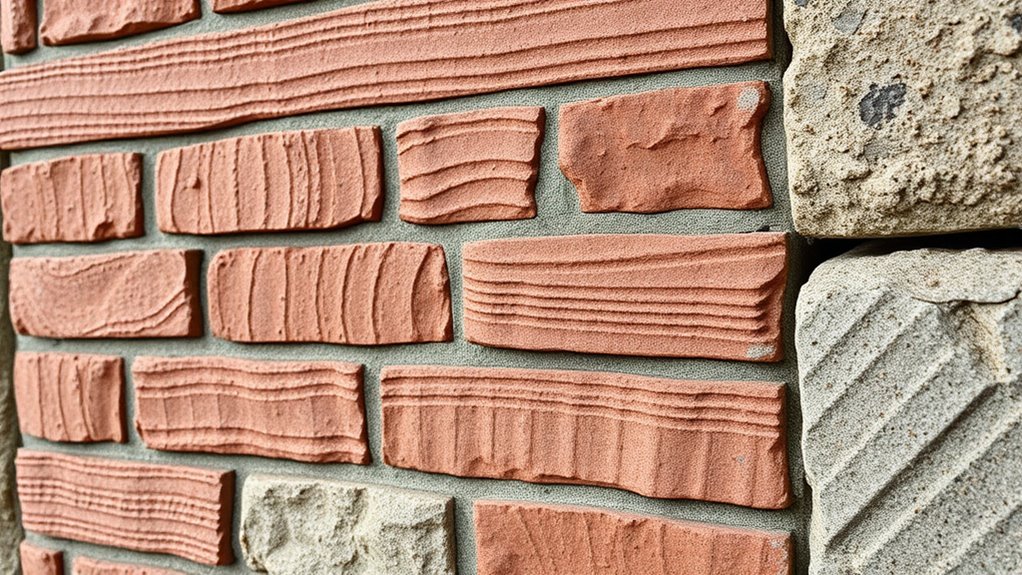
Maintaining the integrity and appearance of foam textured surfaces requires regular care and attention. To guarantee good weather resistance, you should inspect your surfaces periodically for damage or wear. Cleaning methods should be gentle to avoid damaging the foam; use soft brushes or mild soap solutions with water. Avoid harsh chemicals that can degrade the material. Applying a protective sealant can enhance weather resistance and prolong durability, especially in harsh climates. If you notice cracks or chips, repair them promptly with compatible patching materials to prevent further deterioration. Proper maintenance not only preserves the textured look but also extends the lifespan of your foam surfaces. Staying proactive with cleaning and repairs keeps your foam textured surfaces looking authentic and resilient over time. Additionally, ensuring proper ventilation can help reduce moisture buildup, which is crucial for maintaining material durability and preventing mold or rot.
Frequently Asked Questions
Can Foam Textures Be Customized to Match Specific Brick or Stone Styles?
Yes, foam textures can definitely be customized to match specific brick or stone styles. You can achieve this through color matching, selecting paints that mimic real stone or brick hues, and pattern customization by carving or shaping the foam to resemble particular textures. With careful attention to detail, you can create realistic, personalized surfaces that blend seamlessly with your existing design, making your project look authentic and visually appealing.
What Safety Precautions Should I Take When Working With Foam Materials?
Think of working with foam as dancing with fire—you need to stay safe. Always wear personal protective equipment like masks, gloves, and eye protection to guard against fumes and particles. Make sure your workspace is well-ventilated, like a gust of fresh air flowing through a forest, to disperse fumes safely. Keep a fire extinguisher nearby, and work in a clean, organized area to prevent accidents. Safety keeps your creative spark alive!
How Do I Repair Damaged or Chipped Foam Textured Surfaces?
To repair a damaged or chipped foam textured surface, start by cleaning the area to remove dust and debris. Use a foam repair compound or a similar lightweight filler designed for textured surfaces, then carefully mold it to match the existing texture. Once it dries, sand lightly if needed, and blend the repair seamlessly with the surrounding area. This foam repair process helps restore your textured surface effectively and smoothly.
Are Foam Textures Suitable for Outdoor Applications Exposed to Weather?
Think of foam textures as a delicate garden sculpture exposed to the elements. While they can be used outdoors, you need to take into account weather resistance and UV durability. Without proper sealing and treatment, foam textures may crack, fade, or degrade over time. To ensure longevity, choose products specifically designed for outdoor use, apply UV-resistant coatings, and regularly maintain your textured surfaces. This way, your project stays vibrant and durable against weather’s wear and tear.
What Are the Environmental Impacts of Using Foam for Textured Surfaces?
Using foam for textured surfaces raises environmental concerns because it’s often made from non-biodegradable materials that can harm ecosystems when disposed of improperly. You might consider sustainable alternatives like recycled or natural materials to reduce your environmental footprint. By choosing eco-friendly options, you help minimize pollution and conserve resources, ensuring your project is both visually appealing and environmentally responsible.
Conclusion
With the right foam materials and techniques, you can transform any surface into a stunning faux brick or stone masterpiece. Just follow the steps carefully, and your project will look more realistic than you’d ever imagine—like a tiny slice of real masonry! Keep your finish maintained, and your creation will stand the test of time. Remember, your foam textured surface isn’t just a decoration; it’s a showstopper that’ll dazzle everyone who sees it!