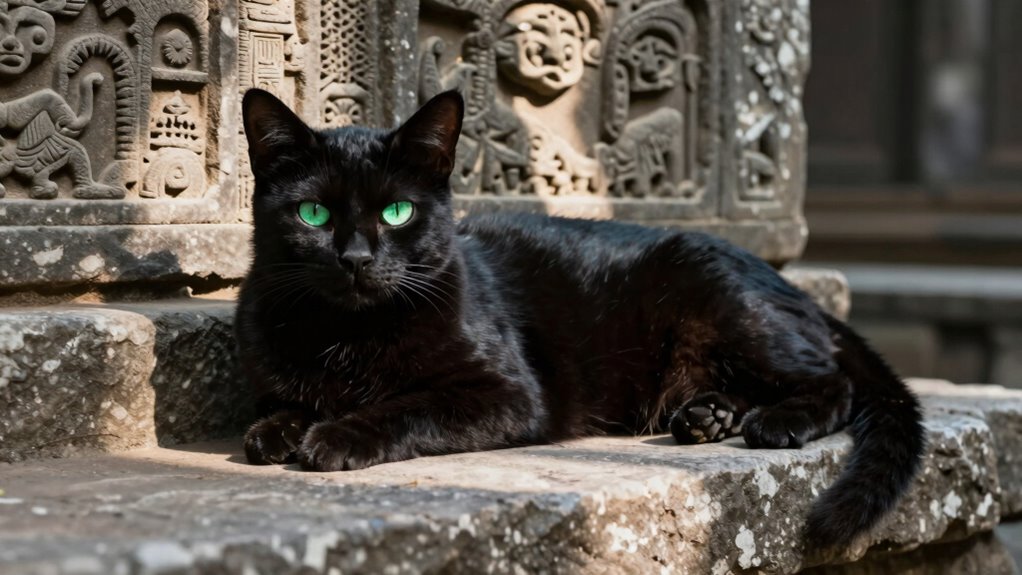

Black cats have a history that stretches back thousands of years, long before superstitions took hold. In ancient Egypt, they were revered as sacred animals embodying protection, divine power, and grace, linked to the goddess Bastet. Their symbolic meaning has shifted over time, often associated with witchcraft and superstition in medieval Europe. If you keep exploring, you’ll uncover surprising truths behind these mysterious animals as symbols of both fear and protection across different cultures.

Get decor and gifts delivered free — and shop member deals
- Fast, free delivery on millions of items
- Access to Prime Big Deal Days deals on October 6–7
- Prime Video, Amazon Music and more included
Key Takeaways
- Black cats were revered in Ancient Egypt as sacred animals symbolizing protection, divinity, and fertility.
- Their association with witchcraft and evil emerged during Medieval Europe, shifting perceptions from reverence to fear.
- Cultural symbolism of black cats varies, representing both bad luck and protective qualities across different societies.
- Their historical significance reflects broader human fears, hopes, and superstitions about magic and the supernatural.
- The perception of black cats continues to evolve, influenced by folklore, literature, and societal beliefs over centuries.
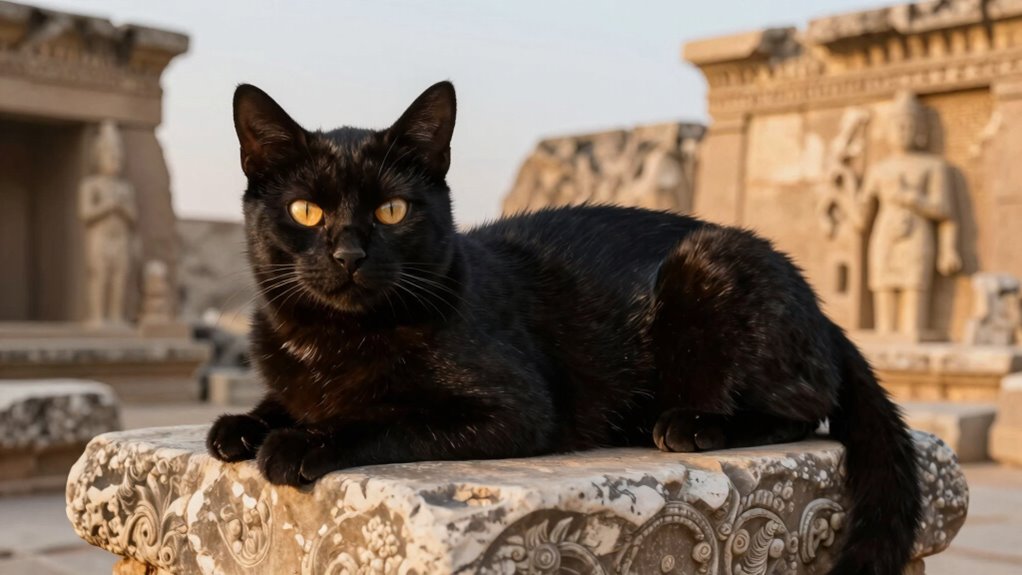
Have you ever wondered where the mysterious black cat truly comes from? It’s a question that taps into centuries of stories, beliefs, and fears. To understand these creatures’ true origins, you need to look beyond modern superstitions and explore their deep roots in various cultures. The superstitions origins surrounding black cats are complex and often contradictory. In some societies, they’re seen as symbols of bad luck and evil, while in others, they’re revered as protectors and good luck charms. These conflicting perceptions have shaped how people view black cats for generations, but they’re just surface-level ideas when you dig deeper. The cultural symbolism attached to these animals reveals a lot about how humans have historically related to mystery, nature, and the unknown.
Long before superstitions cast black cats as omens of misfortune, they were revered in many ancient cultures. In Ancient Egypt, cats, including black ones, were considered sacred. They symbolized protection, grace, and divine power. The Egyptians believed cats had protective qualities that could ward off evil spirits, and killing one was a serious crime. This reverence carried into their religious symbolism, where cats represented the goddess Bastet, goddess of home, fertility, and protection. Their cultural symbolism was positive, emphasizing reverence rather than fear. Conversely, during the Middle Ages in Europe, the perception shifted dramatically. Black cats became associated with witchcraft and the devil, fueling superstitions origins that linked them to evil forces. This association led to widespread fear, persecution, and even mass killings of black cats during witch hunts. These superstitions, rooted in fear and misunderstanding, persisted for centuries and contributed to the dark reputation black cats carry in many cultures to this day. Interestingly, many of these beliefs were also reinforced by societal fears, which perpetuated superstitions about black cats and their supposed powers. Additionally, the spread of these beliefs was often amplified by literature and folklore, which further cemented the negative perceptions. Moreover, the symbolic significance of black cats has continued to evolve as cultures reassess their historical context and symbolism.
The history of black cats is therefore a mirror of human beliefs and fears. Their cultural symbolism has shifted dramatically depending on the era and society. What was once a symbol of divine protection became a sign of evil and misfortune. Interestingly, superstitions about black cats continue to influence modern perceptions and behaviors, reflecting how deeply ingrained these beliefs are in societal consciousness. Despite these changes, the underlying truth remains: black cats have always been powerful symbols, representing everything from mystery and magic to protection and superstition. Their story is not just about superstitions origins but about the way humans project their fears and hopes onto animals. Additionally, understanding the cultural symbolism of black cats helps shed light on how perceptions of animals can be shaped by societal fears and beliefs. These perceptions often vary widely, illustrating the fluid nature of symbolic meaning across different cultures and historical periods. So, the next time you see a black cat crossing your path, remember that their true history is much richer and more nuanced than the superstitions might suggest. They are creatures that have long embodied the complex tapestry of human culture, fear, and reverence.
As an affiliate, we earn on qualifying purchases.
Frequently Asked Questions
Are Black Cats Considered Bad Luck Worldwide?
Black cats aren’t considered bad luck worldwide; superstitions origins vary across cultures. In some places, they’re symbols of good fortune, while in others, they’re linked to witchcraft and misfortune. Cultural symbolism influences these beliefs, so perceptions differ. You might see black cats as lucky in the UK or Japan, but in parts of Europe, they’re sometimes associated with witchcraft. It’s all about how different societies interpret these animals.
How Did Black Cats Become Associated With Witches?
You might have heard that black cats became associated with witches through mythic symbolism and historical perceptions. During the Middle Ages, people believed black cats were witches’ familiars, helping them with magic. This myth grew from superstitions that linked black cats to the supernatural. Over time, these beliefs fueled fear and superstition, making black cats symbols of witchcraft and evil in many cultures, especially in Europe.
Do Black Cats Have Different Health Issues Than Other Cats?
Black cats often carry symbolic weight, but genetically, they don’t face unique health issues compared to others. Breed differences and genetic mutations can influence health, yet black coloration itself isn’t a risk factor. You should watch for common feline conditions regardless of color, like dental problems or obesity. Regular vet check-ups help catch issues early, ensuring your black cat remains healthy and vibrant, symbolizing resilience and mystery rather than misfortune.
Are Black Cats More Common in Certain Cultures?
You’ll notice black cats are more common in certain cultures, especially in regions with rich historical symbolism like Egypt, where they’re revered, or parts of Europe, where cultural perceptions have varied over time. Historically, black cats have been seen as symbols of good luck or bad omens depending on the culture. These perceptions influence how societies treat and regard black cats, making them more or less common in different parts of the world.
Can Black Cats Be Considered Good Luck?
Yes, black cats can be considered good luck, depending on cultural symbolism and superstitions origins. In some cultures, like in Britain and Japan, black cats symbolize prosperity and protection, making them lucky charms. Their association with good luck often stems from historical superstitions origins, where they were seen as guardians against evil spirits. So, if you believe in their cultural symbolism, black cats can definitely bring positive energy and fortune.
Conclusion
As you now know, black cats have a history that’s as rich and mysterious as their midnight coats. Imagine walking through a village centuries ago, where a black cat crossing your path might have been seen as a sign of luck or misfortune—depending on who you asked. Just like those ancient beliefs, their story continues to evolve, reminding you that history’s true magic lies in how stories are passed down, shaping perceptions one pawstep at a time.
Fall Picks
fall essentials
As an affiliate, we earn on qualifying purchases.