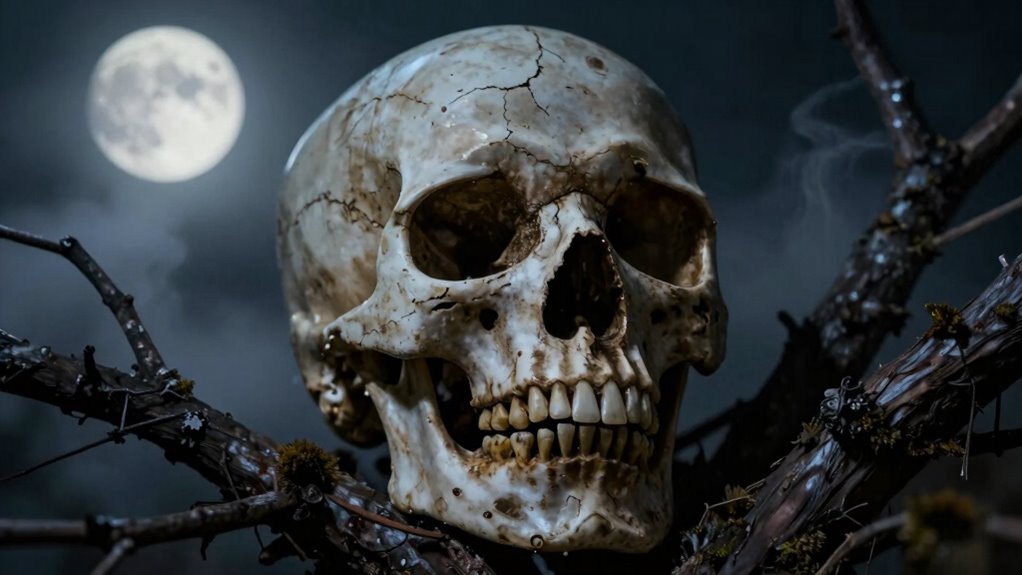

Bones show up in Halloween imagery because they symbolize the boundary between life and death, tracing back to ancient Celtic festivals like Samhain when spirits crossed into the human world. During the Victorian era, bones became a reminder of mortality and appeared in art and costumes. Their universal symbolism of life’s fleeting nature makes bones a powerful visual motif. If you keep exploring, you’ll uncover even more wild stories behind their spooky prominence.
Key Takeaways
- Bones symbolize the boundary between the living and the dead, originating from ancient Celtic festivals like Samhain.
- Victorian-era art popularized bones as reminders of mortality (memento mori), influencing Halloween imagery.
- Bones serve as universal symbols of mortality, resonating across cultures and emphasizing life’s fleeting nature.
- Using bones in costumes and decor merges themes of fun, fear, and reflection on death’s cycle.
- The stark, recognizable imagery of bones effectively evokes the macabre, blending entertainment with deeper spiritual symbolism.
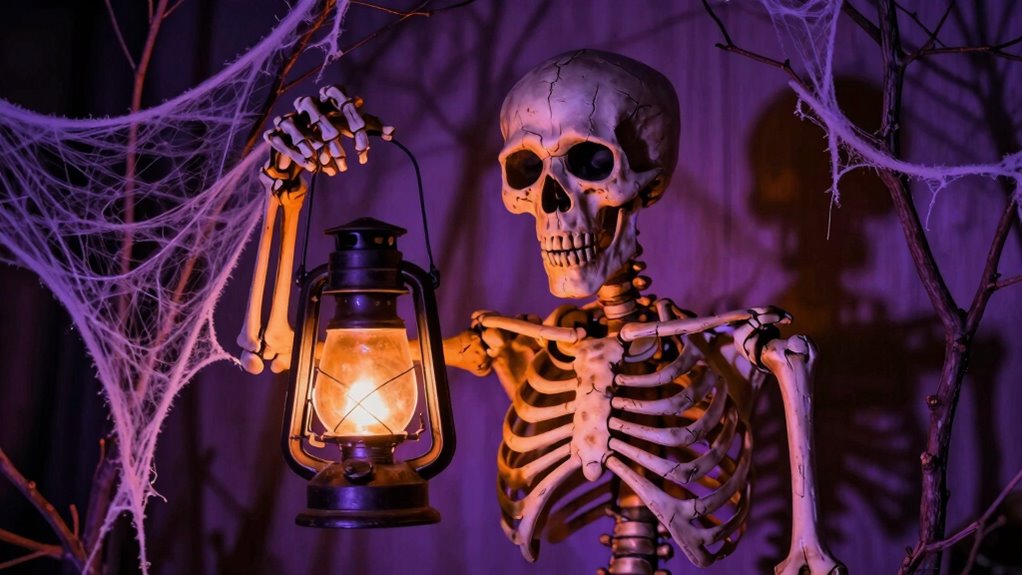
Have you ever wondered why bones are such a prominent symbol in Halloween imagery? It’s not just because they look spooky; there’s a deep history behind their place in holiday symbolism. Bones evoke a visceral connection to death, mortality, and the unknown, making them a natural fit for a holiday that celebrates the eerie and supernatural. When you see skeletons or bones in Halloween costumes, it’s more than just a costume choice—it’s a nod to centuries of cultural associations with death and the afterlife, which have evolved into playful, sometimes frightening symbols.
In the early days of Halloween, which has roots in ancient Celtic festivals like Samhain, bones represented the boundary between the living and the dead. People believed that during Samhain, spirits could cross over into the world of the living, and bones served as powerful symbols of those spirits. Over time, this connection matured into the tradition of wearing Halloween costumes, including skeleton suits and bone-themed accessories, to ward off spirits or mimic their presence. These costumes allowed people to engage with death’s imagery in a humorous or frightening way, transforming fear into entertainment.
Bones also became a staple in holiday symbolism during the Victorian era, when memento mori—artistic reminders of mortality—gained popularity. Skeletons and bones appeared in art and literature, reinforcing the idea that death is an inevitable part of life. This shift made bones a compelling element of Halloween costumes, especially as folks embraced more macabre themes. Skeleton costumes, for example, became a popular way to confront mortality head-on while adding a touch of whimsy or eeriness to the festivities. The symbolism of death in Victorian art helped solidify bones as a powerful visual motif for Halloween. Additionally, the use of bones in cultural symbolism across societies underscores their enduring significance beyond just Halloween, emphasizing their universal appeal and deep-rooted meaning. Moreover, the stark simplicity of bones makes them an effective visual motif that transcends language and culture, resonating universally with human perceptions of mortality.
Furthermore, bones carry a universal, archetypal symbolism that resonates across cultures. They are simple, stark, and immediately recognizable, making them an ideal motif for Halloween decor and costumes. When you dress as a skeleton or incorporate bones into your Halloween costume, you’re tapping into this rich tapestry of meaning—reminding everyone of life’s fleeting nature, but also celebrating death as a part of life’s cycle. The imagery of bones is so ingrained in Halloween that it’s hard to separate the spooky from the symbolic, blending fun and fear in an age-old tradition that’s still going strong today. Furthermore, the cultural significance of bones in various societies underscores their enduring symbolic power, linking the macabre imagery of Halloween to broader human themes of life, death, and remembrance.

Funziez! Slim Fit Adult Onesie – Animal Halloween Costume – Plush Unisex One Piece Cosplay Suit for Women and Men
- Slim Fit Design: Close-fitting for ease of movement
- Animal Details: Face, wings, and tail accents
- Unisex Costume: Suitable for women and men
As an affiliate, we earn on qualifying purchases.
As an affiliate, we earn on qualifying purchases.
Frequently Asked Questions
When Did Bones First Become Associated With Halloween?
You see bones associated with Halloween since the 19th century, rooted in mystical symbolism and historical origins. During that time, skeletons and bones represented death and the supernatural, fitting the holiday’s spooky themes. You might notice that these symbols reinforce fears and mysteries of the afterlife, making bones a powerful, eerie reminder of mortality. Their use during Halloween evolved from ancient rituals to modern spooky decorations, emphasizing the holiday’s connection to life, death, and the unknown.
Are Bones Used in Halloween Decorations Worldwide?
Bones are widely used in Halloween decorations worldwide, like a universal language of spooky charm. You’ll see bone symbolism in skulls, skeletons, and tombstones, adding a chilling touch. In Halloween fashion, bones become accessories and costumes that make your look stand out. While some regions prefer other symbols, bones remain a global staple, embodying the eerie spirit of Halloween and making any celebration more hauntingly fun.
Do Bones Have Symbolic Meanings in Different Cultures?
Bones do hold symbolic meanings in different cultures, often linked to cultural symbolism and ritual significance. You might find bones representing life, death, or ancestors in various traditions. In some cultures, bones serve as powerful symbols during ceremonies, embodying spiritual connections or protection. Their significance varies widely, but they universally evoke themes of mortality and the cycle of life, making them meaningful symbols across many societies.
How Are Real Bones Ethically Sourced for Halloween Displays?
You can find real bones for Halloween displays through ethical sourcing, ensuring they come from legally obtained sources like donation programs or archaeological finds with proper permissions. Experts preserve these bones through careful bone preservation techniques, maintaining their integrity and safety. Always verify that the supplier follows ethical sourcing practices to avoid harm or illegal trade. This way, you respect both cultural sensitivities and legal standards while creating authentic, impactful decorations.
What Are Modern Trends in Using Bones for Halloween Costumes?
You’re embracing bone aesthetics in your Halloween costumes by combining real or faux bones with creative design. Modern trends highlight mixing bones with other materials for a unique look, emphasizing costume creativity. You might see skeletal armor, ribcage corsets, or spooky bone masks. This approach allows you to stand out, showcasing a detailed and edgy style that taps into the eerie allure of bones, making your costume both striking and memorable.
Conclusion
So, next time you see bones lurking in Halloween decorations, remember there’s more beneath the surface than just spooky symbols. The backstory is tangled with history, superstition, and a touch of the wild unknown. As you carve your pumpkins and hang your skeletons, consider what secrets those bones might hold—hidden stories waiting to be uncovered. The true mystery of bones isn’t just in the imagery, but in the shadows where history and legend collide.