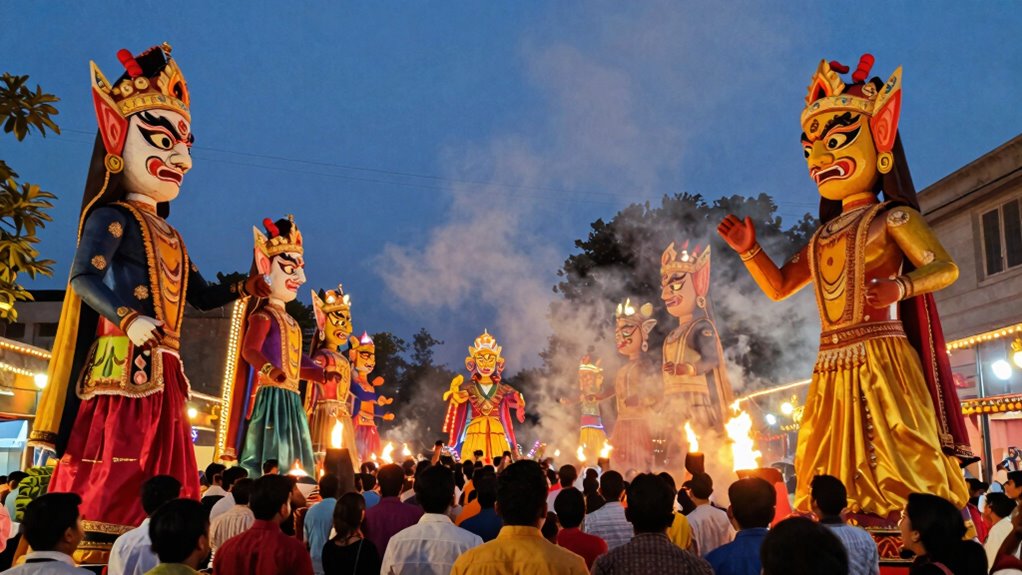

During India’s festival season, demon stories come alive through vibrant rituals, dances, masks, and mythic reenactments that embody the age-old battle between good and evil. These stories are more than entertainment; they serve as symbols of moral lessons and cultural identity, connecting communities with their history. Ritual acts invoke divine protection and reinforce values passed down through generations. If you want to discover how these tales shape traditions and communities, keep exploring this fascinating cultural landscape.
Listen free for 30 days with Audible
Thousands of audiobooks and originals — cancel anytime.
As an affiliate, we earn on qualifying purchases.
Key Takeaways
- Demon stories are integral to festivals like Durga Puja, symbolizing the victory of good over evil through mythic reenactments.
- Ritual dances, masks, and theatrical acts depict demon tales, reinforcing cultural values and spiritual protection.
- These stories are passed down through generations, maintaining their relevance and cultural significance during festival celebrations.
- Festivals serve as communal platforms to confront and symbolically banish negative forces represented by demons.
- Mythic demon narratives embody moral lessons, collective fears, and hopes, keeping the tales alive in cultural and ritual practices.
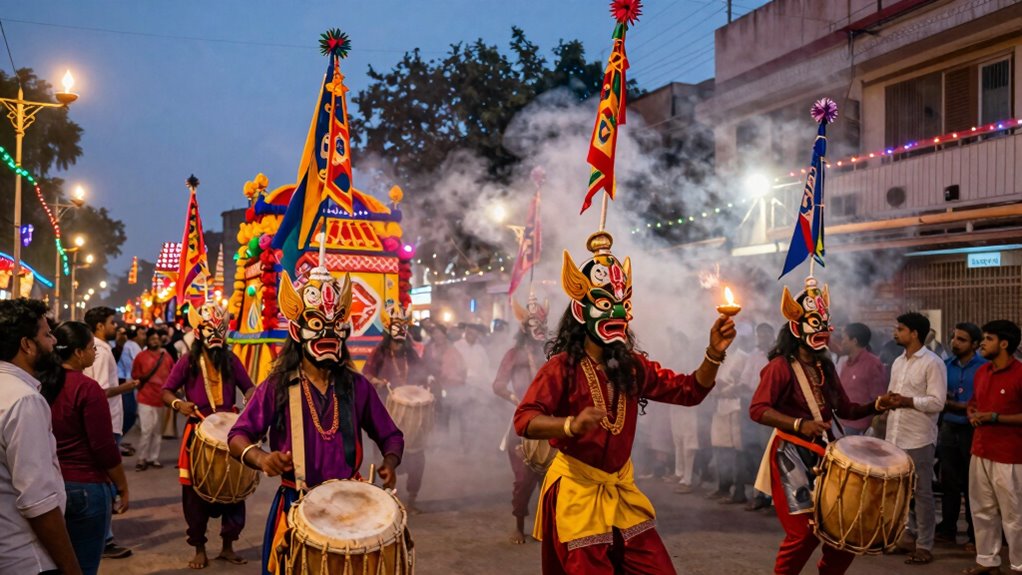
Have you ever wondered why stories of demons are so prominent during India’s festival season? It’s because these tales are deeply woven into the cultural fabric, serving more than just entertainment. They embody lessons, fears, and beliefs passed down through generations. During festivals, mythological creatures—especially demons—take center stage, not just as villains but as symbols with ritual significance. These stories help communities connect with their history, reinforce moral values, and seek protection against evil spirits. When you witness the vibrant processions or participate in rituals, you’re engaging with ancient narratives that have shaped India’s spiritual landscape.
In many traditions, demons are seen as more than just monsters; they embody chaos, ignorance, or negative forces that must be confronted and subdued. These mythic creatures often appear in stories as adversaries of gods and heroes, representing the struggle between good and evil. This duality isn’t just mythological; it serves as a metaphor for personal and societal battles. During festivals, reenacting these stories isn’t just about storytelling but about invoking the power of these mythic beings through rituals. For example, during Durga Puja, the goddess Durga’s victory over the demon Mahishasura signifies the triumph of righteousness over evil. Such narratives imbue these celebrations with ritual significance, turning myth into a living, breathing part of the cultural experience.
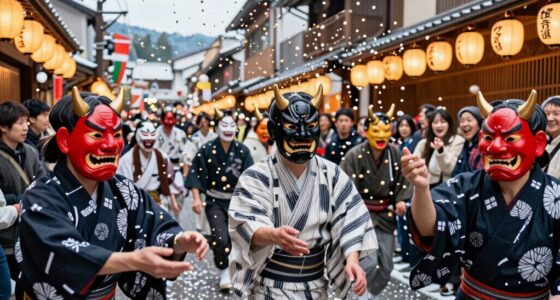
The ritual significance of these demon stories extends beyond storytelling. They often involve elaborate dances, masks, and symbolic acts designed to invoke divine protection or banish evil spirits. These rituals serve as collective acts of cleansing, reaffirming societal values and spiritual beliefs. Interestingly, the use of masks and symbolic acts in these rituals often draws inspiration from traditional cultural symbols, linking mythic stories to tangible practices. Additionally, these stories serve as a way to pass down cultural knowledge from generation to generation, ensuring the continuity of tradition. The ritual acts performed during festivals often incorporate specific symbolic gestures that are believed to have protective or purifying effects, further emphasizing their spiritual importance. When you participate in or observe these ceremonies, you’re not just witnessing folklore—you’re engaging with a spiritual process rooted in mythic creatures that symbolize deeper truths. It’s a way for communities to confront their fears, seek blessings, and reinforce their cultural identity. These stories also serve as a reminder of the ongoing battle between chaos and order, encouraging individuals to embody virtues like courage and righteousness.
Ultimately, the prominence of demon stories during India’s festival season isn’t just about entertainment. It’s an expression of collective hopes, fears, and moral lessons encoded in mythic creatures that continue to live through ritual significance. As you immerse yourself in these festivals, you become part of a centuries-old tradition where tales of demons serve as powerful symbols—reminding everyone of the eternal struggle between good and evil, and the importance of upholding righteousness amid chaos.
As an affiliate, we earn on qualifying purchases.
Frequently Asked Questions
How Do Demon Stories Vary Across Different Indian Regions?
You’ll notice that demon stories vary across Indian regions through unique characters and themes rooted in regional folklore. In some areas, demons symbolize evil to be defeated during festivals, while in others, they represent lessons or moral struggles. These tales often reflect local beliefs and festival symbolism, making each region’s stories distinct. You’ll find that these stories serve to reinforce cultural values and celebrate the triumph of good over evil.
What Are the Origins of Demon Tales in Indian Festivals?
You might think demon tales are just spooky stories, but their origins lie deep in Indian culture’s complex symbolism. These stories emerged from ancient festival narratives that used demon symbolism to embody good versus evil, chaos versus order. Festivals like Durga Puja or Holi reframe these tales, turning demons into lessons of triumph and transformation. Their roots reveal a rich tradition of storytelling that’s both mythic and moral, shaping India’s vibrant festival season.
Are Demon Stories Linked to Specific Religious Beliefs?
Yes, demon stories are linked to specific religious beliefs. You see, these tales often feature mythical creatures symbolizing evil or spiritual challenges, reflecting deeper spiritual symbolism. They serve to teach moral lessons, reinforce cultural values, and illustrate the victory of good over evil. By engaging with these stories, you connect to a rich tradition where demons embody obstacles that must be overcome through faith, devotion, and moral strength.
How Have Modern Media Influenced Demon Storytelling Traditions?
Modern media has deeply influenced demon storytelling traditions by enabling cultural adaptations through digital storytelling. You can now access and share these tales more widely, often adding contemporary twists that resonate with today’s audiences. This shift allows you to experience traditional demon stories in new formats like videos, podcasts, and social media, keeping the stories alive while also evolving them to reflect modern themes and perspectives.
What Lessons Are Conveyed Through India’s Demon Stories?
You learn that India’s demon stories teach you that appearances can be deceiving, highlighting the importance of inner strength and wisdom. Through cultural symbolism and mythical creatures, these tales remind you to face fears bravely and recognize the duality within good and evil. As the saying goes, “Don’t judge a book by its cover,” emphasizing that true understanding comes from looking beyond surface appearances.
Conclusion
As you immerse yourself in India’s festival tales, you realize these demon stories aren’t just myths—they’re the heartbeat of the season, echoing through centuries like thunderclaps. You might think you’ve heard it all, but these stories grow fiercer and more intricate with every retelling, weaving a tapestry so vivid it could swallow the universe. In this festival of legends, you’re not just a spectator—you’re part of an eternal, monstrous symphony that keeps the legend alive forever.
Grilling season Picks
grills
As an affiliate, we earn on qualifying purchases.