
TL;DR

Get decor and gifts delivered free with Prime
- Fast, free delivery on millions of items
- Prime Video, Amazon Music and more included
- Member-only deals all year
Ideal Home reports that a “transition tree” can be decorated for autumn or Halloween, then gradually restyled for Christmas and New Year. Interior experts say the approach can extend the use of seasonal decorations, but it is a decorating suggestion, not a formally measured trend.
Ideal Home has reported on “transition trees,” a seasonal decorating approach in which the same tree is restyled from autumn or Halloween through Christmas and New Year. The report cites interior experts who say the approach can keep a focal point in use for longer and reduce the need to start a new decorating scheme for each occasion.
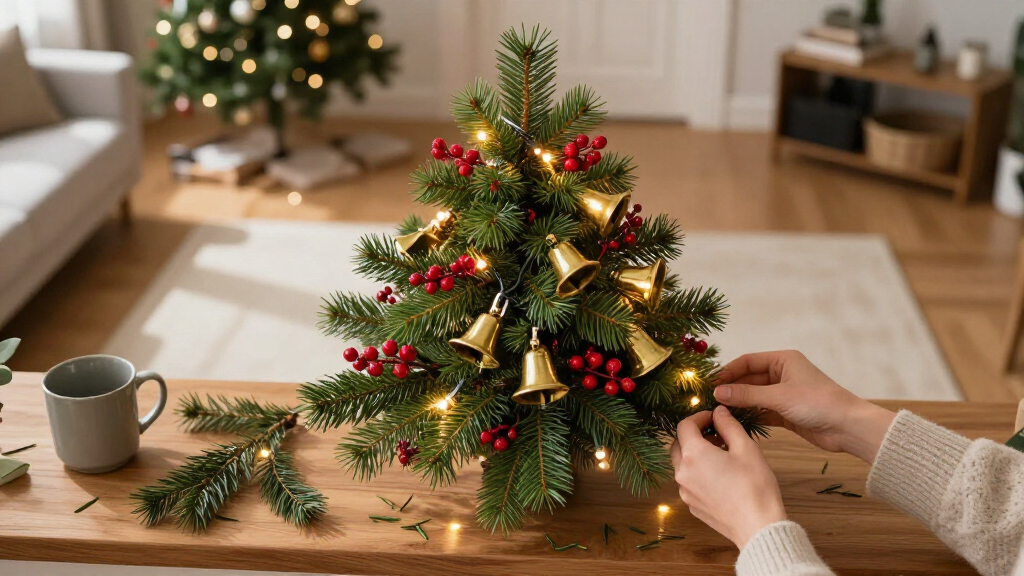
A transition tree can be a small artificial Christmas tree put up early or a more understated twig tree, according to the report. For autumn, suggested decorations include pine cones, dried foliage, faux berries, ribbons in red, orange or brown, and amber-toned ornaments. Halloween additions could include toy spiders, webs, or small homemade decorations made from dried satsuma skins.
As the season changes, decorations can be swapped or added in stages. The report suggests introducing fairy lights, metallic details and richer jewel tones, then moving toward a full Christmas look. Burgundy and gold are offered as colors that can bridge autumn and winter. After Christmas, the tree can be simplified for New Year by removing ornaments and leaving its lights in place.
Victoria Robinson, a trend expert at window-coverings company Hillarys, told Ideal Home that the approach lets people “evolve the look of the same tree over time.” Interior designer and trends forecaster Whinnie Williams, speaking for Balsam Hill, suggested adapting existing decorations, including wrapping baubles in white fabric to make ghost-like ornaments. These are expert recommendations, not evidence that the trend has been widely adopted.
One Tree Across Several Seasons
The idea offers households a way to reuse seasonal decorations and change a room’s appearance without replacing its central display every few weeks. That may appeal to people who decorate for autumn and Halloween as well as Christmas, especially when the gap between those occasions feels too short for separate setups.
The practical effect depends on the tree and decorations a household already owns. A twig tree with natural materials may need fewer changes than a full-size tree with strongly themed ornaments. The report presents the approach as a flexible styling option; it provides no figures on cost savings, environmental benefits or how many households are adopting it.
artificial Christmas tree with adjustable decorations
As an affiliate, we earn on qualifying purchases.
As an affiliate, we earn on qualifying purchases.
From Halloween to Christmas
Seasonal decorating now often starts before December, with autumn and Halloween displays appearing alongside the traditional Christmas decorating period. That creates a stretch after Halloween when some people may want to keep a seasonal display without moving immediately to overtly Christmas-themed decorations.
Ideal Home frames transition trees as a possible response to that interval. Robinson said she expects the idea to grow as homeowners favor decorations that can be styled in more than one way. The report also notes that Halloween trees have become more popular this year, but describes transition trees as not yet an established trend. The claim about future popularity is Robinson’s assessment, not a confirmed market forecast.
““One of the biggest benefits of a transition tree is that it helps create a sense of occasion throughout the darker months.””
— Victoria Robinson, trend expert at Hillarys, quoted by Ideal Home
How Widely Will It Catch On?
It is not clear how widespread transition trees are or whether they will become a common decorating trend. The report offers expert views and styling ideas, but no consumer survey, sales data or other measure of uptake. Robinson’s expectation that they will become more popular remains a forecast.
The report also does not quantify whether reusing one display saves money or reduces waste. Those outcomes would depend on what a household buys, keeps and replaces. The suggested timeline is flexible advice rather than a standard decorating schedule, and the article does not identify a single required tree type or set of decorations.
Restyling as the Season Changes
For households trying the approach, the next steps are practical rather than tied to a formal launch: begin with decorations already available, add autumn or Halloween details, then replace them gradually with winter and Christmas ornaments. For New Year, Williams’s suggestion is to remove the baubles and leave the lights on.
Whether the idea gains wider traction will depend on how homeowners respond during the coming decorating seasons. No sales results, adoption figures or further milestones are provided in the source report, so its longer-term popularity remains to be seen.
Key Questions
What is a transition tree?
It is a tree decorated in stages for different seasonal occasions, typically moving from autumn or Halloween to Christmas, and sometimes to New Year.
What can I use for an autumn transition tree?
Ideas in the Ideal Home report include pine cones, dried foliage, faux berries, velvet ribbons and ornaments in warm colors. A twig tree is one suggested option.
How can I change a Halloween tree for Christmas?
Remove the Halloween decorations and add winter or Christmas details, such as fairy lights, metallic accents, richer colors and baubles. The report suggests making changes gradually rather than replacing everything at once.
Does the report show that transition trees are already a major trend?
No. Ideal Home reports expert interest in the idea, but says transition trees are not yet an established trend and provides no adoption or sales figures.
Source: rss
Halloween Picks
halloween
As an affiliate, we earn on qualifying purchases.