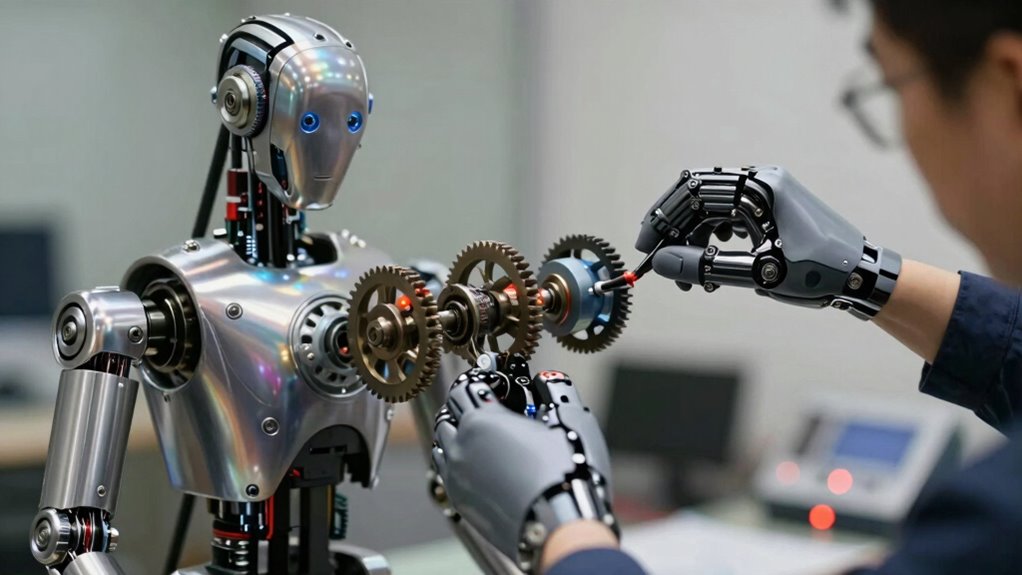

To stop triggering too early, focus on precise timing during setup. Use automation tools or pre-programmed sequences to sync movements, lights, and sound effects accurately. Practice your cues repeatedly, adjusting as needed to match the desired moment perfectly. Avoid rushing the triggers before understanding the full scene; this causes awkward movements and breaks immersion. Fine-tuning your timing makes your animatronics appear more natural. Keep practicing, and you’ll master seamless triggers that captivate your audience every time.
Key Takeaways
- Develop a detailed timing plan to coordinate cues precisely and avoid premature triggers.
- Use automation tools to test and refine trigger sequences for accuracy.
- Synchronize lighting and sound effects carefully to ensure cohesive and natural responses.
- Conduct multiple rehearsals to identify and correct early trigger issues.
- Implement real-time monitoring to adjust cues promptly during performances.
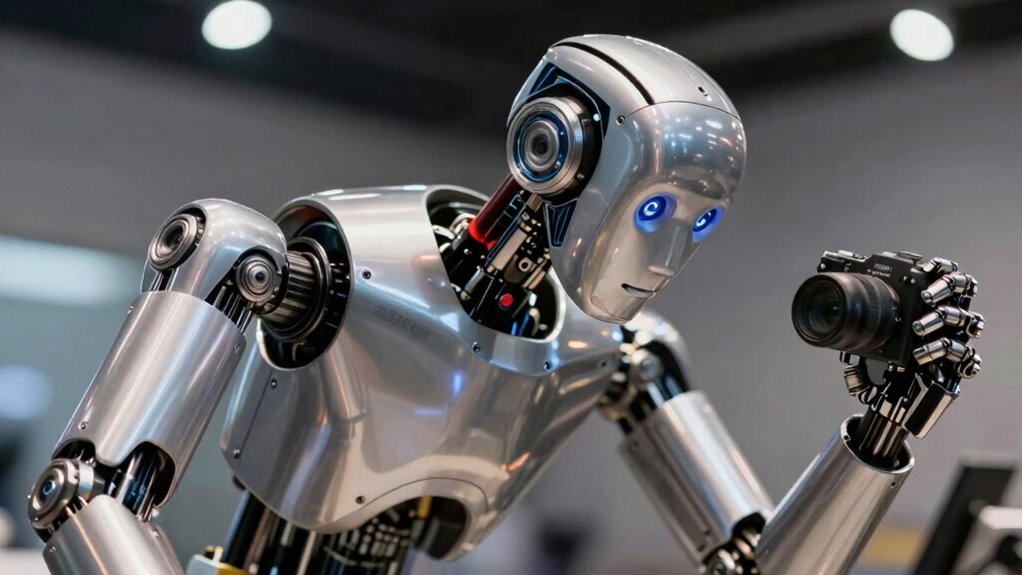
Many people tend to trigger their reactions too early, often before fully understanding the situation. When it comes to animatronics, rushing the timing can ruin the entire experience. Instead of creating a seamless show, you end up with awkward moments where movements seem out of sync or jarring. To avoid this, you need to master the art of timing your animatronic actions perfectly, especially when it comes to lighting synchronization and sound effects coordination. These elements are the backbone of a convincing performance, and they demand precise timing to work together smoothly.
Getting your lighting synchronization right is essential. When an animatronic moves, the lights should enhance the action, highlighting key moments and adding dramatic flair. If the lights turn on too early or too late, it breaks the illusion and confuses your audience. You want the lighting to complement the movement, appearing just as the figure begins to animate or right as it reaches a climax. This requires careful planning and testing, so you can fine-tune the timing until it feels natural and effortless. When lighting syncs perfectly with the animatronic’s motion, you create a more immersive experience that captures attention and heightens the overall impact. Practicing with automation tools can significantly improve your timing accuracy. Additionally, understanding the timing window for each effect helps in achieving seamless synchronization. Developing a detailed timing plan can also help streamline this process and prevent delays or mismatched cues.
Perfect lighting synchronization enhances animatronic movements, creating immersive, seamless displays that captivate your audience.
Sound effects coordination is equally critical. The moment a creature roars, a door opens, or a spooky wind blows, your sound should match the visual cues precisely. Triggering sound effects too early can diminish their effect, making the scene feel disjointed. Conversely, delays can sap the energy from a pivotal moment. To get this right, you need to align your sound triggers carefully with the animatronic’s movements. Using pre-programmed sequences or automation tools can help you achieve this accuracy, allowing each sound to hit at just the right instant. When sound and movement are synchronized, it feels as if the animatronic is truly alive, responding naturally to its environment. Paying attention to timing precision is crucial for creating a convincing display. Consistent testing and adjustment are key to maintaining this synchronization over multiple performances. Remember, the more you practice and refine your cues, the more natural and professional your presentation will appear.

BN-LINK Outdoor Power Stake Timer, 100FT Wireless Remote Control, Dusk to Dawn Sensor for Outdoor Lights, 6 Grounded Outlets, 6ft Extension Cord, 1875W/15A,Christmas Decorations, ETL Listed
SPACE-SAVING 6-OUTLET STAKE TIMER: Power up to 6 devices simultaneously with this convenient yard stake timer, perfect for…
As an affiliate, we earn on qualifying purchases.
As an affiliate, we earn on qualifying purchases.
Frequently Asked Questions
How Do I Test Animatronic Timing Without Causing Damage?
You can test animatronic timing safely by first calibrating sensors properly to guarantee accurate triggers. Use a controlled environment to observe how the animatronic responds without risking damage. Manage power carefully, turning it on and off in short intervals to prevent overheating or stress on components. Regularly check sensor calibration during tests, and adjust timing gradually to fine-tune movements without causing harm.
What Tools Are Best for Precise Timing Adjustments?
A stitch in time saves nine, so precision matters. For accurate timing adjustments, use a digital multimeter for sensor calibration and a motor synchronization tool to align movements perfectly. These tools let you fine-tune triggering points and motor responses, preventing early triggers or delays. Invest in a programmable controller or timing software for even greater control. This approach guarantees your animatronics operate smoothly and reliably, saving you time and effort.
How Often Should I Revisit and Fine-Tune Animatronic Triggers?
You should revisit and fine-tune your animatronic triggers during regular trigger calibration sessions, ideally every few months or after any major maintenance. Consistent trigger calibration guarantees smooth operation and prevents early or late activations. Incorporate trigger calibration into your maintenance schedules to catch issues early. Regular adjustments help maintain precise timing, reducing wear and tear, and keeping your animatronics performing flawlessly.
Can Software Updates Improve Trigger Accuracy Over Time?
Yes, software updates can improve trigger accuracy over time. Regular software calibration guarantees your animatronic system stays synchronized with intended timings. Update benefits include bug fixes, enhanced algorithms, and new features that refine trigger precision. By keeping your software current, you reduce misfires and improve performance. This proactive approach helps maintain ideal timing, ensuring your animatronics run smoothly and engage audiences more effectively.
What Common Mistakes Lead to Early Trigger Issues?
You often trigger early due to poor trigger calibration or timing inconsistencies. Make certain your trigger sensors are properly aligned and calibrated, as misalignment can cause early activation. Inconsistent timing settings also lead to premature triggers, so double-check your timing adjustments regularly. Avoid rushing through calibration steps, and test frequently to confirm your animatronic triggers activate precisely when intended, preventing early triggering issues.
lighting synchronization for animatronics
As an affiliate, we earn on qualifying purchases.
As an affiliate, we earn on qualifying purchases.
Conclusion
Think of your animatronic timing as a skilled conductor guiding an orchestra. When you trigger too early, it’s like starting the symphony before the musicians are ready, creating chaos rather than harmony. By mastering your timing, you guarantee each note hits perfectly, crafting a seamless performance. Remember, patience and precision turn a simple show into an unforgettable masterpiece. So, take your cues carefully—your audience will thank you with a flawless, enthralling experience.

YQBOOM 10PCS 41mm Piezo Disc Transducer Contact Microphone Trigger Sound Sensor with 3.94 Inches Wires for Acoustic Instrument,Mic Drum Trigger Acoustic Pickup CBG Guitar
Perfect for beginner to use as touch-sensors, electronic drum triggers, buzzers, make your own contact mics, also used…
As an affiliate, we earn on qualifying purchases.
As an affiliate, we earn on qualifying purchases.
animatronic performance rehearsal tools
As an affiliate, we earn on qualifying purchases.
As an affiliate, we earn on qualifying purchases.