
In your first DIY animatronic, understanding degrees of motion helps you control how joints and limbs move, making them appear more realistic. It refers to the number of directions a joint can rotate, bend, or pivot. More degrees of motion mean smoother, more lifelike movement. Using servos and careful design, you can achieve natural articulation. Keep exploring to discover how mastering these movements can bring your animatronic to life.
Key Takeaways
- Degrees of motion define how many directions a joint can move, influencing the realism of your animatronic.
- Servos control joint movement precisely, enabling you to set specific degrees of motion for natural movements.
- Different joints have varying degrees of freedom; hinge joints typically move in one direction, while ball-and-socket joints move in multiple.
- Planning degrees of motion helps prevent overextension and ensures smooth, lifelike animation in your DIY project.
- Understanding these concepts guides mechanical design and improves the overall performance and expressiveness of your animatronic.
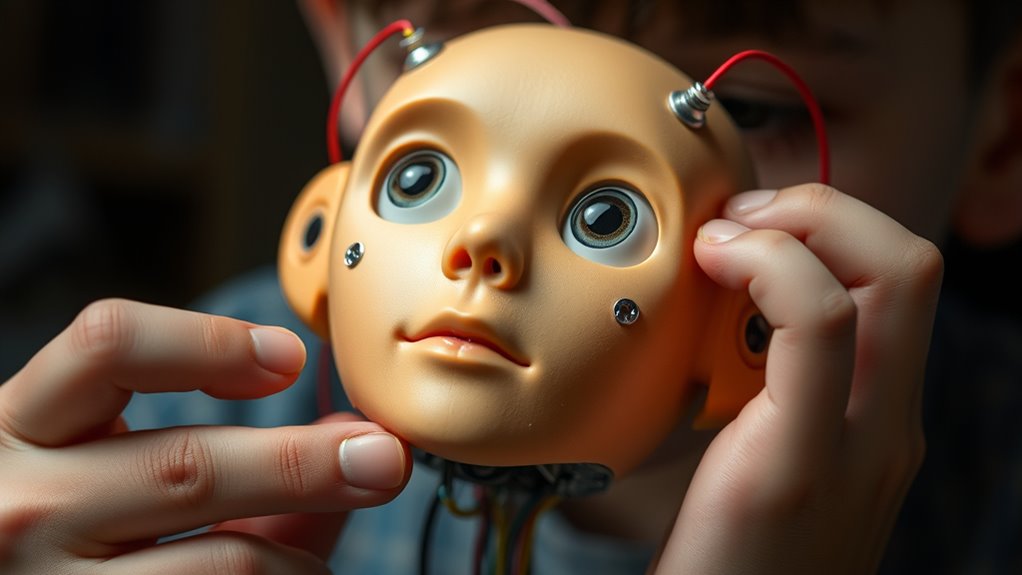
If you’re diving into DIY animatronics, understanding what “degrees of motion” means is essential for creating realistic and expressive movements. Essentially, degrees of motion refer to the range of movement a joint or limb can achieve. When designing your animatronic figure, you want to think about how many different directions each part can move and how smoothly those movements occur. This concept is central to making your creation look lifelike, as real biological joints don’t just move back and forth—they can pivot, rotate, and bend in multiple ways. To achieve this, servo control becomes your best friend. Servos are small motors that can be precisely controlled to rotate to specific angles, making them perfect for mimicking joint articulation. By using servos, you can set exact degrees of motion for different parts of your animatronic, whether it’s a simple arm lift or a complex head turn. Understanding joint articulation is another key element. It’s about how your servos connect to the mechanical joints, allowing movement in specific planes. For example, a hinge joint, like an elbow, typically has one degree of motion—bending and straightening—while a ball-and-socket joint, such as a shoulder or hip, offers multiple degrees of freedom, enabling rotation in several directions. When you design your robot, you’ll need to decide how many degrees of motion each joint should have based on the desired expressiveness and complexity. More degrees of motion mean more realistic, nuanced movements, but also require more precise servo control and mechanical design. Carefully planning each joint’s range of motion ensures your animatronic can achieve natural, smooth movements without overextending or damaging parts. This understanding of degrees of motion and joint articulation will help you troubleshoot and refine your design for optimal performance.

4-Pack Servo Motor MG995 Control Angle180 Metal Gear Servo 13KG Digital High Speed Torque Servo Motor for DIY Smart Robot Toys RC Toy Car Model Helicopter RC Boat
Good performance digital standard Deegoo-FPV servo, which can be a common use for robots, mechanical arms, climbing cars…
As an affiliate, we earn on qualifying purchases.
As an affiliate, we earn on qualifying purchases.
Frequently Asked Questions
How Do I Determine the Right Degrees of Motion for My Project?
To determine the right degrees of motion for your project, first consider the desired motion precision and joint flexibility. Think about how natural or exaggerated the movements should be, and choose joints that match those needs. Look at reference videos or models for inspiration, and test different ranges to see what feels right. Adjust accordingly to balance smoothness, control, and complexity, ensuring your animatronic moves realistically and effectively.
What Materials Are Best for Achieving Smooth Movement?
Think of achieving smooth movement like tuning a musical instrument. For materials, you want something durable yet flexible—think nylon or aluminum for servos, which resist wear and tear. When servo calibration is precise, motion feels seamless. I once used nylon gears that maintained smooth operation after months, proving durable materials guarantee consistent, fluid movements in your animatronic. Prioritize quality materials and calibration for the best results.
Can I Add Multiple Degrees of Motion to a Single Joint?
Yes, you can add multiple degrees of motion to a single joint by incorporating multi axis joints, which allow for increased motion complexity. These joints enable the movement in different directions, like rotation and bending, making your animatronic more lifelike. Just guarantee your design accommodates the additional mechanical and control complexity, and use precise components to maintain smooth, coordinated motion across all axes.
How Does Degrees of Motion Affect Power Consumption?
Ironically, the more degrees of motion your animatronic has, the more power it gobbles up. More movement means increased energy consumption, which can drain your batteries faster or spike your electricity bill. If you want power efficiency, keep those joints simple and limit motion. Every extra degree costs you in energy, so balancing motion with energy conservation keeps your project running longer without sacrificing too much flair.
Are There Safety Considerations Related to Higher Degrees of Motion?
Higher degrees of motion can pose safety risks if you don’t follow proper precautions. You should always use safety precautions like secure mounting and protective gear, as increased motion can cause mechanical stress on components. Also, verify your animatronic’s movements are controlled to prevent unexpected jerks or failures. Regularly check for wear and tear to avoid mechanical stress that could lead to malfunctions or injuries.
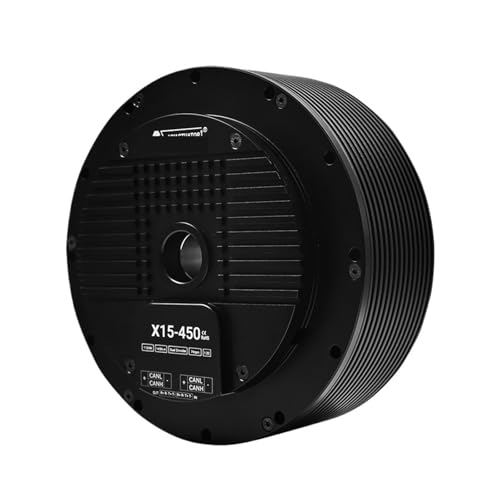
MGMYVDDGVW Servo Motor High Torque X15-450 Industrial Automation Articulated Motor Robotic Arm Servo Joint Module(X15-EtherCAT(CAN))
Stability: Can be used stably for a long time
As an affiliate, we earn on qualifying purchases.
As an affiliate, we earn on qualifying purchases.
Conclusion
So, now you know what ‘degrees of motion’ really mean—it’s not just fancy engineering talk. It’s a reminder that even your DIY animatronic has more freedom than most people stuck in routine. Think about it: with a few wires and some patience, you’re giving life to something that can actually move—something your boss probably dreams of during meetings. So go ahead, make it dance, and maybe, just maybe, inspire your coworkers to loosen up a little.

Diy Studio Stop Motion Armature Kits | Metal Puppet Figure for Character Design Creation | Not-Ready Studio Armature Kits Very Easy to Assemble for Stop Motion Animation or Just Fun | 200 mm Tall
✅ HIGH QUALITY MODEL ARMATURE KIT – include small parts, made from Steel with Balls and Socket Joints.
As an affiliate, we earn on qualifying purchases.
As an affiliate, we earn on qualifying purchases.
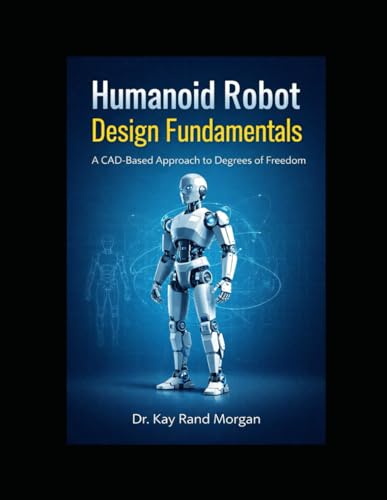
Humanoid Robot Design Fundamentals: A CAD Based Approach to Degrees of Freedom
As an affiliate, we earn on qualifying purchases.
As an affiliate, we earn on qualifying purchases.