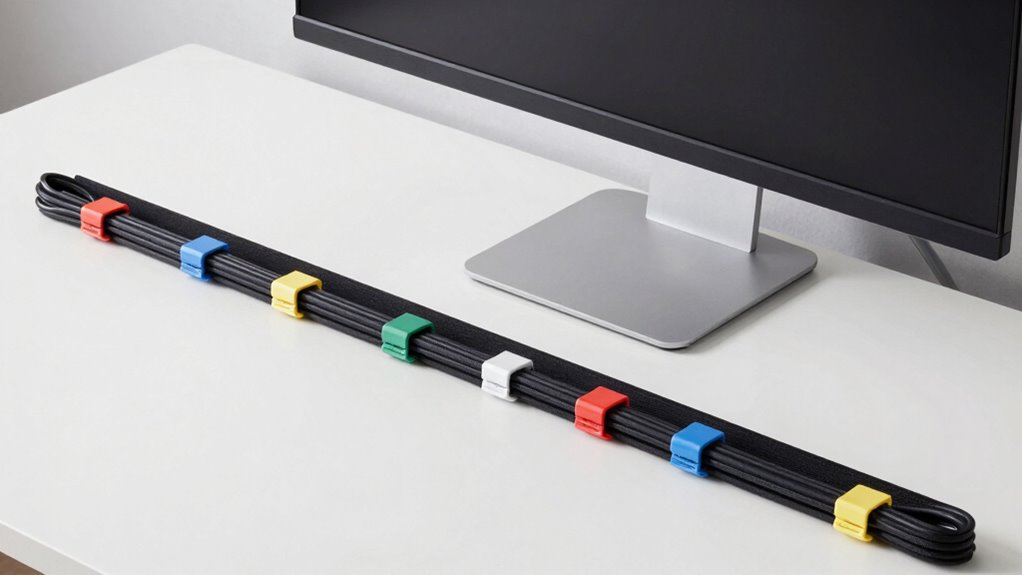

To make your setup look professional, follow a systematic cable management method: group similar cables together, route them along designated paths, and secure them with clips, ties, or sleeves. Use labels for easy identification and keep excess slack coiled neatly out of sight. Maintain a consistent organization system and regularly check for wear or damage. Applying these techniques creates a clean, efficient workspace—that’s just the start, and there’s more to discover for ideal results.
Key Takeaways
- Group similar cables together and route them along designated paths for a tidy appearance.
- Use cable clips, sleeves, or ties to secure and align cables neatly.
- Label cables clearly for quick identification and organized troubleshooting.
- Manage excess cable length by coiling and hiding it out of sight.
- Regularly inspect and update organization to maintain a professional, clutter-free setup.

Effective cable management is vital for maintaining a tidy workspace, preventing damage, and guaranteeing safety. When you focus on proper wire organization, your setup not only looks professional but also functions more reliably. The key is to develop a system that keeps all your cables neat, accessible, and protected from wear and tear. Start by grouping similar cables together—such as power cords, data cables, and audio/video wires—and route them along designated paths. Using cable clips, sleeves, or ties helps keep everything aligned and prevents tangling, which can cause damage or make troubleshooting difficult later on.
Proper cable organization keeps your workspace tidy, safe, and functioning reliably.
Wire organization is about more than just bundling cables; it’s about creating a logical structure that makes sense for your workspace. You should consider the length of each cable and avoid excessive slack that can clutter your area. Instead, use cable organizers like Velcro straps or zip ties to keep excess length neatly coiled and out of sight. Not only does this improve the visual appeal, but it also reduces the risk of tripping hazards or accidental disconnections. As you organize, remember to keep frequently used cables within easy reach, while less often used ones can be tucked away to maintain a clean surface. Incorporating cable labeling into your routine enhances overall organization and saves time in the long run. When combined with wire organization strategies, it creates a streamlined setup that looks professional and operates smoothly. Remember to regularly check your labels for wear or damage and update them as needed. This ongoing maintenance prevents confusion and keeps your workspace looking sharp. Ultimately, a well-organized cable system not only improves the aesthetics of your environment but also guarantees safety, reduces equipment downtime, and simplifies future upgrades or repairs. By paying attention to wire organization and cable labeling, you set yourself up for a clean, efficient, and professional-looking workspace that functions flawlessly.

Haunted Hill Farm Soul Sucker Demon Reaper with Child by Tekky, Motion-Activated Talking Halloween Animatronic for Creepy Indoor or Covered Outdoor Halloween Decorations, Plug-in or Battery Operated
Premium Life-size Animatronic: Soul Sucker is perfect for indoors or a covered outdoor area so place our evil...
As an affiliate, we earn on qualifying purchases.
Frequently Asked Questions
What Tools Are Essential for Effective Cable Management?
To manage cables effectively, you need essential tools like cable labels and zip ties. Cable labels help you identify wires easily, preventing confusion during setup or troubleshooting. Zip ties keep cables neat and secure, reducing clutter and accidental disconnections. Using these tools together, you can create a clean, professional-looking setup that’s easy to maintain and troubleshoot, ensuring your cables stay organized and accessible at all times.
How Often Should I Recheck and Reorganize My Cables?
You should recheck and reorganize your cables every three to six months. Regularly inspecting your cable labeling helps guarantee everything stays clear, while wire length adjustment may be needed if you notice slack or tension issues. This routine keeps your setup tidy, prevents tangles, and makes future upgrades easier. Staying proactive with cable management ensures your system remains professional-looking and functions smoothly over time.
Can Cable Management Improve Airflow and Cooling?
Did you know that good cable aesthetics and flexibility can actually improve airflow and cooling? When you organize cables properly, you create clear pathways that prevent obstructions and reduce heat buildup. Using flexible cables and tidy routing keeps airflow unobstructed, which helps your system stay cooler and perform better. So, investing time in cable management isn’t just for looks—it’s a smart move for ideal cooling and longer-lasting components.
Are There Specific Cable Types Best Suited for Professional Setups?
Yes, for professional setups, you should use flexible, shielded, and low-profile cables like Cat6 Ethernet or Slim HDMI cables. To keep your setup organized, incorporate cable labeling and color coding, making it easy to identify and troubleshoot connections quickly. These methods help streamline maintenance and guarantee a clean, professional appearance, enhancing both functionality and aesthetics. Proper cable choices combined with labeling make your setup look polished and efficient.
How Do I Hide Cables Behind Furniture or Walls?
You hide cables behind furniture or walls by installing concealed wiring, creating a clean, clutter-free look. Use decorative covers to hide cords along walls or baseboards, giving a seamless appearance. Run cables behind bookshelves or inside wall cavities, anchoring them securely. This approach makes your setup look polished and professional, while ensuring safety and easy access. With these techniques, your cables become invisible, blending effortlessly into your space.

Spirit Halloween 4 Ft 6 In Scary Sitting Scarecrow Animatronic, Multicolor
Bring any Halloween display to life by adding this Scary Sitting Scarecrow Animatronic to your home decor. This...
As an affiliate, we earn on qualifying purchases.
Conclusion
By adopting this cable management method, you’ll instantly elevate your setup’s look and functionality. Keeping cables organized not only saves time but also creates a sleek, professional appearance. Remember, a tidy workspace is a tidy mind—less clutter means less stress. So, take the time to implement these tips, and watch your setup transform into a polished, efficient space. After all, a place for everything and everything in its place makes work much smoother.
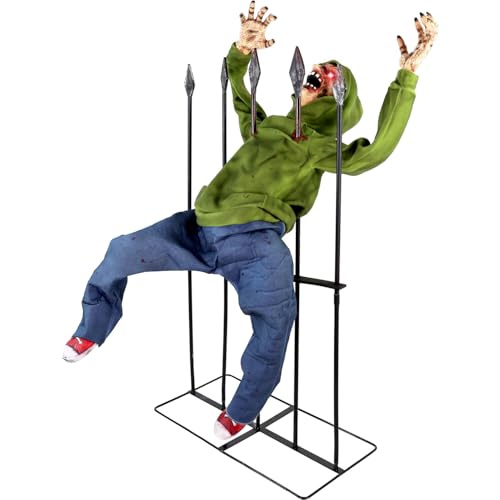
Haunted Hill Farm 4.4-Ft Animatronic Impaled Zombie, Halloween Animatronic, Creepy Party Decoration, Spooky Décor, Macabre Gift for Horror Movie Lovers, Voice-Activated Lights & Sound, Life-Size
Premium Life-Size Animatronic: Frighten guests and trick-or-treaters with this premium quality spine-chilling Halloween decoration
As an affiliate, we earn on qualifying purchases.

LarpGears Outdoor Halloween Skeleton Decorations, 7.8Ft Flying Rotated Skull Reaper Ghost Scarecrow Decorations for Garden, Porch, Yard
High-Quality Halloween Animatronics: This Halloween prop features animated motion, creating a spine-tingling effect as the reaper ghost appears...
As an affiliate, we earn on qualifying purchases.