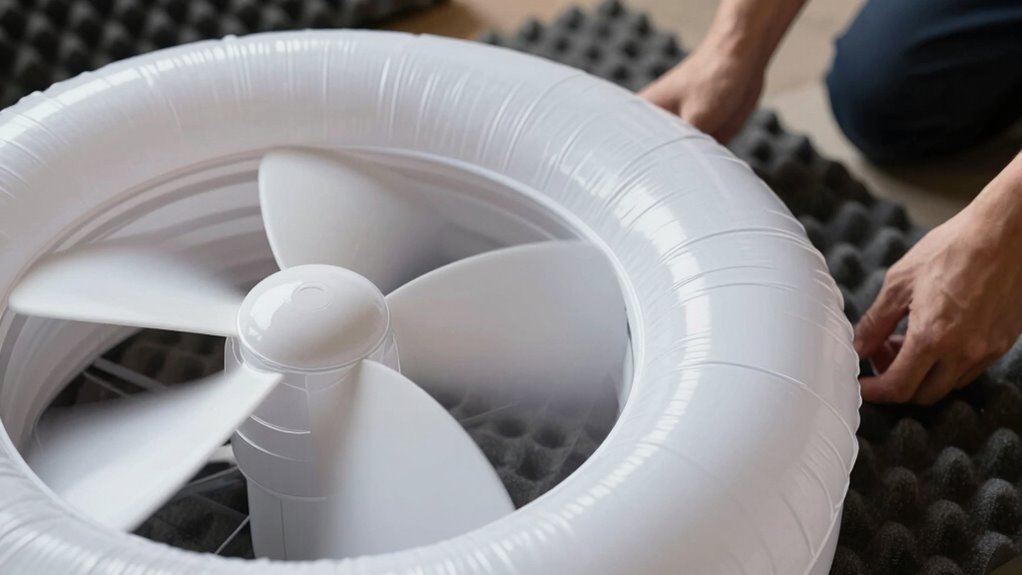

To quiet your inflatable fan, start by placing it on a stable, vibration-reducing surface and removing any debris or obstructions from the intake and exhaust. You can also reduce noise by installing vibration mounts, adding sound-absorbing materials, or enclosing the fan in a sound-absorbing enclosure. Adjusting the fan speed to the lowest effective setting and performing regular maintenance will also help. Keep exploring for more tips to make your fan run quieter and more efficiently.

Get decor and gifts delivered free with Prime
- Fast, free delivery on millions of items
- Prime Video, Amazon Music and more included
- Member-only deals all year
Key Takeaways
- Use vibration mounts or isolators to dampen sound transmission and reduce noise levels.
- Enclose the fan in a sound-absorbing enclosure or surround it with acoustic materials.
- Adjust the fan speed to the lowest effective setting to minimize motor noise.
- Regularly inspect and maintain the fan, tightening loose parts and lubricating moving components.
- Ensure proper positioning on a stable, vibration-reducing surface for optimal noise reduction.
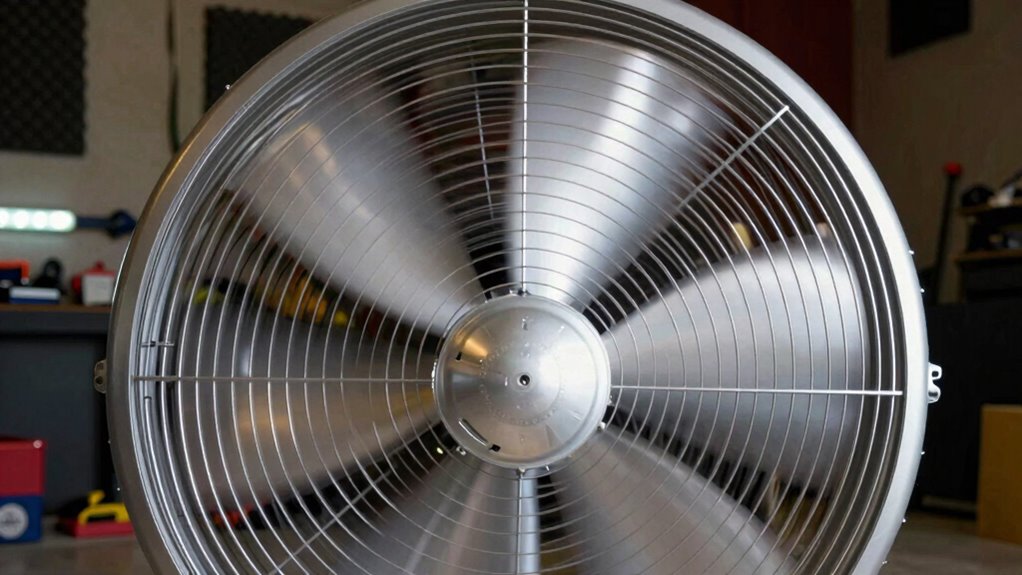
Inflatable fans are a popular solution for temporary cooling and event setups, but their noise levels can sometimes be disruptive. If you’ve noticed that your inflatable fan’s noise is too loud, there are effective ways to quiet it down without sacrificing airflow. The key lies in understanding airflow enhancement and applying noise reduction techniques that target the source of the sound.
First, focus on airflow enhancement. When airflow is unbalanced or obstructed, the fan works harder and generates more noise. Check that the fan is positioned on a flat, stable surface to reduce vibrations, which can amplify noise. Make sure the intake and exhaust areas are free of debris or obstructions that could restrict airflow. Properly aligning the fan and ensuring it’s not over-pressurized can also help maintain steady airflow while reducing unnecessary strain on the motor, which in turn minimizes noise. Additionally, understanding smart appliances can aid in choosing quieter, more efficient models for better noise control. Improving airflow efficiency can also reduce the load on the fan, leading to quieter operation. Using noise-reducing accessories such as vibration mounts or isolators can further dampen sound transmission from the fan to surrounding surfaces. Incorporating sound-absorbing materials around the fan can further enhance noise reduction by minimizing reflected sound waves.
Ensure proper positioning, clear obstructions, and balanced airflow to reduce fan noise and improve efficiency.
Next, consider noise reduction techniques that directly target the sound produced by the fan. Installing sound-dampening materials around the fan can make a noticeable difference. For example, placing acoustic foam or rubber mats beneath or around the fan helps absorb vibrations and dampen sound waves. If possible, encasing the fan in a sound-absorbing enclosure designed for outdoor or industrial equipment can further reduce noise levels. Additionally, using flexible ducting instead of rigid pipes can help minimize vibrations transmitted from the fan to surrounding structures.
Adjusting the fan’s speed settings can also contribute to noise reduction. If your inflatable fan has adjustable speeds, try lowering the setting to find a balance between adequate airflow and quieter operation. Running the fan at the lowest effective speed reduces the motor’s workload and the resulting noise. In some cases, installing a variable frequency drive (VFD) allows you to fine-tune the fan’s speed precisely, leading to smoother operation and less noise overall.
Lastly, routine maintenance plays a crucial role. Regularly inspecting the fan for loose parts, worn bearings, or imbalanced blades ensures it operates efficiently and quietly. Tightening loose screws or bolts and lubricating moving parts prevents vibrations that cause extra noise. Keeping the fan clean from dust and debris also ensures it runs smoothly, helping maintain superior airflow and minimizing unnecessary noise. Proper maintenance can also extend the lifespan of the fan, ensuring consistent noise levels over time.
As an affiliate, we earn on qualifying purchases.
Frequently Asked Questions
Can Inflatable Fan Noise Affect Indoor Air Quality?
Yes, inflatable fan noise can affect indoor air quality by causing noise interference, which may lead to stress or distraction, impacting your overall well-being. While the noise itself doesn’t directly harm indoor air, persistent loud sounds can make it harder to focus or relax, indirectly affecting your environment. To maintain good indoor air quality and a peaceful space, consider quieting the fan or relocating it to reduce noise interference.
Are There Specific Brands Known for Quieter Inflatable Fans?
You’ll find that brands like TurboFan and CoolAir are known for quieter inflatable fans, thanks to their strong reputation for quality and low noise level specifications. Some may worry about durability, but these brands prioritize sound reduction without sacrificing performance. Checking product reviews can confirm their noise levels. Overall, selecting a well-established brand guarantees you get a quieter fan that meets your needs, making your inflatable experience more comfortable.
How Often Should I Service My Inflatable Fan for Noise Reduction?
You should service your inflatable fan every 3 to 6 months to maintain ideal noise mitigation. Regular maintenance tips include cleaning the blades, tightening loose parts, and inspecting for wear and tear. By staying consistent with these checks, you prevent noise from escalating and guarantee smooth operation. Proper servicing not only reduces noise but also extends your fan’s lifespan. Make it a routine to keep your inflatable fan quiet and efficient.
Is It Safe to Use Noise-Canceling Headphones Near Inflatable Fans?
Yes, it’s safe to use noise-canceling headphones near inflatable fans, provided you follow headphone safety guidelines. Noise canceling benefits include reducing loud sounds, helping you focus or protect your hearing. Just make certain the headphones don’t block your awareness of your surroundings, especially if you need to monitor the fan or your environment. Keep the volume at a safe level, and enjoy the noise reduction without risking safety.
Can Ambient Temperature Influence Inflatable Fan Noise Levels?
Think of your inflatable fan as a musical instrument—its sound can change with the weather. Ambient temperature influences noise levels because it affects temperature regulation within the fan, causing parts to expand or contract. Cooler temperatures might reduce noise, while heat can increase vibrations and sound. Additionally, warmer air can alter noise absorption, making the fan seem louder. Keeping the environment stable helps maintain quieter, more consistent operation.
Conclusion
If your inflatable fan’s noise is shaking your nerves and shattering your peace, don’t suffer in silence! With these simple tricks, you can silence that monstrous roar and reclaim your calm. Imagine finally enjoying whisper-quiet comfort instead of feeling like you’re living next to a jet engine. You deserve serenity, not a deafening drone. So, take action now—quiet that beast and restore your sanity before your walls start vibrating with noise!
Fall Picks
fall essentials
As an affiliate, we earn on qualifying purchases.