
To set up like a pro haunter, start with a detailed layout including rooms, corridors, and scare zones to guide visitor flow smoothly. Use layered lighting to create an eerie atmosphere, and double-check all electrical connections to avoid issues. Make a checklist of props, decorations, and safety measures, ensuring everything is secure and hazard-free. Conduct walkthroughs to identify weak points and tweak as needed. Keep organized and follow an all-encompassing plan—if you keep going, you’ll master the secrets behind a truly immersive haunted house.

Get decor and gifts delivered free with Prime
- Fast, free delivery on millions of items
- Prime Video, Amazon Music and more included
- Member-only deals all year
Key Takeaways
- Develop a detailed layout with clearly defined rooms, scare zones, and visitor flow for seamless navigation.
- Use layered lighting with dim, flickering, and colored lights to create an immersive, eerie atmosphere.
- Prepare and securely set up props, decorations, and sound effects, ensuring safety and stability.
- Create a comprehensive timeline and checklist for setup, testing all elements before opening.
- Conduct thorough walkthroughs to identify weak spots, safety hazards, and improve scare effectiveness.
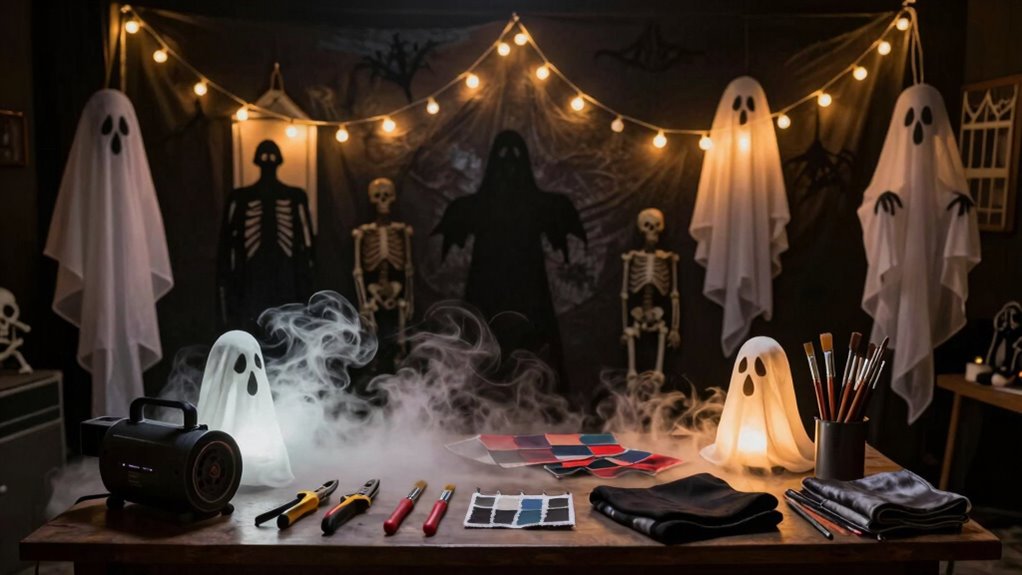
Have you ever started a project only to realize you were missing a vital step? That’s a common mistake, especially when setting up a haunted house. To avoid that, you need a solid setup checklist that keeps you organized and confident. First, focus on your haunted house design. You want to map out the layout clearly, deciding where each room, corridor, and scare zone will go. Visualize the flow of visitors, ensuring they’re guided smoothly from one scene to the next while building suspense. Consider the overall theme and atmosphere you want to create, and plan your space accordingly. This planning stage is crucial because it sets the foundation for everything else.
Start with a clear layout and theme to build a suspenseful, immersive haunted house experience.
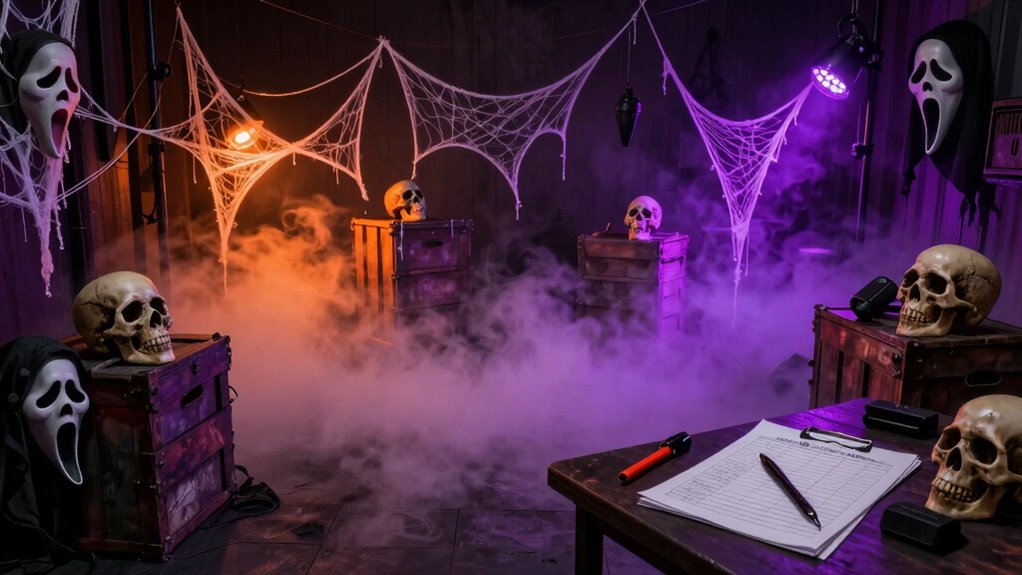
Next, pay attention to your ghostly lighting. Lighting is your best tool to create mood and hide imperfections. Make sure you have enough power sources and extension cords to cover your entire setup. Use dim, flickering lights, or colored bulbs to cast eerie shadows, adding to the spooky ambiance. Remember to test your lighting before the big night; nothing kills the scare more than flickering bulbs or dead connections when visitors are in the house. Incorporate different layers of lighting—ambient, accent, and spotlights—to highlight key features and hide wiring. Ghostly lighting isn’t just about visibility; it’s about creating an unsettling atmosphere that keeps visitors on edge. Additionally, understanding haunted house design principles can help you craft more immersive and effective scare zones. Proper planning and design can also enhance the overall visitor experience, making your haunt more memorable. Conducting thorough biodiversity research on natural light effects can inspire creative lighting setups that mimic real-world eerie environments. Carefully researching haunted house safety**** guidelines can help you avoid accidents and ensure a secure environment for everyone.
As you move forward, don’t forget to gather your props and decorations. Make a list of all the scare elements, themed items, and set pieces you want to include. Safety should be a top priority, so check that all props are secure and that walkways are clear of tripping hazards. Sound effects also play a major role in immersing your guests, so prepare your audio equipment and soundtracks. Test everything in advance to avoid surprises on the night of your haunt. Keeping track of your supplies and setup schedule helps avoid last-minute rushes and ensures a smooth operation.
Finally, create a timeline for setup and breakdown, so you stay on track. Double-check your supplies—furniture, costumes, makeup, and tools—making sure nothing’s missing. Walk through your haunt once or twice before the big night to identify any weak spots or areas that need tweaking. By following this setup checklist, you’ll feel more like a pro haunter, confident that your haunted house is both spooky and safe. With meticulous planning, ghostly lighting, and attention to detail, you’ll deliver an experience that will thrill and terrify your visitors.
haunted house props and decorations
As an affiliate, we earn on qualifying purchases.
As an affiliate, we earn on qualifying purchases.
Frequently Asked Questions
How Do I Choose the Best Haunted House Location?
To choose the best haunted house location, prioritize a spot with high foot traffic and good visibility. Guarantee your theme stays consistent throughout the space to create an immersive experience. Use effective lighting techniques—dim lights, flickering effects, and shadows—to enhance atmosphere and hide imperfections. A strategic location combined with cohesive theme elements and clever lighting makes your haunted house more enticing and memorable for visitors.
What Safety Measures Are Essential for Haunted Setups?
You should prioritize safety equipment like fire extinguishers, first aid kits, and sturdy lighting. Make sure emergency procedures are clear and well-communicated to everyone involved. Regularly check all props and structures for stability, and keep clear pathways for quick evacuation. Train your team on emergency protocols, so everyone knows what to do during incidents. These safety measures protect both your guests and your crew, ensuring a fun, scare-filled experience without unnecessary risks.
How Can I Create Realistic Sound Effects?
You can create realistic sound effects by using ambient noises and sound layering. Don’t worry if it feels complicated; start with simple recordings like creaking doors or distant thunder. Layer different sounds to build depth—combine subtle whispers with eerie footsteps or rustling leaves. Adjust volume and timing to match your scene, making the environment feel alive and immersive. With practice, your sound effects will truly haunt your guests.
What Budget Should I Allocate for Decorations?
You should allocate a budget based on your theme and space, but aim for cost-effective options to maximize your funds. Use DIY decoration tips like homemade props, painted cardboard, or repurposed items to create spooky effects without overspending. Focus on lighting and simple details to enhance the atmosphere. By planning carefully and utilizing budget-friendly ideas, you can transform your space into a haunted scene without breaking the bank.
How Do I Attract More Visitors to My Haunt?
You want more visitors, huh? Irony’s on your side—just use interactive props and themed lighting to make your haunt irresistible. People love to engage and be immersed in the experience, so set up surprises that invite participation. Bright, spooky lighting draws attention from afar, while interactive props keep guests talking and sharing. Combine these elements, and you’ll turn casual passersby into enthusiastic, repeat visitors without breaking the bank.
Conclusion
Now that you’ve checked off every item on the setup checklist, you’re almost ready to haunt with confidence. But here’s the real question—are you prepared for what comes next? The atmosphere, the reactions, the unexpected twists—those are what truly turn you into a pro haunter. Keep your eyes open and your nerves steady. The perfect haunting experience is just a heartbeat away. Are you ready to take that final step into the unknown?
Fall Picks
fall essentials
As an affiliate, we earn on qualifying purchases.