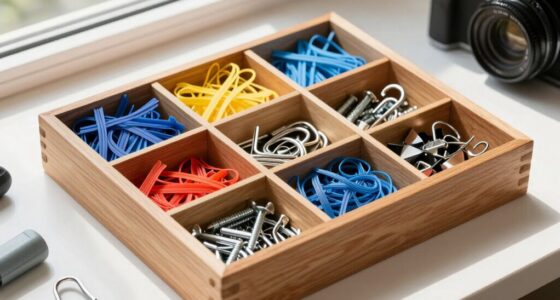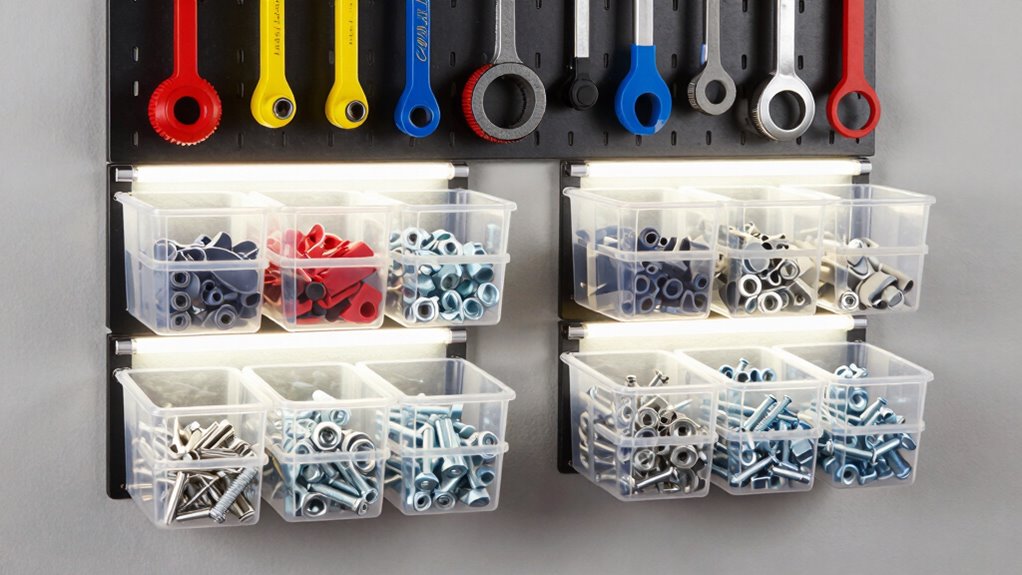

Creating designated storage zones is a simple way to stop losing parts and keep your space organized. By assigning specific areas for tools, supplies, or hobby items, you improve accessibility and prevent chaos. Using clear labels and adjustable shelves helps you find everything quickly and stay consistent with your system. When you set up effective zones, it turns clutter into order—making your routines smoother. Keep going to discover how to perfect your storage layout.

Get decor and gifts delivered free with Prime
- Fast, free delivery on millions of items
- Prime Video, Amazon Music and more included
- Member-only deals all year
Key Takeaways
- Designate specific storage zones for different parts and tools to prevent misplacement and improve organization.
- Use labeled shelves and containers to clearly identify where items belong, making retrieval quick and easy.
- Store frequently used parts in accessible areas to reduce search time and avoid losing essential pieces.
- Regularly review and update zones to accommodate changing needs and prevent clutter buildup.
- Implement a consistent labeling system to encourage household participation and maintain organized storage zones.
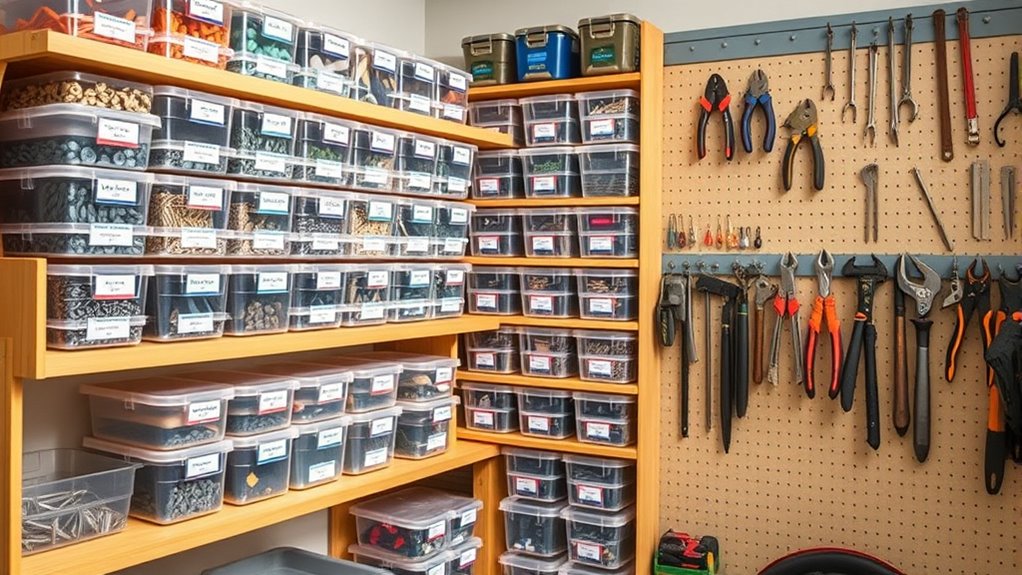
Creating designated storage zones in your home can transform clutter into organized space, making everyday routines smoother. When you set up specific areas for different items, you prevent chaos from taking over. For example, in your garage or craft room, using organized shelving helps you assign a clear spot for tools, supplies, or hobby materials. These shelves aren’t just about storage; they’re about creating a system that makes finding what you need quick and effortless. When combined with a smart label system, your storage zones become even more effective. Labels act as visual cues, so you instantly know where everything belongs, reducing the time spent searching for misplaced parts or supplies.
Start by evaluating what items you want to organize and where they naturally belong. For instance, keep frequently used tools in a central location on accessible shelves, while seasonal or rarely used items can go on higher or less prominent shelves. When installing your organized shelving, choose sturdy units that fit your space and can hold the weight of your items. Adjustable shelves give you flexibility, so you can customize the storage as your needs change. Once your shelving is in place, implement a label system using clear tags or printed labels. Label each section or bin carefully—think about categories like “Screws,” “Paint Supplies,” or “Gardening Tools.” This not only streamlines your process but also makes it easier for everyone in the household to maintain the organization.
Evaluate items and assign them to accessible, labeled shelving for effortless organization and maintenance.
A well-thought-out storage zone with organized shelving and labels encourages you to keep things tidy. When everything has a designated spot, it’s less tempting to leave clutter lying around. Plus, knowing exactly where to put things after use speeds up your routines, whether you’re fixing a project or tidying up. Over time, maintaining these zones becomes second nature. You’ll find that your tools, spare parts, or craft supplies stay in their designated areas, and you won’t lose parts or spend time hunting for missing items. The key is consistency: regularly check your zones, update labels if needed, and reconfigure shelves as your collection or needs evolve.
In the end, creating these zones with organized shelving and labels isn’t just about storage; it’s about reclaiming your space and making everyday tasks easier. When everything has its place, you gain more control, less frustration, and a home that looks neat and inviting. It’s a simple step that makes a big difference, turning chaos into calm and helping you stay on top of your organization game. Incorporating Free Floating concepts, such as adaptable storage solutions, can further optimize your space by utilizing vertical or underused areas efficiently.
adjustable shelving units for garage
As an affiliate, we earn on qualifying purchases.
As an affiliate, we earn on qualifying purchases.
Frequently Asked Questions
How Do I Choose the Right Storage Zone for Different Tools?
To choose the right storage zone for your tools, start by considering their size and frequency of use. Use labeling strategies to clearly identify each zone, and color coding to quickly distinguish between tool types. Place frequently used tools in easily accessible areas, while specialized tools go in designated zones. This organization helps prevent losing parts and makes your workspace more efficient.
What Materials Are Best for Durable Storage Zones?
For durable storage zones, you should choose materials with high material durability, like heavy-duty plastic, metal, or plywood. Metal offers excellent strength and longevity, making it ideal for heavy tools, while plastic is resistant to moisture and easy to clean. Plywood is a good budget option with solid durability. Comparing these materials helps you select the best storage material for your needs, ensuring your parts stay safe and organized over time.
How Often Should I Reorganize My Storage Zones?
Ever wonder how often you should reorganize your storage zones? It’s best to set a maintenance routine, like every three to six months, to keep things tidy. Seasonal reorganization helps you adapt to changing needs and prevents clutter from building up. Regular check-ins ensure your storage zones stay functional and efficient, saving you time and frustration. So, schedule those reorganizations—your future self will thank you!
Can DIY Storage Zones Be Customized for Small Spaces?
Yes, DIY storage zones can be customized for small spaces. You can incorporate various customization options like adjustable shelves, stackable containers, and wall-mounted racks to maximize space. Use space-saving techniques such as vertical storage and multi-purpose furniture to make the most of limited areas. These strategies help you organize efficiently without clutter, ensuring your small space stays functional and tidy while keeping everything easily accessible.
What Safety Precautions Should I Consider When Creating Storage Zones?
Think of your workspace as a fortress; safety is your strongest wall. When creating storage zones, always wear personal protective equipment like gloves and goggles to shield yourself. Make certain all shelves and hooks are securely mounted to prevent accidents. Keep sharp tools out of reach and maintain clear walkways. By following these precautions, you protect yourself from harm while organizing efficiently, turning chaos into a safe, structured haven.
Conclusion
By creating designated storage zones, you can cut down on lost parts and save time searching. Did you know that clutter costs the average person up to 4.3 hours a week? By organizing your space with simple DIY zones, you’ll not only boost efficiency but also reduce frustration. Take control today—set up your zones and enjoy a more organized, stress-free workspace. Your parts—and your sanity—will thank you!
Halloween Picks
halloween
As an affiliate, we earn on qualifying purchases.