TL;DR
Halloween themed string lights add seasonal color and spooky shapes to porches, windows, trees, and parties. Match the strand’s illuminated length and power source to your space, check its indoor or outdoor rating, and treat novelty lights as accents rather than safe path lighting.
A few orange bulbs can turn a plain porch into a Halloween scene, but the wrong strand can leave your steps dark or your window looking oddly bare. Halloween themed string lights come in everything from tiny pumpkins and dangling ghosts to simple orange-and-purple bulbs, and the best choice depends on where you’ll hang them and what you want them to do.

Get decor and gifts delivered free with Prime
- Fast, free delivery on millions of items
- Prime Video, Amazon Music and more included
- Member-only deals all year
This guide helps you compare styles, power sources, and lighting effects, then plan a display that suits your home. You’ll also learn what to know about outdoor ratings, cord placement, and why decorative lights shouldn’t replace the lighting you need to see a path. For instance, a battery strand can make a wreath glow where there’s no outlet, while a weather-rated plug-in set may suit a long porch rail.
Treat novelty Halloween lights as accent lighting; use suitable lighting to make steps and walkways visible.
Compare illuminated length, total length, bulb count, and spacing before buying.
Use a strand outdoors only when its label and instructions rate it for outdoor conditions, and check its cords and connectors too.
Choose plug-in, battery, or solar power based on outlet access, placement, and charging conditions.
Follow manufacturer limits for connecting strands, using timers, and storing or handling batteries.
Pick a Halloween style that fits your display
Halloween themed string lights are decorative strands built around spooky shapes, Halloween colors, or both. They add atmosphere to porches, windows, trees, mantels, and parties, but their small bulbs usually work best as accents. Think of them like the colored sprinkles on a cake: they catch your eye, while other lighting does the heavy lifting. That distinction helps set expectations: a strand can make a railing feel festive without casting enough light to reveal uneven steps.
Common covers include mini pumpkins, ghosts, bats, skulls, spiders, witches’ hats, and candy corn. The covers give a display a recognizable theme, but they also make each bulb visually larger, so a few shapes can feel busy in a small window. A strand of orange and purple bulbs without shaped covers creates a cleaner line, especially if your porch already has a carved pumpkin or a large skeleton as the centerpiece. For instance, a renter could loop warm orange lights around an indoor window frame and add two paper bats for a simple display that packs away easily.
Orange and purple remain the familiar pair, but you can also find black, green, red, warm white, and multicolor options. Color changes the feeling and the way decorations read together: purple with green can feel like a comic-book haunted house, while warm white with black decorations gives a quieter, candlelit look without placing an open flame near fabric or leaves. A limited palette tends to make separate items feel like one scene; adding every available color can compete with the shapes you want people to notice.
Some newer designs combine novelty covers with multiple modes, timers, or remote controls. Features vary by product, so check the label before you buy. A blinking ghost strand might be fun for a party because motion adds energy, while steady-on pumpkin lights may suit a front window where repeated flashes could compete with room lighting or distract people outside. Choose the effect based on how long people will look at it and what else is happening in the space.
Popular right now

Vitamix Touch & Go Advance 32-Ounce Bar Blender, White

Bose QuietComfort Headphones – Wireless Bluetooth Over-Ear Noise Cancelling Headphones, Petal Pink Limited Edition

Bose QuietComfort Headphones (2nd Gen), Wireless Over-Ear Noise-Cancelling Headphones, Black
As an affiliate, we earn on qualifying purchases.
Match the power source to the place you’ll hang the lights
Choose plug-in lights for a spot near a suitable outlet, battery lights where cords would be awkward, and solar lights for outdoor places that receive enough daylight. The power source shapes where you can decorate, how reliably the lights run, and how much upkeep the strand needs. A brilliant display can be a short-lived one if you have to change batteries every evening, while a solar strand in deep shade may not stay bright through the hours you want it on.
Plug-in strands can suit a long porch rail or indoor mantel with a nearby outlet. A steady power supply is convenient for extended displays, but cord reach and outlet placement determine where the strand can go safely. Before buying, check the strand’s instructions for extension cord use and how many strands, if any, you may connect. Don’t assume two matching-looking products can join; only connect lights when the manufacturer says they’re connectable and gives a limit. If the outlet is far away, a longer cord can create a trip hazard, so plan the route before committing to a layout.
Battery-powered lights make it easy to decorate a wreath, stair banister, or shelf without running a cord across the room. That flexibility is useful for small displays or places without an outlet, but runtime depends on battery type, light mode, and timer settings. Consult the product estimate and keep spares if the lights need to shine through a party. A fading mode may use power differently from steady-on; follow the instructions for your particular model. Consider where the battery compartment will sit too, since an inaccessible box makes switching modes or replacing batteries inconvenient.
Solar lights avoid a wall cord outdoors, but their performance depends on panel placement, weather, and available daylight. This makes them convenient where an outlet is impractical, though less predictable than plug-in lights when days are short or the panel is shaded. A strand under a deep porch roof may not charge as well as one in an open garden. For example, if a solar ghost strand sits in shade for most of the day, it may glow briefly after dusk; move its panel into a sunnier spot if the product’s design allows it. Check the expected charging conditions against your actual site before relying on solar for a particular event.
Measure the strand before you decorate a porch or window
Measure the space and compare it with the strand’s illuminated length, total length, bulb count, and bulb spacing. Those numbers tell you more than the package’s headline length alone. Illuminated length shows how much of the run will actually glow; total length includes the cord needed to reach the outlet. Bulb spacing affects whether the result looks like a continuous border or a string of isolated points. A long cord section before the first bulb can leave part of a window looking empty, and widely spaced shapes can make a porch rail feel sparse.
Start with a tape measure. If your front window is six feet wide, look for a strand with enough lit length to span it and reach an outlet without pulling the cord taut. For instance, a ten-foot strand may sound generous, but if several feet consist of an unlit lead wire, it may not cover the full frame with glowing bulbs. Leave enough slack to follow corners and attach the strand securely; stretching it tight can strain connections or make the layout look awkward.
For a tree or porch post, estimate how many passes you want around it. One loose spiral creates a scattered look; closer spacing gives denser color but uses more length. That means the same strand can produce very different results depending on the spacing between turns. Lay the strand on the ground first when you can, and test how the lights look from the sidewalk as well as from the doorway. The viewing distance matters: a sparse strand may read clearly up close but disappear against a tree from the street.
Novelty strands are accent lighting, not dependable path lights. Small pumpkin bulbs may look charming on the railing but still leave a step in shadow because their light is aimed at decoration and spaced along a narrow line. Keep a proper porch fixture or other suitable lighting on the route guests will walk, and secure cords so they don’t cross steps or walkways. This lets the display add atmosphere without asking it to do a safety job it may not be designed to do.
Use outdoor-rated lights and keep the setup safe
Use a Halloween light strand outdoors only when its packaging or instructions specifically rate it for outdoor use. That rating matters because outdoor displays face moisture and changing conditions that indoor products may not be designed to handle. Check its plugs, connectors, and any extension cord for suitability too; one outdoor-rated strand does not make an indoor extension cord safe in wet conditions. Rain, dew, and damp leaves can reach connections even under a roof, so plan where each joint will sit before hanging the lights.
Keep lights and cords away from water unless every relevant component is rated for the conditions. Don’t use strands with damaged insulation, loose sockets, or broken covers, and don’t overload outlets. Damage can expose parts that should remain protected, while too many connected loads can exceed the product’s stated limits. Secure cords along a wall or railing so visitors don’t trip, especially near steps where costumes can limit movement and visibility. A tidy route also makes it easier to spot damage when you inspect the setup.
Keep lights away from candles, heaters, and other heat sources. A fabric ghost draped over a warm fixture can create a hazard, even if the strand itself uses LEDs. LEDs typically use less electricity and produce less heat than incandescent bulbs, but that doesn’t remove the need to follow the product’s placement instructions. Covers, nearby decorations, and the fixture they are draped over all affect the setup, so leave clearance rather than assuming the bulb type alone makes a location safe.
If you use battery lights around children or pets, keep batteries and small detachable covers out of reach, and check product warnings. For example, a curious dog may tug a low-hanging spider strand or chew a loose cord. A timer can limit how long the display runs, which can reduce unnecessary operating time, but it doesn’t make an unsafe placement safe. Follow the maker’s directions, especially if they recommend switching lights off when unattended.
Choose LEDs for easy upkeep, or incandescent bulbs for a specific look
LED Halloween lights generally use less electricity and produce less heat than incandescent strands, which makes them a practical choice for many displays. Lower heat can be useful around decorations, and lower electricity use can matter when lights stay on for long evenings. Incandescent lights remain available, including novelty shapes and vintage-style designs, so you may prefer their particular appearance. Neither label tells the whole story: compare the product’s instructions, build, and intended use.
LEDs often pair with steady, blinking, fading, color-changing, and timer settings. Some models add a remote or app controls, although features and device compatibility vary. Each setting changes the display’s character as well as its convenience: a timer can save you from remembering to switch a front-window strand off every night, while frequent color changes may draw attention away from other decorations. If you’re decorating just for a party, a remote can make it easier to change the mood without reaching behind furniture.
Incandescent novelty lights may suit a retro display, but check the manufacturer’s guidance for spacing and heat, and keep them clear of decorations that can scorch or catch fire. Their warmer, familiar glow may be the look you want, but that preference comes with a need to pay close attention to placement. For instance, if you’re wrapping lights around a paper haunted-house scene, LEDs with an appropriate rating can reduce heat near the paper, but you still need to follow the product instructions and avoid damaged strands.
Use modes with a little restraint. Rapid flashing can feel lively in a party room but distracting in a window facing the street, where passersby may see the lights for longer than you expect. A steady glow or slow fade often makes a porch display easier to enjoy for longer, while a brief burst of blinking lights can give a haunted-house corner a more dramatic feel. The right mode depends on whether you want the lights to support conversation, draw attention from outside, or create a short-lived surprise.
Set up a display that looks full without creating dark gaps
A good Halloween display layers string lights with objects and practical lighting, so the bulbs add mood without needing to light the whole scene. Start by deciding what guests should notice first: a pumpkin on the steps, a wreath in the window, or a row of ghosts along the porch. Then use the lights to guide the eye toward that feature. A clear focal point keeps a small display from feeling cluttered, while practical lighting fills in the shadows the decorative strand leaves behind.
Try this simple setup for a small porch:
- Measure the rail and doorway, then check the strand’s illuminated length and outlet reach.
- Choose an outdoor-rated strand and inspect the plug, cord, and covers before hanging it.
- Test the lights on the ground so you can spot dark sections or a mode that flashes too quickly.
- Attach the strand securely, keeping cords away from steps, water, and heat sources.
- Turn on the porch fixture or another suitable light so guests can see the walking surface.
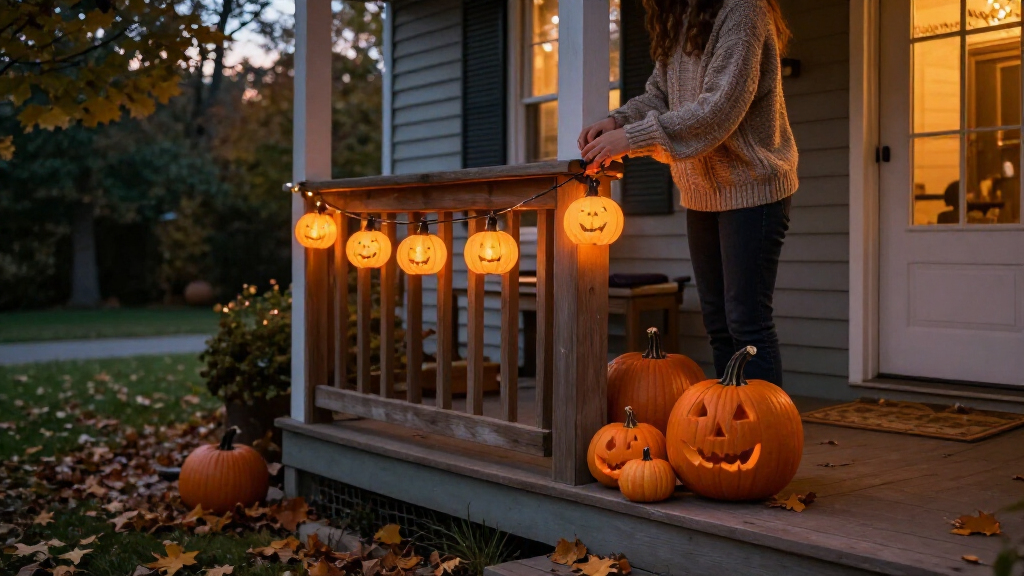
For instance, wrap orange lights around the rail, hang purple ghosts inside the window, then place a pumpkin near the door. The layered colors can feel like a small stage set, but the regular porch light keeps the steps visible. If the display still looks thin from the street, add another strand only if the product instructions allow the connection or provide a safe separate outlet.
When Halloween passes, switch the strand off, remove batteries where appropriate, and check for damage before storage. Put lights away dry, and coil them loosely to reduce tangles or crushed covers. That small bit of care can save time next October, when you’re ready to make the porch glow again.
Frequently Asked Questions
Can I use Halloween string lights outdoors?
Yes, if the strand is specifically rated for outdoor use. Check its instructions and make sure any plugs, connectors, and extension cords suit the conditions too.
Are LED Halloween lights better than incandescent ones?
LEDs generally use less electricity and produce less heat. Incandescent strands can suit a particular vintage look, so compare the product’s instructions and intended use before choosing.
How many lights do I need for a porch or window?
Measure the area, then compare it with the strand’s illuminated length and bulb spacing. A single loosely hung strand may look sparse, and the total length can include unlit cord.
Can I connect multiple Halloween light strands?
Only connect strands if the manufacturer says they are connectable, and stay within the stated limit. Similar-looking products may have different connection rules.
Do solar Halloween lights work under a covered porch?
They may work, but performance depends on how much daylight reaches the solar panel and on the product’s battery and weather. A shaded panel may provide less runtime after dusk.
Are Halloween string lights safe around children and pets?
Use the lights as directed, secure cords, and keep batteries or small detachable parts out of reach. Check the product’s age-related warnings and keep curious pets from chewing or tugging at the strand.
Conclusion
Choose lights for the space you have, check the product rating, and measure the illuminated length before you hang anything. A strand of purple bats can give your doorway a spooky edge, but it can’t make a dark step safe.
Let the novelty lights paint the scene, and give your guests a clear path to the door. Then when October ends, pack the glow away dry and ready for next year.