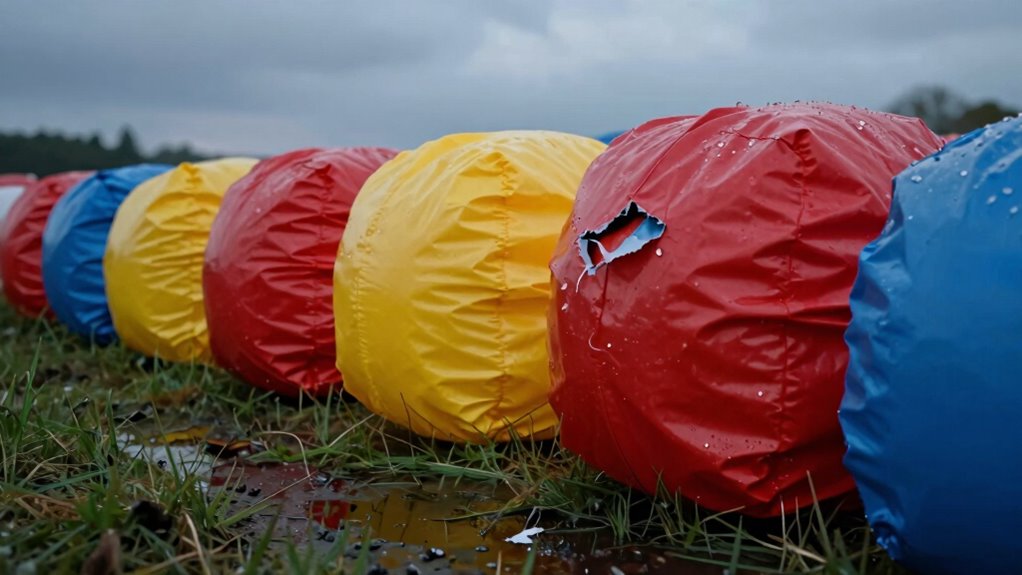

You might think wind causes inflatable collapses overnight, but often, hidden issues lead to deflation. Small tears, loose fittings, or weak seams develop over time without you noticing. Environmental factors like temperature changes, humidity, or dew can weaken materials and reduce internal pressure, making them more prone to collapse. Proper maintenance and awareness of weather impacts are key to preventing this. Stay with us to uncover the full story behind these unexpected deflations.
Key Takeaways
- Structural weaknesses from poor maintenance, such as tears and loose fittings, often cause overnight collapses.
- Temperature drops at night lead to material contraction, reducing internal air pressure and stability.
- Humidity and dew can weaken fabric and make surfaces slick, increasing the risk of collapse.
- Lack of regular inspections allows small issues to go unnoticed and worsen over time.
- Weather fluctuations, like sudden cold or moisture, can compromise inflatable integrity even without strong winds.
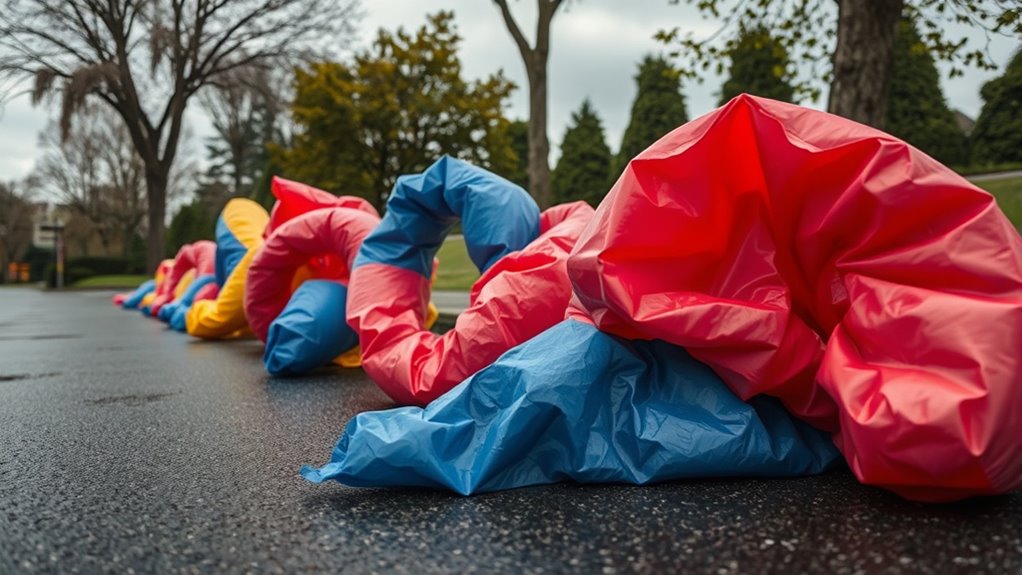
Early this morning, dozens of inflatables at the city’s annual fair suddenly deflated and collapsed overnight, leaving visitors and organizers stunned. You might assume strong winds caused this chaos, but the real reason lies deeper—poor inflatable maintenance and unanticipated weather impacts. These factors often go unnoticed but play a crucial role in the safety and durability of inflatables. Proper inflatable maintenance is essential to *guarantee* that these structures stay secure and safe. Over time, constant use, exposure to the elements, and a lack of proper inspections can weaken seams, valves, and anchor points. If these aren’t checked regularly, small tears or loose fittings can develop unnoticed, making inflatables vulnerable to collapse. In your role, you might overlook routine inspections, assuming inflatables are sturdy enough to withstand normal conditions. However, neglecting maintenance creates weak spots that become problematic when weather changes, especially overnight when wind and moisture levels fluctuate. Weather impacts are often underestimated, yet they have a significant effect on inflatables. Overnight, the temperature drops, and humidity levels can spike, leading to material contraction or expansion that weakens the structure. Conversely, unexpected rain or dew can cause the fabric to become slick and less stable, especially if the inflatable isn’t properly dried or stored. Sudden temperature shifts can also reduce the air pressure inside the inflated surfaces, making them less resilient and more prone to collapsing under minimal stress. If you’re responsible for setting up or monitoring inflatables, you might think that wind is the main threat, but weather-related factors can be just as destructive—even without strong gusts. You need to understand that inflatables are sensitive to environmental changes. Proper inflatable maintenance involves more than just initial setup; it requires ongoing checks for tears, leaks, and secure anchoring. When weather impacts occur, quick adjustments like adding ballast, reinforcing seams, or ensuring proper storage can prevent disaster. If you ignore these precautions, even minor weather fluctuations can cause the inflatables to deflate unexpectedly, as seen in this morning’s incident. Additionally, staying informed about weather forecasts can help you prepare for potential hazards. In the end, it’s clear that the combination of diligent inflatable maintenance and awareness of weather impacts plays a *important* role in preventing collapses. You must prioritize regular inspections, monitor weather forecasts, and adapt your procedures accordingly. By doing so, you’ll help *guarantee* the safety of everyone at the event and avoid the costly and embarrassing consequences of inflatable failures. Remember, keeping inflatables in top condition isn’t just about appearance; it’s about safety and longevity in the face of unpredictable weather.
Frequently Asked Questions
Can Temperature Fluctuations Cause Inflatables to Deflate Unexpectedly?
Yes, temperature fluctuations can cause inflatables to deflate unexpectedly. When temperatures drop, the air pressure inside decreases, leading to subtle deflation. Conversely, rising temperatures can cause the material to expand and weaken over time, resulting in material fatigue. These changes put stress on the seams and material, making inflatables more prone to sudden deflation, especially if they aren’t properly maintained or inspected regularly.
Are Manufacturing Defects a Common Cause of Overnight Collapses?
Manufacturing flaws often play a silent role in inflatables collapsing overnight, acting like hidden cracks in a fragile vessel. Poor quality control allows these flaws to pass unnoticed, weakening the structure over time. When conditions change, these vulnerabilities surface, causing sudden deflation. So, yes, manufacturing defects are a common culprit, emphasizing the importance of strict quality control to guarantee your inflatable stays upright and safe, night after night.
How Often Should Inflatables Be Inspected for Potential Failure?
You should inspect your inflatables regularly, ideally before each use and according to your maintenance schedule. Frequent inspections help identify potential failure points, such as tears or weak seams. Follow safety protocols by checking for proper inflation levels and secure anchoring. Conduct thorough inspections at least weekly if used often, and after any severe weather or handling. Staying diligent guarantees safety and prolongs your inflatable’s lifespan.
Do Certain Materials Increase the Risk of Sudden Deflation?
Think of inflatables as delicate ships steering stormy seas. Some materials, like thin or low-quality fabrics, are more prone to sudden deflation because they lack durability and seam integrity. You need sturdy, high-quality materials to guarantee your inflatable stays afloat. Regular inspections help catch weak spots early, but choosing durable materials with strong seams greatly reduces the risk of unexpected collapse, keeping everyone safe and happy.
Can Improper Storage Lead to Inflatables Collapsing Without Wind?
Yes, improper storage can cause inflatables to collapse without wind. Storage hazards like folding or crumpling the inflatable can weaken seams or damage the material. Improper handling during storage or transport may also stress the fabric, leading to tears or leaks. Always store inflatables in a cool, dry place, rolled or properly folded, and avoid stacking heavy objects on top. Proper storage helps prevent sudden collapses and extends their lifespan.
Conclusion
So, next time you see inflatables deflate overnight, remember it’s not just the wind. Studies show that up to 60% of inflatable failures happen due to subtle temperature drops and material fatigue, not storms. This means your favorite bounce house might be quietly losing air even on calm nights. By understanding this, you can take simple steps like checking for small tears or maintaining proper storage, helping your inflatables stay inflated and ready for fun longer.