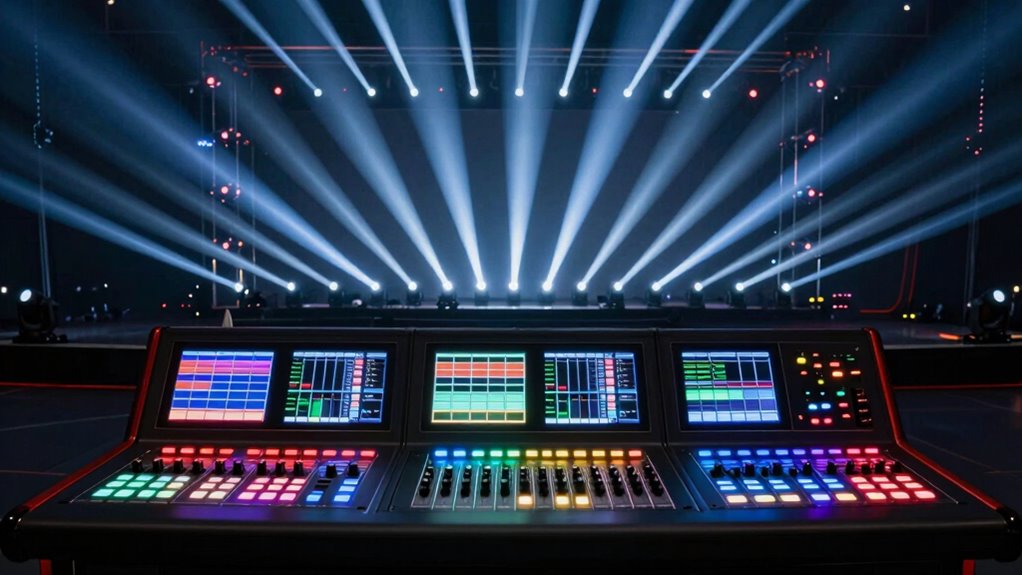

Picking the wrong moving head channel mode can cause confusion, miscontrol, and frustration when setting up or programming your fixtures. Each mode assigns functions differently to DMX channels, affecting how you access features like pan, tilt, color, or gobos. If you choose an incorrect mode, your controls won’t match your expectations, making adjustments difficult. Getting familiar with the correct modes guarantees your fixtures respond predictably. Keep exploring to access the full potential of your lighting setup.

Get decor and gifts delivered free with Prime
- Fast, free delivery on millions of items
- Prime Video, Amazon Music and more included
- Member-only deals all year
Key Takeaways
- Choosing the incorrect channel mode causes features like pan, tilt, or color to respond unexpectedly.
- Misunderstanding mode functions leads to programming errors and inconsistent lighting effects.
- Selecting the wrong mode complicates fixture calibration, reducing control accuracy.
- Different modes assign functions differently, making mode mismatch confusing during operation.
- Proper knowledge of DMX protocol and fixture documentation prevents mode-related control issues.
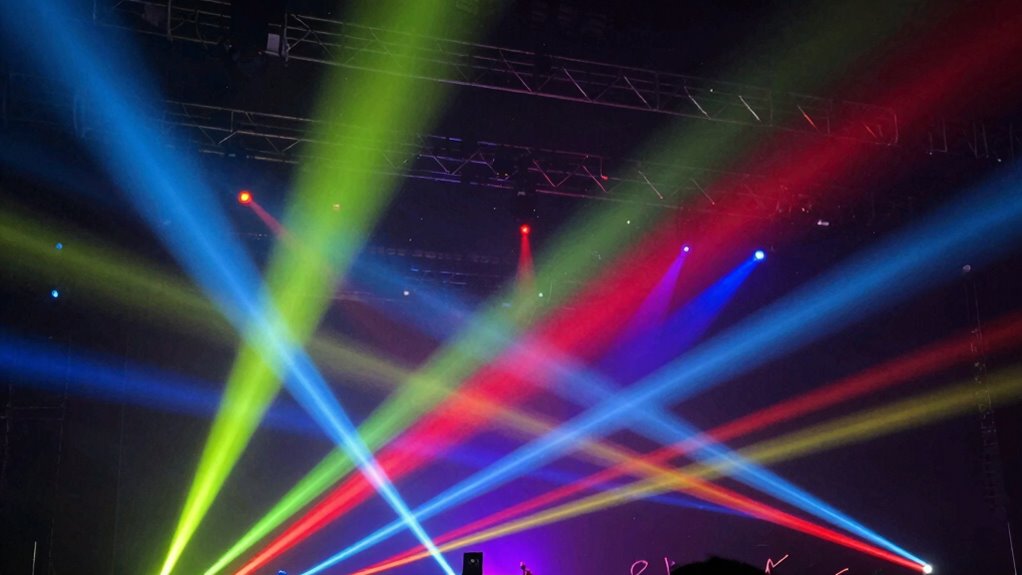
Moving head fixtures are versatile lighting tools that can be programmed to create dynamic effects, and understanding their channel modes is essential for effective control. When you’re working with these fixtures, you’ll quickly find that selecting the right channel mode makes all the difference in achieving the desired look. Each mode determines how the fixture interprets DMX signals, which are transmitted via the DMX protocol—an industry standard for lighting control. If you pick the wrong mode or don’t fully grasp how these modes function, you’ll likely end up confused, frustrated, and unable to produce consistent results.
Choosing the right channel mode is key to reliable and precise moving head lighting control.
Lighting calibration plays a crucial role here. Proper calibration ensures that the fixture responds predictably to DMX commands, regardless of the channel mode in use. Without calibration, the fixture might interpret signals differently, leading to unexpected movement, color changes, or effects. When you understand how the fixture’s channel modes correlate with your lighting setup, you can fine-tune your calibration to match your specific needs. This alignment simplifies your programming process and allows for more precise control over the fixture’s parameters.
Each channel mode, whether it’s mode 1, mode 2, or more complex configurations, assigns different functions to the DMX channels. For example, one mode might dedicate channels to pan and tilt, while another includes additional channels for color, gobo selection, or focus. If you’re unfamiliar with these differences, it’s easy to get lost. You might think you’re controlling one aspect of the fixture, but in reality, you’re adjusting something entirely different because of the mode you selected. This confusion can cause inconsistent effects and make troubleshooting a nightmare.
To avoid this, it’s essential to understand the DMX protocol’s structure and how each channel mode maps to the fixture’s features. Reading the manufacturer’s documentation helps clarify what each mode does and how to set your fixture accordingly. When you select the correct mode and calibrate your fixture properly, you’ll find it’s much easier to program complex, synchronized effects. You’ll spend less time guessing and more time creating stunning lighting displays.
In addition, familiarizing yourself with lighting calibration principles ensures that your fixture responds accurately across different modes and setups. When you understand how calibration impacts your fixture’s interpretation of DMX signals, you can troubleshoot issues more effectively and avoid unnecessary frustration. A thorough knowledge of DMX protocol structure can also help you optimize your lighting system for better performance. When you select the correct mode and calibrate your fixture properly, you’ll find it’s much easier to program complex, synchronized effects. You’ll spend less time guessing and more time creating stunning lighting displays.
In the end, mastering the channel modes of your moving head fixtures requires attention to detail and a clear understanding of lighting calibration principles. That way, you ensure your DMX signals are interpreted correctly, giving you reliable control over your lighting effects. Picking the wrong mode doesn’t just cause confusion; it can derail your entire lighting design. So, take the time to learn how each mode works, calibrate your fixtures properly, and enjoy a smoother, more predictable lighting experience.
moving head lighting fixture DMX controller
As an affiliate, we earn on qualifying purchases.
As an affiliate, we earn on qualifying purchases.
Frequently Asked Questions
How Do Channel Modes Affect the Overall Lighting Design?
Channel modes directly impact your lighting design by controlling color mixing and beam shaping. When you select the right mode, you can seamlessly blend colors and shape beams to create dynamic effects. However, choosing the wrong mode can cause confusion, making it difficult to achieve your desired look. Understanding how each mode affects these features helps you craft cohesive, visually stunning lighting that enhances your overall design.
Can Channel Modes Be Changed Mid-Show?
Yes, you can change channel modes mid-show by using DMX addressing and mode switching features. Just make sure you’re aware of the fixture’s capabilities and how to reprogram it safely. Switching modes during a performance allows you to adapt lighting effects on the fly, but be cautious—incorrect mode switching can cause confusion or unintended effects. Always test changes beforehand to guarantee smooth transitions during your show.
What Is the Most Commonly Used Channel Mode?
Think of your moving head as a painter’s palette—the most common mode is the Channel Mode 7, which offers the broadest control for color mixing and beam shaping. It acts like a master artist, allowing you to blend colors and shape beams seamlessly. This mode simplifies complex effects and is versatile for most performances, making it the go-to choice for lighting designers aiming for dynamic, vibrant shows.
Are There Any Compatibility Issues With Different Moving Head Brands?
Yes, there can be compatibility issues between different moving head brands. You might face problems with brand compatibility, especially if devices use different protocols or control standards. Firmware updates are essential here; they can improve compatibility and fix bugs. Always verify your fixtures have the latest firmware and check if the brand recommends specific DMX settings or modes. This helps prevent confusion and ensures smooth operation across various brands.
How Do I Troubleshoot if My Moving Head Isn’t Responding Correctly?
If your moving head isn’t responding correctly, start by checking your DMX addressing to make certain it’s set correctly for your control board. Next, perform fixture calibration to confirm the device operates smoothly. Verify all DMX cables are secure and functioning properly. Reset the fixture if needed, and consult the manual for specific troubleshooting steps. Adjust settings carefully, and test again to see if the response improves.
Conclusion
Choosing the right moving head channel mode is like steering a ship—one wrong turn can leave you lost in a sea of confusion. Don’t let complexity sink your confidence; instead, master these modes to navigate your lighting with ease. Remember, understanding the correct mode transforms chaos into clarity, turning your lighting setup from a puzzle into a masterpiece. So, make the right choice, and let your creativity shine—because in the world of lighting, knowledge is your brightest tool.
Halloween Picks
halloween
As an affiliate, we earn on qualifying purchases.