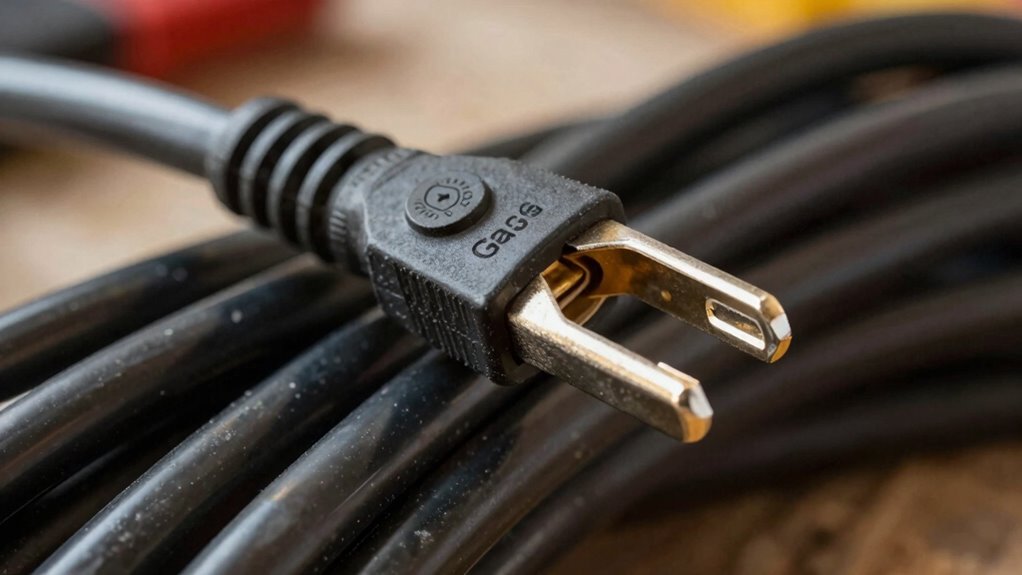

Choosing the right extension cord gauge is essential to prevent overheating and protect your devices. Thicker wires (like 14 or 16 AWG) handle higher currents, making them suitable for heavy-duty or outdoor use, while thinner ones (such as 18 or 20 AWG) work for light tasks. Using an inadequate gauge can cause heat buildup and potential fires. Knowing how gauge affects safety helps you pick the right cord; if you want to learn more, keep exploring.

Get decor and gifts delivered free with Prime
- Fast, free delivery on millions of items
- Prime Video, Amazon Music and more included
- Member-only deals all year
Key Takeaways
- Thicker gauges (e.g., 14 or 16 AWG) handle higher current, reducing risk of overheating and damage.
- Thinner gauges (e.g., 18 or 20 AWG) are suitable for light loads but can melt under heavy use.
- Always match the cord gauge to your device’s power needs to prevent overheating.
- Using an undersized gauge for heavy-duty tasks increases fire risk and equipment damage.
- Check labels for gauge ratings to ensure safety and proper performance for your application.

When choosing an extension cord, understanding its gauge is vital for safety and performance. The gauge, which indicates the thickness of the wire inside the cord, directly impacts how much electrical current the cord can safely carry. If you pick a cord with too thin a wire for your needs, you risk overheating, which can lead to melting, fires, or damage to your equipment. Conversely, a thicker gauge provides a higher capacity for power, guaranteeing your devices run smoothly without the risk of electrical failures. Knowing the right gauge helps you follow proper electrical standards and maintain cord safety, preventing accidents and equipment damage. The most common way to measure a cord’s gauge is by its American Wire Gauge (AWG) size. Smaller numbers, like 16 or 14 AWG, mean thicker wires capable of handling more current, making them suitable for heavy-duty appliances or outdoor use. Larger numbers, such as 18 or 20 AWG, indicate thinner wires designed for lighter tasks, like powering small lamps or electronic devices. If you’re unsure about the power needs of your tools or appliances, always opt for a thicker gauge to provide a margin of safety and performance. Using an extension cord with an inadequate gauge can lead to voltage drops, which reduce the efficiency of your devices and can cause overheating. Properly understanding electrical standards and selecting the correct gauge ensures safe operation and helps prevent potential hazards. Electrical standards set the minimum requirements for safe cord use, and adhering to these standards guarantees you avoid hazards. For example, outdoor extension cords must meet specific weather-resistant standards and have appropriate insulation to withstand the elements. Indoor cords, on the other hand, typically have less rugged insulation but still need to meet safety guidelines. Always check the cord’s labeling to confirm it complies with electrical standards, and avoid improvising with makeshift or damaged cords. Using cords that meet proper standards guarantees safety and reduces the risk of electrical shock or fire. Cord safety isn’t just about choosing the right gauge; it also involves proper usage. Never overload a cord beyond its rated capacity, avoid running cords under rugs or furniture where heat can build up, and inspect cords regularly for signs of wear or damage. Proper storage and careful handling prolong the life of your extension cords and keep your environment safe. Additionally, understanding the importance of insulation is crucial because it protects against electrical shock and environmental damage. Regularly inspecting your cords for proper insulation helps prevent potential hazards and prolongs their usability. Being aware of insulation quality can help you select cords that are more durable and suitable for your specific environment, especially if used outdoors.
Popular right now

Breville Barista Express Espresso Machine with Built-In Grinder, Black Truffle

Sony WH-1000XM6 Wireless Noise-Canceling Headphones, Black

Vitamix Propel Series 510 Professional-Grade Blender, Black
As an affiliate, we earn on qualifying purchases.
Frequently Asked Questions
How Do I Choose the Right Extension Cord Gauge for Outdoor Use?
To choose the right extension cord gauge for outdoor use, consider your power needs and safety. For heavy-duty tools or long distances, opt for a lower gauge number like 12 or 10, which handle more current safely. Use a gauge comparison chart to match your equipment’s wattage to the appropriate gauge. Always prioritize cord safety by selecting a weather-resistant, heavy-duty cord to prevent overheating and guarantee reliable outdoor performance.
Can Using a Lower Gauge Extension Cord Cause Electrical Fires?
Using a lower gauge extension cord can increase the risk of electrical fires if it’s not rated for your device’s power needs. It compromises extension cord safety because thinner wires may overheat during heavy use. To prevent electrical fires, always choose the right gauge for your equipment, verify cords are in good condition, and don’t overload them. Proper extension cord selection is key to electrical fire prevention and safe outdoor use.
What Is the Maximum Wattage My Extension Cord Can Handle?
Think of your extension cord as a highway for electricity—its maximum wattage is like the speed limit. Typically, a standard 16-gauge cord handles up to 1,600 watts, while a 14-gauge can support around 2,400 watts. For cord safety and to avoid overloads, always check the power capacity marked on the cord or packaging. Staying within these limits keeps your devices safe and prevents dangerous electrical fires.
How Often Should I Replace an Extension Cord Based on Gauge?
You should replace your extension cord if it shows signs of damage, fraying, or overheating, regardless of gauge. For maximum cord safety and electrical ratings, check its age; typically, replace cords every 3 to 5 years. Over time, insulation can degrade, risking electrical hazards. Regularly inspecting and replacing worn cords ensures safe power delivery, prevents fires, and maintains proper electrical ratings for your devices and home safety.
Are There Specific Gauges Recommended for High-Power Tools?
For high-power tools, you should opt for a thicker cord—typically a 10 or 12-gauge—like a strong rope capable of handling heavy loads without overheating. This guarantees cord safety and prevents melting or damage. Think of the gauge comparison as a ladder; the lower the number, the thicker the cord, providing the necessary power flow. Always choose the right gauge to keep your tools running smoothly and safely.
Conclusion
Think of choosing the right extension cord gauge like steering a ship through treacherous waters—you need the proper size to avoid dangerous overheating or damage. Just as a seasoned sailor respects the power of the sea, you must respect the flow of electricity. Picking the correct gauge keeps your devices safe and your home protected, ensuring you’re not caught in a storm of melted wires or short circuits. Stay vigilant, and navigate safely with the right cord gauge.