To create surround sound outdoors without fancy gear, position your speakers at ear level or slightly above, spaced evenly around your space, and angled toward your listeners. Elevate them on stands or mounts to maximize projection and avoid sound absorption. Avoid placing speakers behind large objects or on the ground. Fine-tune volume and EQ to balance the sound and reduce echoes. For more tips on perfect placement and setup, keep exploring how to optimize your outdoor audio experience.
Key Takeaways
- Position speakers at ear level and evenly around the area for uniform sound coverage.
- Elevate speakers on stands or mounts to maximize projection and minimize sound absorption.
- Use strategic placement to avoid reflections and obstacles that cause echoes or dead zones.
- Calibrate volume and EQ settings based on measured sound levels for balanced outdoor audio.
- Incorporate barriers or sound-absorbing materials to contain sound and reduce disturbances.
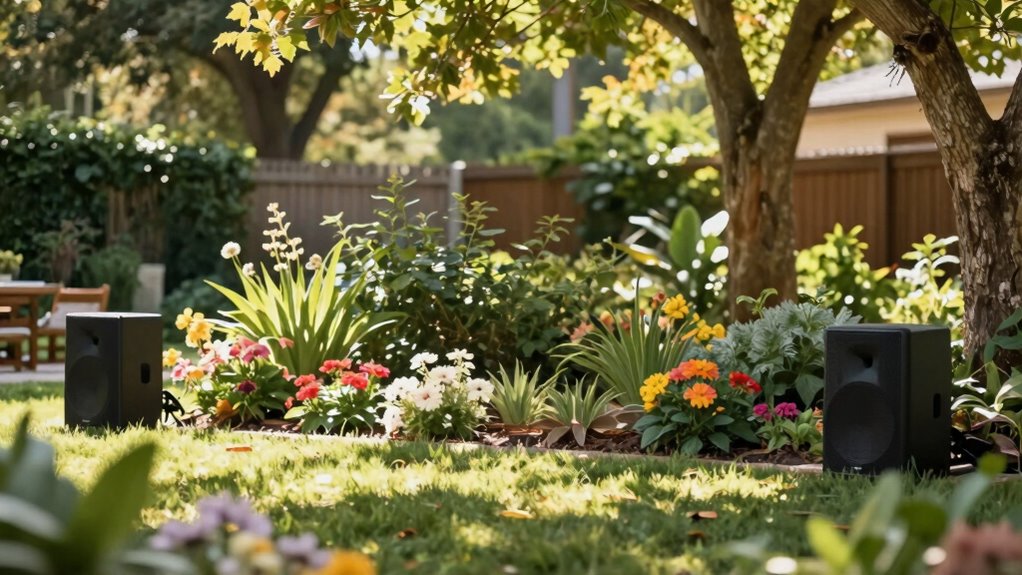
When placing speakers outdoors, the right positioning can make all the difference in sound quality and coverage. You want your music or audio to fill the space evenly without creating dead zones or overly loud spots. To achieve this, understanding how sound absorption influences outdoor environments is essential. Unlike indoor spaces, where walls and furniture absorb sound, open-air settings allow sound waves to travel freely, often causing echoes or uneven distribution. By positioning your speakers thoughtfully, you can minimize these issues and guarantee clearer, more balanced sound.
Speaker calibration plays a key role in this process. Once you’ve selected the ideal spots, you should fine-tune your speakers to optimize sound levels and clarity. Calibration involves adjusting volume and equalization settings so that the audio remains consistent across the entire area. When calibrated properly, your outdoor setup will sound natural and immersive, as if the music is coming from a single, seamless source. This step is especially important if you’re using multiple speakers for surround sound effects or party music, making sure that each speaker complements the others rather than competing or creating distortion.
Calibrate your outdoor speakers for balanced, natural sound and seamless audio experience.
To get started, consider placing your speakers at ear level or slightly above, angled toward the listening area. This positioning helps focus sound waves where you want them, reducing sound absorption by nearby objects like trees, bushes, or furniture. Keep in mind that open spaces tend to scatter sound, so spacing your speakers evenly around the area creates a more uniform coverage. Avoid placing speakers directly on the ground or behind large objects, as these can absorb or block sound, diminishing clarity and volume. Instead, elevate them on sturdy stands or mounts to prevent sound absorption by surrounding surfaces and to maximize projection. Additionally, sound reflection from nearby surfaces can impact clarity, so being mindful of their placement can improve overall sound quality. Properly considering sound absorption factors during setup can also help in reducing unwanted echoes and enhancing the listening experience. Moreover, using sound-absorbing materials in strategic locations can further improve sound quality by minimizing reflective surfaces that cause distortion.
Furthermore, using soundproofing techniques such as outdoor rugs or barriers can help contain the sound and prevent it from disturbing neighbors, ensuring a more enjoyable experience for everyone. Once your speakers are in place, take the time to calibrate them. Use a sound level meter or a smartphone app to measure volume levels at different points in your outdoor space. Adjust each speaker’s volume and EQ settings until the sound feels balanced and natural throughout the area. Remember that outdoor environments can sometimes produce unwanted echoes, so paying attention to speaker placement can help reduce this issue. This process might take some trial and error, but it’s worth it for a seamless listening experience. Remember, the key to great outdoor sound isn’t just about the quality of your speakers but also how well you position and calibrate them. When you pay attention to sound absorption factors and fine-tune your setup, you’ll create an outdoor audio environment that rivals indoor surround sound—without any fancy gear needed.
Frequently Asked Questions
How Do Outdoor Weather Conditions Affect Speaker Placement?
Weather conditions markedly affect your speaker placement outdoors. You should choose speakers made from weatherproof materials to withstand rain, snow, and sun exposure. Position them to optimize sound dispersion while protecting them from harsh elements. Avoid placing speakers directly on the ground or in low spots prone to water pooling. Proper placement guarantees durability and maintains sound quality, even during unpredictable weather, so your outdoor sound experience remains clear and consistent.
What Are the Best Speaker Types for Outdoor Use?
You should choose weather-resistant speakers designed for outdoor use, preferably wireless ones for easy placement and minimal clutter. Look for models with waterproof or water-resistant ratings, like IPX4 or higher, to withstand rain and humidity. Consider power source options such as rechargeable batteries or solar power, which give you flexibility. Wireless connectivity guarantees seamless streaming from your devices, while durable construction helps your speakers endure outdoor elements for consistent, quality sound.
How Far Apart Should Outdoor Speakers Be Placed?
You should space outdoor speakers about 8 to 10 feet apart to achieve ideal sound dispersion and surround effect. Don’t worry if your yard is uneven—adjust the speaker height to match the terrain. Proper placement ensures even sound coverage, so everyone enjoys clear audio without dead spots. When you position your speakers thoughtfully, you’ll create an immersive outdoor experience that feels like a private concert, no fancy gear needed.
Can Existing Indoor Speakers Be Used Outdoors Effectively?
Yes, you can use existing indoor speakers outdoors, but they might not perform at their best. Indoor acoustics differ from outdoor environments, so you’ll need to account for sound reflections and open space. Proper speaker calibration helps, adjusting volume and EQ settings to improve outdoor sound quality. Consider placing speakers in weather-resistant enclosures and avoiding direct exposure to elements, ensuring they deliver the best possible outdoor audio experience.
How Do I Prevent Outdoor Speakers From Theft or Vandalism?
Think of your outdoor speakers as treasures needing protection. To prevent theft or vandalism, implement security measures like sturdy enclosures, lockable mounts, or disguised placement. Use theft prevention devices such as security cables or alarmed mounts. Additionally, position speakers in less obvious spots and install cameras nearby. These steps not only safeguard your investment but also deter potential troublemakers, ensuring your outdoor sound experience remains uninterrupted and secure.
Conclusion
By strategically placing your outdoor speakers, you can create a surround sound experience that transforms your space. Imagine hearing every note clearly from every corner—almost like being at a concert. Did you know that perfect speaker placement can improve sound quality by up to 50%? So, take your time, experiment with positions, and enjoy a richer, more immersive outdoor soundscape—no fancy gear required. Your next gathering will sound as good as it feels!