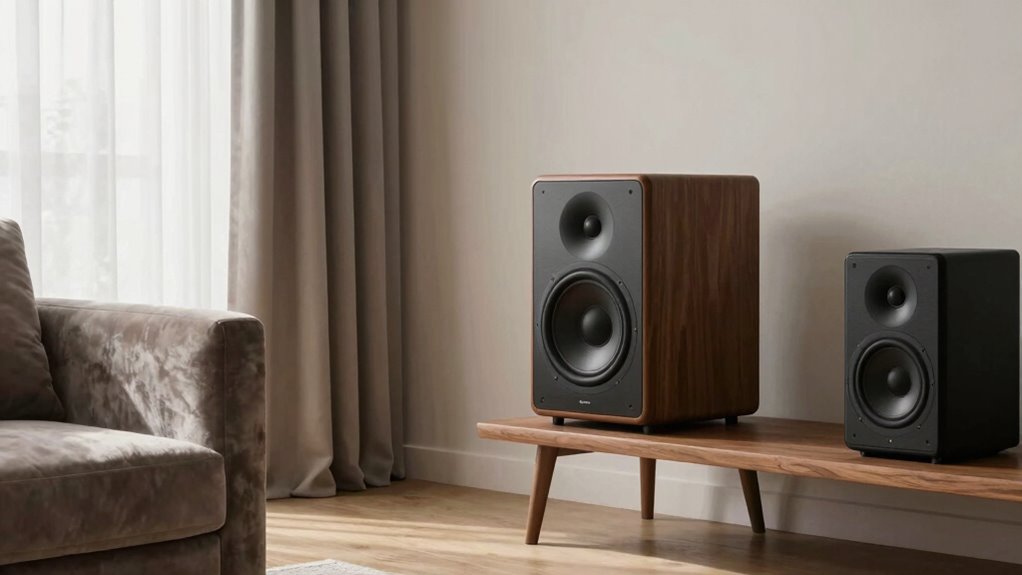

Proper speaker placement makes a bigger difference in sound quality than cranking up the volume. When you position your speakers thoughtfully—at ear level, away from reflective surfaces, and with balanced distance from walls—you reduce unwanted echoes and muddy sounds. Symmetrical setup and optimizing height improve clarity and imaging. Instead of just increasing volume, focus on placement tweaks for richer, clearer audio. Keep exploring, and you’ll discover simple ways to transform your listening experience effortlessly.
Key Takeaways
- Proper speaker placement has a greater impact on sound clarity than simply increasing volume.
- Position speakers so that tweeters are at ear level for optimal sound balance.
- Use soft furnishings and avoid reflective surfaces to reduce echoes and improve audio quality.
- Maintain symmetry and appropriate distance from walls to enhance stereo imaging and bass control.
- Focus on fine-tuning placement and room acoustics for richer, clearer sound without extra cost.
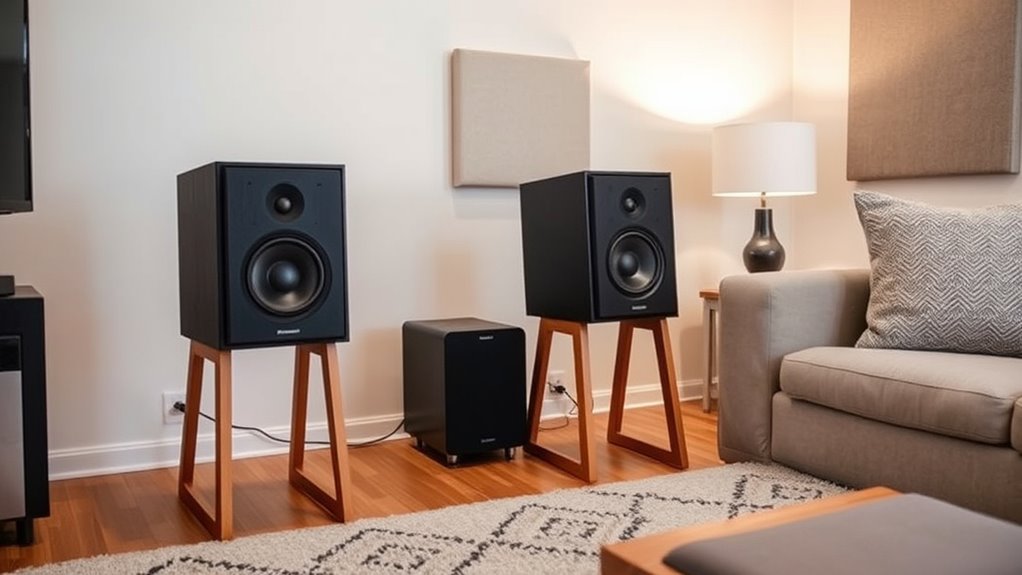
Ever wondered how to optimize your room’s sound quality without spending a fortune? It all starts with understanding that speaker placement is more critical than volume. The way you position your speakers dramatically influences how sound interacts with your room’s acoustics. A common mistake is cranking up the volume to compensate for poor positioning, but that often just amplifies unwanted reflections and muddles the sound. Instead, focus on where you place your speakers, especially considering factors like speaker height and room acoustics.
Optimizing sound starts with proper speaker placement, not volume—focus on height and room acoustics for clearer, richer audio.
Speaker height matters because sound waves travel differently at various elevations. If your speakers are too low or too high, you risk creating an imbalance where certain frequencies dominate or get lost. Ideally, your speakers should be positioned so that the tweeters are roughly at ear level when you’re seated. This height ensures direct sound reaches your ears with minimal reflections, allowing you to experience a clearer, more accurate soundstage. Adjusting speaker height is a simple yet effective step; using stands or wall mounts can help you achieve the perfect elevation.
Room acoustics play a crucial role in sound quality as well. Hard surfaces like glass, tile, and drywall reflect sound waves, causing echoes and muddiness. Soft furnishings such as rugs, curtains, and upholstered furniture absorb excess reflections, improving clarity. When placing your speakers, avoid positioning them directly against reflective surfaces. Instead, aim for a spot where sound can bounce minimally or be absorbed, creating a balanced environment. Additionally, the shape and size of your room influence how sound travels. Small, square rooms tend to produce standing waves and bass booms, so strategically placing speakers away from corners can help mitigate these issues.
Beyond height and room acoustics, consider symmetry in your setup. Placing speakers equidistant from the listening position and from each other creates a natural stereo image. Experiment with angles and distances—generally, about 1.5 to 2 times the distance from your ears to the speakers is a good starting point. Keep in mind that closeness to walls can boost bass but also cause boomy sounds, so find a balance that enhances clarity without overwhelming low frequencies.
Ultimately, optimizing your speaker placement isn’t about brute volume but about fine-tuning position and environment. By paying attention to speaker height and managing room acoustics, you’ll unlock richer, more balanced sound. This simple focus on placement makes a world of difference, giving you a listening experience that’s both immersive and precise—without breaking the bank.

Haunted Hill Farm Soul Sucker Demon Reaper with Child by Tekky, Motion-Activated Talking Halloween Animatronic for Creepy Indoor or Covered Outdoor Halloween Decorations, Plug-in or Battery Operated
Premium Life-size Animatronic: Soul Sucker is perfect for indoors or a covered outdoor area so place our evil...
As an affiliate, we earn on qualifying purchases.
Frequently Asked Questions
How Do Room Acoustics Affect Speaker Placement?
Room acoustics greatly influence your speaker placement because they affect sound absorption and echo control. When you position speakers, consider how sound waves bounce off walls and furniture, creating echoes or dead spots. By placing speakers away from reflective surfaces and adding sound absorption materials, you improve clarity. Proper placement minimizes echo and optimizes sound quality, making your listening experience richer and more accurate.
Can Furniture Placement Impact Sound Quality?
Yes, furniture placement can impact sound quality by affecting how sound waves travel and reflect in your space. Strategic placement of decorative acoustics can help manage echoes and improve clarity. Keep in mind that speaker aesthetics matter too; choosing furniture that complements your speakers can enhance both sound and style. Moving furniture away from speakers or adding soft furnishings can make a noticeable difference in your listening experience.
What Tools Are Best for Measuring Sound Dispersion?
To measure sound dispersion effectively, you need tools that reveal how sound level varies with speaker orientation. Use a sound level meter to detect changes in volume at different angles, ensuring ideal speaker placement. Laser distance meters can help with precise positioning. These tools let you fine-tune speaker angles, creating a balanced, immersive sound experience where every note hits just right—secrets that make all the difference.
How Does Speaker Height Influence Audio Experience?
You should pay close attention to speaker height because it directly impacts your listening experience. Position the speakers so their tweeters are roughly at your ear level when you’re in your usual listener position. This ensures clear sound and balanced dispersion. If speakers are too high or low, you might miss out on details or experience uneven sound. Adjusting speaker height helps create a more immersive and accurate audio environment tailored to your listener position.
Are There Universal Speaker Placement Guidelines?
You might think there are universal speaker placement rules, but don’t be fooled. To get the best sound, focus on speaker symmetry and angling—aim for equal distance from your listening spot and angle your speakers toward you. Positioning matters more than volume, so experiment with placement until the sound feels balanced and immersive. Remember, even the best speakers can underperform if they’re not properly aligned.

Spirit Halloween 4 Ft 6 In Scary Sitting Scarecrow Animatronic, Multicolor
Bring any Halloween display to life by adding this Scary Sitting Scarecrow Animatronic to your home decor. This...
As an affiliate, we earn on qualifying purchases.
Conclusion
So, the next time you set up your speakers, remember that placement outweighs volume in shaping your sound experience. Don’t just blast your music and hope for the best—consider how positioning affects clarity and immersion. After all, isn’t the goal to create a space where every note feels just right? Paying attention to placement transforms your listening from okay to extraordinary. Are you ready to prioritize placement and truly elevate your sound?
Haunted Hill Farm 4.4-Ft Animatronic Impaled Zombie, Halloween Animatronic, Creepy Party Decoration, Spooky Décor, Macabre Gift for Horror Movie Lovers, Voice-Activated Lights & Sound, Life-Size
Premium Life-Size Animatronic: Frighten guests and trick-or-treaters with this premium quality spine-chilling Halloween decoration
As an affiliate, we earn on qualifying purchases.

LarpGears Outdoor Halloween Skeleton Decorations, 7.8Ft Flying Rotated Skull Reaper Ghost Scarecrow Decorations for Garden, Porch, Yard
High-Quality Halloween Animatronics: This Halloween prop features animated motion, creating a spine-tingling effect as the reaper ghost appears...
As an affiliate, we earn on qualifying purchases.