

To prevent splash and failure when using ultrasonic mist in cauldrons, make certain your device is properly calibrated for the specific size and material. Keep the water level consistent and use high-quality, mineral-free water to avoid buildup. Position the mist outlet carefully to direct mist into the target area, and manage airflow to prevent turbulence. Regular maintenance and adjustments are vital for reliable operation—if you want to discover more tips, keep exploring this topic.

Get decor and gifts delivered free with Prime
- Fast, free delivery on millions of items
- Prime Video, Amazon Music and more included
- Member-only deals all year
Key Takeaways
- Properly calibrate the ultrasonic device for cauldron size and material to ensure optimal mist particle size.
- Maintain correct water levels, avoiding overfilling or underfilling to prevent splashing and equipment damage.
- Position mist outlets accurately into the target area, minimizing turbulent airflow and splashing risks.
- Use diffusers or baffles to control airflow and promote smooth, even mist dispersion.
- Regularly check water quality and perform maintenance to prevent mineral buildup and ensure consistent operation.
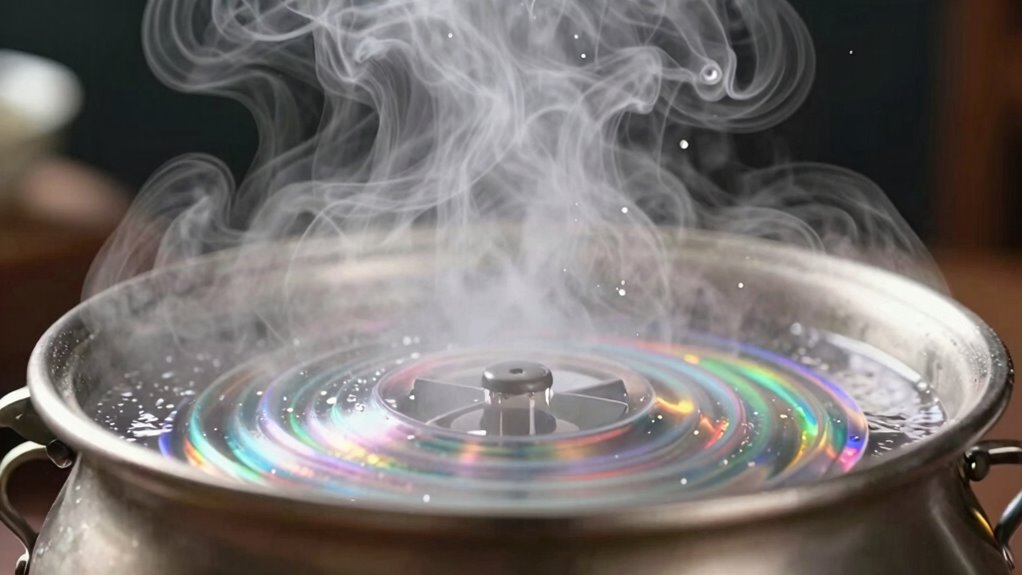
Ultrasonic mist technology has revolutionized the way we generate fog and vapor in cauldrons, offering a safer and more efficient alternative to traditional methods. This technology uses high-frequency sound waves to produce a fine mist, making the process cleaner and more controllable. When operating ultrasonic devices, your primary goal is to achieve consistent mist dispersion, which guarantees even fog production without splash or failure. To do this effectively, you need to understand the role of ultrasonic frequency. The ultrasonic frequency determines the size of the mist particles—higher frequencies produce finer mist, which disperses more evenly, while lower frequencies may result in larger droplets that are prone to splashing or uneven distribution.
When setting up your ultrasonic mist generator, confirm the device is calibrated correctly for your specific cauldron size and material. An improper frequency setting can cause the mist to either be too coarse or too fine, both of which risk splash or uneven evaporation. You should also verify that the mist chamber is filled with the right amount of water or solution. Overfilling can cause excess mist that splashes outside the cauldron, while underfilling might lead to dry operation, damaging the ultrasonic transducer. Maintaining a consistent water level guarantees stable mist dispersion and prevents system failures. Additionally, maintaining proper water quality can significantly extend the lifespan of your ultrasonic mist device. Regularly checking and replacing water to prevent mineral buildup is an important maintenance step to ensure optimal performance. Proper calibration of your ultrasonic device is essential for maintaining consistent mist quality and avoiding operational issues.
Another key to avoiding splash is controlling the flow rate and positioning of the mist output. Position the mist outlet so that it disperses directly into the desired area, avoiding turbulent airflow that can cause splashing. Adjust the airflow or ventilation around your setup to promote smooth, gentle mist spread. If your mist tends to splash, consider installing a diffuser or baffle to break up turbulent air currents and guide the mist more evenly. Additionally, understanding the importance of ultrasonic frequency in optimizing mist quality is essential for consistent results. Proper maintenance practices can also extend the lifespan of your ultrasonic mist generator and prevent failures.
ultrasonic mist generator for cauldrons
As an affiliate, we earn on qualifying purchases.
As an affiliate, we earn on qualifying purchases.
Frequently Asked Questions
Can Ultrasonic Mist Damage Sensitive Ingredients in the Cauldron?
Yes, ultrasonic mist can potentially cause ultrasonic damage to sensitive ingredients if the mist’s intensity is too high or if the ingredients are particularly delicate. To prevent this, you should control the ultrasonic frequency and power, ensuring gentle misting. Monitoring ingredient sensitivity and adjusting parameters accordingly helps preserve the integrity of fragile components, avoiding ultrasonic damage and ensuring your ingredients remain effective and intact during processing.
What Is the Ideal Water Level for Ultrasonic Mist Systems?
Think of your ultrasonic mist system like a finely tuned orchestra; the water level calibration is the conductor’s baton. Keep the water just below the transducer’s surface for mist consistency and ideal operation. Too high, and you risk splash; too low, the system struggles. Regularly check and adjust the water level to guarantee steady, even mist production, safeguarding your ingredients and maintaining a harmonious process.
How Often Should Ultrasonic Transducers Be Cleaned?
You should clean your ultrasonic transducers at least once a month to guarantee ideal transducer maintenance and prevent buildup that can cause splash or failure. Regular cleaning removes mineral deposits and debris, maintaining mist quality. If you notice a decline in mist production or inconsistent fog, increase cleaning frequency. Use appropriate cleaning solutions and gentle tools to avoid damaging the transducers, keeping your ultrasonic mist system running smoothly.
Are There Safety Concerns With Ultrasonic Mist in Enclosed Spaces?
Yes, there are safety concerns with ultrasonic mist in enclosed spaces. You should prioritize proper ventilation safety to prevent inhaling ultrasonic emissions, which can be harmful over time. Ensuring good airflow reduces the risk of airborne particles accumulating, protecting your health. Always operate ultrasonic devices in well-ventilated areas, and consider using protective equipment if necessary, to minimize exposure to ultrasonic emissions and maintain a safe environment.
Can Ultrasonic Mist Be Used With Hot Liquids Without Failure?
Think of ultrasonic mist as a delicate dance partner—hot liquids can be tricky. Yes, ultrasonic mist can be used with hot liquids, but you must prioritize hot liquid compatibility and ultrasonic failure prevention. Use specialized equipment designed for high temperatures, maintain proper water levels, and avoid sudden temperature changes. These steps help prevent ultrasonic failure, ensuring your misting process remains smooth and safe, even with hot liquids.
Conclusion
Think of managing ultrasonic mist in cauldrons as tending a delicate garden. When you carefully control the water levels and monitor the vibrations, you prevent unwanted splashes and failures—like nurturing fragile blooms to bloom fully. Avoid rushing the process; patience is your best tool. With steady hands and mindful attention, you’ll cultivate a harmonious environment where the mist dances gracefully, ensuring your cauldron’s magic thrives without chaos.
Halloween Picks
halloween
As an affiliate, we earn on qualifying purchases.