
To keep outdoor electronics safe during rainy seasons, you should seal gaps around doors and windows using weatherproof materials like foam tape, rubber gaskets, or silicone sealant. Clean surfaces first, measure gaps accurately, and press or apply the seals firmly for a tight fit. Regularly check and reapply seals as needed to prevent water from seeping in. Keep your electronics protected and long-lasting—discover more tips on effective DIY weather sealing below.
Key Takeaways
- Use weatherstripping or foam tape around doors and windows to prevent rainwater intrusion near outdoor electronics.
- Clean and dry surfaces thoroughly before applying sealants for optimal adhesion and durability.
- Choose appropriate seal materials like silicone sealant or rubber gaskets based on gap size and weather conditions.
- Regularly inspect and reapply seals after storms or seasonal changes to maintain protection.
- Proper sealing enhances electronics’ lifespan, prevents moisture damage, and improves overall home energy efficiency.
Have you ever noticed drafts sneaking in around your doors and windows? If so, you’re not alone. During rainy seasons, these tiny gaps can let in more than just chilly air—they can also allow water to seep into your home, risking damage to your outdoor electronics and appliances. That’s where DIY weather seals come into play. By sealing these gaps effectively, you can safeguard your outdoor gadgets from moisture and extend their lifespan.
Sealing gaps around doors and windows protects outdoor electronics from moisture damage.
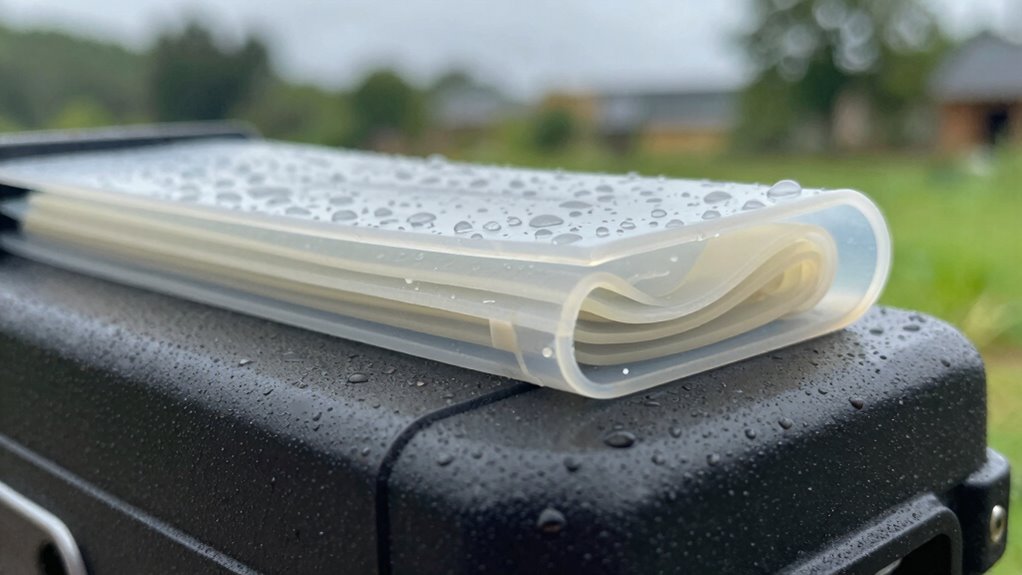
The first step is choosing the right seal materials. You have several options, including foam tape, rubber gaskets, silicone sealant, and weatherstripping. Foam tape is affordable and easy to apply, making it a popular choice for beginners. Rubber gaskets provide a tighter seal and are more durable, ideal for areas exposed to heavy rain. Silicone sealant is flexible and waterproof, perfect for sealing around irregular gaps or joints. When selecting your seal materials, consider the size of the gaps, the type of surface you’re sealing, and the weather conditions in your area. Using high-quality seal materials guarantees a longer-lasting result and better protection for your electronics.
Installation tips are just as vital as choosing the right materials. Before starting, clean the surfaces thoroughly to remove dirt, dust, and old sealant. Dry the area completely, since moisture can compromise the adhesion of your seal. Measure the gaps carefully, so you cut or apply your sealant precisely. When applying foam tape or weatherstripping, press firmly to guarantee a good seal and avoid gaps. For silicone sealant, use a caulking gun for a smooth, even bead, and smooth it out with a finger or tool for a neat finish. Pay special attention to corners and edges, as these are common weak points for leaks. Don’t rush the process—allow the sealant to cure fully before exposing it to rain or moisture. It’s also wise to check the seals periodically and reapply or adjust as needed, especially after heavy storms or seasonal changes. Additionally, understanding the importance of family photoshoot fails and unexpected pet antics can remind you to secure outdoor electronics from sudden weather surprises.
Sealing your doors and windows yourself might seem challenging at first, but with the right materials and some careful tips, it’s straightforward. Properly installed weather seals create an effective barrier against rain, wind, and drafts, protecting your outdoor electronics from moisture damage. Plus, sealing gaps can improve your home’s energy efficiency by reducing heat loss. In the end, a small investment of time and effort can save you from costly repairs and replacements down the line. So, grab your seal materials, follow these installation tips, and keep your outdoor electronics safe all year round.
Frequently Asked Questions
How Long Do DIY Weather Seals Typically Last Outdoors?
DIY weather seals typically last about 1 to 3 years outdoors, depending on seal durability and weather conditions. You should regularly inspect them for cracks or deterioration, especially after harsh storms or seasonal changes. Proper application and using high-quality materials can extend outdoor longevity. Keep in mind that factors like sun exposure, wind, and rain impact their lifespan, so proactive maintenance helps guarantee your electronics stay protected longer.
Can Weather Seals Be Reused After Removal?
Think of weather seals like a trusty pair of shoes—they can often be worn again if taken off carefully. Reusability concerns arise if the adhesive weakens or the material tears during removal. Use gentle removal techniques, like warming the seal or peeling slowly, to minimize damage. While some seals can be reused, others may lose their sealing power, so inspect them closely before reapplying to guarantee a tight, protective fit.
What Are the Best Materials for Extreme Weather Conditions?
For extreme weather conditions, you should choose durable sealing techniques like silicone or polyurethane sealants that resist water, UV rays, and temperature fluctuations. Weatherproofing tips include applying these materials carefully around joints and seams, ensuring a tight seal. Use weatherproof tapes or rubber gaskets for added protection. These materials and techniques help your outdoor electronics stay safe and functional during harsh weather, extending their lifespan and performance.
How Do I Maintain and Inspect My Weather Seals Regularly?
Think of your weather seal as a guardian armor. Regularly inspect it for cracks or wear, like checking a shield for dents. When you notice seal deterioration, promptly replace it to guarantee weather seal durability. Keep an eye on the seal’s condition monthly, especially after storms. This proactive approach helps prevent water intrusion, maintaining your outdoor electronics’ safety and extending the life of your weather seals.
Are There Eco-Friendly Options for DIY Weather Seals?
Yes, you can choose eco-friendly options for DIY weather seals. Look for biodegradable alternatives like plant-based silicones or natural rubber, which break down safely over time. Recycled material options, such as repurposed rubber or plastic, also work well and reduce waste. These eco-friendly choices help protect your outdoor electronics while minimizing environmental impact, making your weather seals both effective and sustainable.
Conclusion
Now that you’ve learned how to create your own weather seals, imagine the peace of mind you’ll have when your outdoor electronics stay dry, no matter how heavy the rain. But don’t forget—weather can be unpredictable. Will your seals hold up when the storm hits? Keep an eye on your DIY work, and stay prepared. With just a little more effort, you’ll be ready for anything Mother Nature throws your way. Are you ready to test your seals?