If your wireless DMX is glitching, you can fix it by managing interference sources. Start by scanning for RF signals and relocating your transmitters away from radio or Wi-Fi devices. Change the channel or frequency settings to find a clearer band, and position antennas for maximum line of sight. Use high-quality cables and proper grounding to reduce electrical noise. Managing environment and spectrum can be your key to reliable, glitch-free lighting—keep going to discover more proven strategies.

Get decor and gifts delivered free with Prime
- Fast, free delivery on millions of items
- Prime Video, Amazon Music and more included
- Member-only deals all year
Key Takeaways
- Conduct RF scans to identify and eliminate competing signals causing interference.
- Adjust the wireless DMX system to operate on less congested frequency channels.
- Position antennas for maximum line of sight and minimal obstructions.
- Use high-quality shielded cables and proper grounding to reduce electrical noise.
- Manage RF spectrum and environmental factors to prevent signal disruptions during shows.
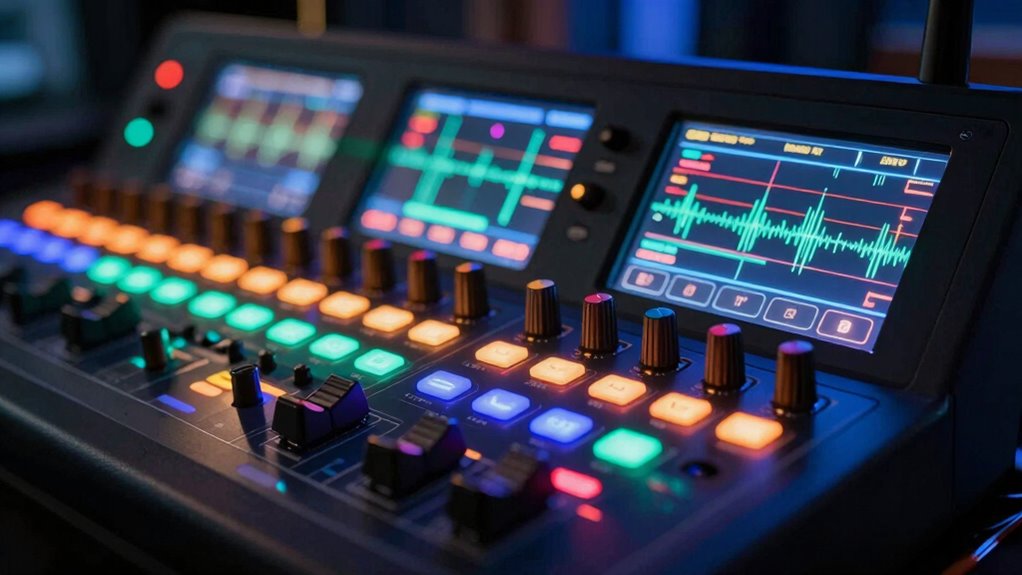
Have you ever experienced flickering lights or unstable wireless DMX signals during a live event? If so, you know how frustrating it can be when your LED stage lighting suddenly goes out of sync or flickers unexpectedly. These issues often stem from interference that disrupts your wireless DMX signals, causing your carefully choreographed lighting cues to fall apart. Luckily, there are practical ways to fix this problem and keep your show running smoothly. One effective approach involves RF signal optimization, which guarantees your lighting control signals stay clear and strong.
First, you want to check for potential sources of interference in your environment. Wireless devices, Wi-Fi routers, and even nearby radio signals can interfere with your DMX transmission. Conduct a quick RF scan to identify any strong signals that might be competing for the same frequency range. Once you know what’s causing interference, you can take steps to reduce it. Moving your wireless DMX transmitter away from other RF sources or changing its frequency can markedly improve signal stability. Many modern wireless DMX systems allow you to select different channels or frequencies, so take advantage of this feature to find a cleaner band.
Check for interference sources and adjust your DMX transmitter’s frequency for a more stable wireless connection.
Another essential aspect of RF signal optimization involves the placement of your antenna and receiver. Position your antennas for maximum line of sight, elevating them if possible, and keep them clear of obstructions. This reduces signal loss and enhances the reliability of your wireless connection. Additionally, using high-quality, properly shielded cables for your LED stage lighting fixtures minimizes the risk of signal degradation. When your LED fixtures are properly grounded and connected with good-quality cables, you lessen the chance of flickering caused by electrical noise or interference. Furthermore, understanding the importance of RF spectrum management can help you better navigate potential conflicts and improve overall system stability. Implementing proper spectrum management practices can significantly reduce interference-related issues.
You should also be aware that RF spectrum congestion can be a common problem in densely populated venues, making it even more critical to optimize your setup. It’s also wise to contemplate the environment in which you’re working. Metal structures, dense walls, or large crowds can all impact RF signal strength. If your venue has lots of metal or reflective surfaces, try to position your transmitter and receiver in open, unobstructed areas. If interference persists, employing external antennas designed for RF signal boosting can help maintain a strong, stable connection. Incorporating environmental considerations into your setup can further enhance your system’s resilience against interference.
Ultimately, the key to fixing wireless DMX glitches lies in proactive RF signal optimization. By carefully selecting frequencies, positioning antennas correctly, and reducing environmental interference, you can guarantee your LED stage lighting remains synchronized and glitch-free. When your wireless signals are stable, your lighting cues are precise, and your show goes off without a hitch. This simple yet essential process keeps your event professional and your audience captivated, even in challenging environments.
As an affiliate, we earn on qualifying purchases.
Frequently Asked Questions
Can Interference Occur With All Wireless DMX Systems?
Yes, interference can occur with all wireless DMX systems because RF interference from other devices or signals can disrupt your signal stability. You might experience glitching or dropouts if nearby electronics, Wi-Fi networks, or even other wireless systems interfere with your setup. To prevent this, guarantee your system operates on a clear frequency, use proper shielding, and regularly check for sources of RF interference to maintain reliable signal stability during your shows.
How Often Should I Check for Wireless Interference During a Show?
You should check for wireless interference regularly throughout your show, especially during setup and key moments. Keep an eye on signal stability, as fluctuations can cause glitches. Also, monitor equipment placement—ensure transmitters and receivers are positioned to minimize obstacles and interference sources. Quick, periodic checks help you catch and address issues early, ensuring smooth performance and avoiding unexpected glitches that could disrupt your show.
Are There Specific Environments More Prone to Wireless DMX Issues?
Certain environments are like busy highways, prone to frequency congestion that can cause wireless DMX issues. You’ll find more interference in areas with high electronic device density or metal structures, which disrupt signals. To combat this, use signal encryption and choose less crowded frequencies. By staying alert to these environments, you can prevent glitches, ensuring your show runs smoothly without unexpected interruptions.
Can Interference Be Caused by Non-Technical Sources?
Yes, interference can be caused by non-technical sources. Radio frequency signals from household devices like cordless phones, microwaves, or baby monitors can disrupt wireless DMX systems. These non-technical sources emit signals that interfere with your DMX’s radio frequency, leading to glitches. To minimize this, keep wireless DMX equipment away from such devices and use interference-resistant channels or frequency hopping systems for more reliable performance.
What Is the Typical Cost of Implementing an Interference Fix?
Think of the cost of fixing interference like planting a seed—initial investment can vary. Typically, you’ll spend between $200 to $1,000 for specialized filters or transmitters, but it depends on your setup. A thorough cost analysis helps you weigh these expenses against potential implementation challenges, such as technical adjustments or equipment upgrades. While costs might seem high, the payoff is smoother shows without glitches, making the investment worthwhile.
Conclusion
By following this interference fix, you can turn your wireless DMX system from a ticking time bomb into a steady heartbeat of your show. Don’t let interference be the ghost haunting your performance; instead, tame it like a wild stallion. With these simple steps, you’ll keep your lighting shining bright and your audience captivated, proving that even the trickiest glitches can be tamed with a bit of know-how.
Fall Picks
fall essentials
As an affiliate, we earn on qualifying purchases.