
Many people confuse Allhallowtide and Halloween, but they have distinct roots. Allhallowtide is a solemn religious period from October 31st to November 2nd, focusing on honoring saints, martyrs, and loved ones through prayers and reflection. Halloween, on the other hand, originated from ancient Celtic festivals and has become a festive, fun event centered on costumes and entertainment. Understanding these differences helps you appreciate their unique meanings—if you look further, you’ll uncover even more fascinating details.
Key Takeaways
- Allhallowtide is a solemn, spiritual period honoring saints and the deceased, while Halloween is a festive, secular celebration with costumes and fun.
- Allhallowtide spans from October 31st to November 2nd, focusing on remembrance and prayer; Halloween occurs mainly on October 31st with entertainment.
- The origins of Allhallowtide are rooted in Christian traditions and ancient Celtic festivals like Samhain, unlike Halloween’s pagan and Christian amalgamation.
- Allhallowtide emphasizes reflection, memorial rituals, and reverence; Halloween emphasizes community activities, costumes, and entertainment.
- Many conflate Halloween with Allhallowtide, but understanding their distinct spiritual and cultural significance reveals their true differences.
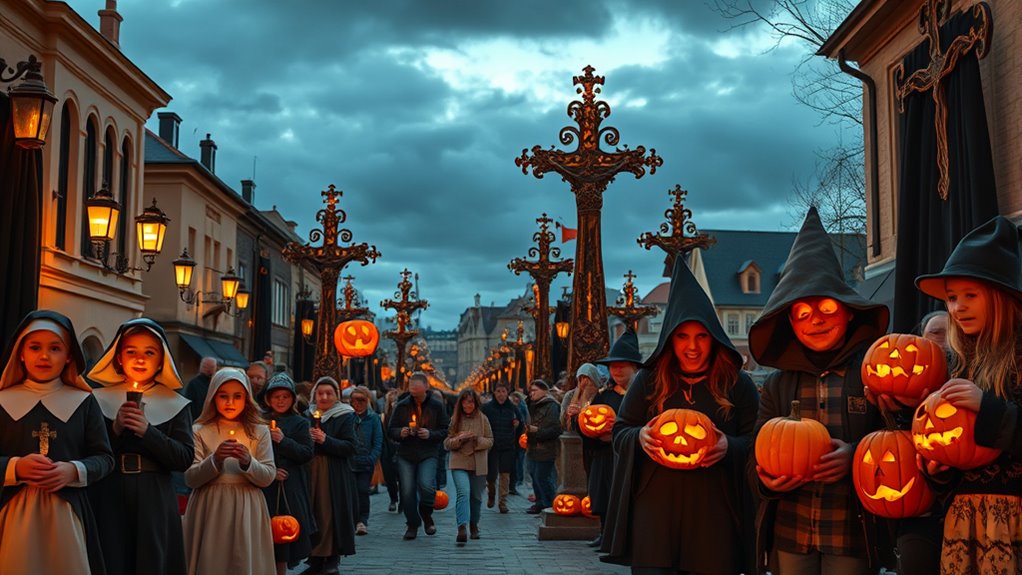
Have you ever wondered how Allhallowtide and Halloween differ despite often being confused? While they share dates and similar themes, understanding their origins comparison reveals distinct histories and cultural significance. Allhallowtide is rooted in ancient Christian traditions, dating back centuries. It’s a period dedicated to honoring saints, martyrs, and the deceased, typically spanning from October 31st to November 2nd. Its origins comparison shows it as a solemn, spiritual time, emphasizing remembrance and reflection. Halloween, on the other hand, has pagan roots that predate Christian influence. Its origins comparison traces back to Celtic festivals like Samhain, marking the end of the harvest season and the beginning of winter. This festival was believed to be a time when the veil between the living and the dead was thinnest, allowing spirits to cross over. Over time, as Christianity spread, these pagan customs merged with religious practices, leading to what we now recognize as Halloween.
The cultural significance of these observances also differs sharply. Allhallowtide carries a deeply reverent tone, emphasizing prayer, memorials, and the veneration of saints. It’s a time for families and communities to remember loved ones who have passed and to seek spiritual protection. Its observances are often quiet, somber, and rooted in tradition, reflecting a respect for the cycle of life and death. In addition, rituals and prayers are common during this period to honor the departed and seek divine favor. Its observances are often quiet, somber, and rooted in tradition, reflecting a respect for the cycle of life and death. In contrast, Halloween has evolved into a more festive and commercial celebration, focused on costumes, trick-or-treating, and spooky entertainment. Its cultural significance is centered around fun and community engagement, with a heavy emphasis on creativity and scares. While it still acknowledges spirits and the supernatural, it’s more about entertainment than reverence.
Despite the differences, many people today blur these lines, celebrating Halloween as a more playful, secular event without recognizing its deep historical roots. Conversely, some observe Allhallowtide with a focus on remembrance rather than festivities. Understanding these distinctions helps you appreciate the unique origins comparison and cultural significance of each. Allhallowtide reminds us of spiritual heritage and the importance of honoring those who came before, while Halloween offers an opportunity for fun, imagination, and community bonding. Recognizing these differences enriches how you approach each celebration, allowing you to respect the traditions behind them and participate in a way that aligns with their true meanings. Ultimately, knowing the origins comparison and cultural significance of Allhallowtide versus Halloween helps you see beyond the costumes and candy, appreciating the history and purpose behind these annual observances.
Frequently Asked Questions
When Did Allhallowtide Originate Historically?
Allhallowtide originated during medieval times, around the 7th century, rooted in ecclesiastical traditions. You should know that it developed as a period to honor saints, martyrs, and the deceased, with roots in early Christian practices. Over time, it became a distinct observance, shaping modern customs. Understanding its medieval origins helps you appreciate the spiritual significance behind Allhallowtide, differentiating it from Halloween’s more secular festivities.
Are Allhallowtide and Halloween Celebrated Worldwide?
You’ll find that Allhallowtide and Halloween aren’t celebrated worldwide in the same way. Some countries observe the secular aspects of Halloween, like costumes and trick-or-treating, while others focus on the religious significance of Allhallowtide, honoring saints and the deceased. Cultural adaptation influences how these celebrations evolve, blending traditional practices with modern customs. So, your experience varies depending on local traditions and whether the focus is religious or secular.
How Do Different Cultures Observe Allhallowtide?
You’ll notice that different cultures observe Allhallowtide through diverse ritual practices and customs. In Mexico, you might join the vibrant Día de los Muertos celebrations with altars and offerings. In Ireland, people participate in storytelling and visiting cemeteries. In the Philippines, you may observe prayers and processions honoring the dead. These cultural variations reflect unique traditions that deepen the significance of Allhallowtide, emphasizing remembrance and respect across the world.
What Are Common Traditional Activities During Allhallowtide?
During Allhallowtide, you typically participate in activities like pumpkin carving and candle lighting to honor the spirits and saints. You might visit cemeteries, decorate graves, or hold vigil prayers. These traditions focus on remembrance and spiritual reflection. You also might gather with loved ones for storytelling, singing, or sharing meals, creating a sense of community and honoring those who have passed.
Can Allhallowtide Overlap With Other Religious Festivals?
Yes, Allhallowtide can overlap with other religious festivals through interfaith celebrations and seasonal overlaps. You might notice communities blending traditions or honoring multiple faiths during this time, especially around late October and early November. These overlaps foster understanding and respect as people celebrate various spiritual observances simultaneously, enriching the cultural landscape. Embracing this interfaith approach helps you appreciate the diverse ways different traditions mark this reflective season.
Conclusion
So, while Halloween might be the spooky party you’ve always known, Allhallowtide invites you to reflect on the sacred and the solemn. One celebrates costumes and candy; the other honors saints and ancestors. Don’t let the confusion hide their distinct meanings. Embrace the contrast — the playful versus the reverent — and deepen your understanding of each. After all, recognizing their differences transforms a simple holiday into a richer, more meaningful experience.