
Don’t believe the myth that banshees are evil spirits. In Irish legends, they’re messengers and protectors, warning families of imminent tragedy rather than causing harm. Their cries serve as respectful signs from the spiritual world, encouraging people to cherish loved ones and acknowledge mortality. These stories reflect deep cultural beliefs about life, death, and supernatural respect. Keep exploring, and you’ll uncover even more about the true meaning behind these fascinating legends.

Get decor and gifts delivered free with Prime
- Fast, free delivery on millions of items
- Prime Video, Amazon Music and more included
- Member-only deals all year
Key Takeaways
- Banshees are not inherently evil; they serve as spiritual messengers warning of family tragedies.
- Legends depict banshees as linked to specific families, emphasizing their role as protectors rather than malevolent spirits.
- Their cries symbolize respect for mortality and should be seen as reminders to cherish loved ones.
- Misconceptions portray banshees as malicious, but true legends highlight their function as warnings from the supernatural realm.
- Understanding banshees as cultural symbols fosters appreciation for Irish folklore’s deeper spiritual and societal meanings.
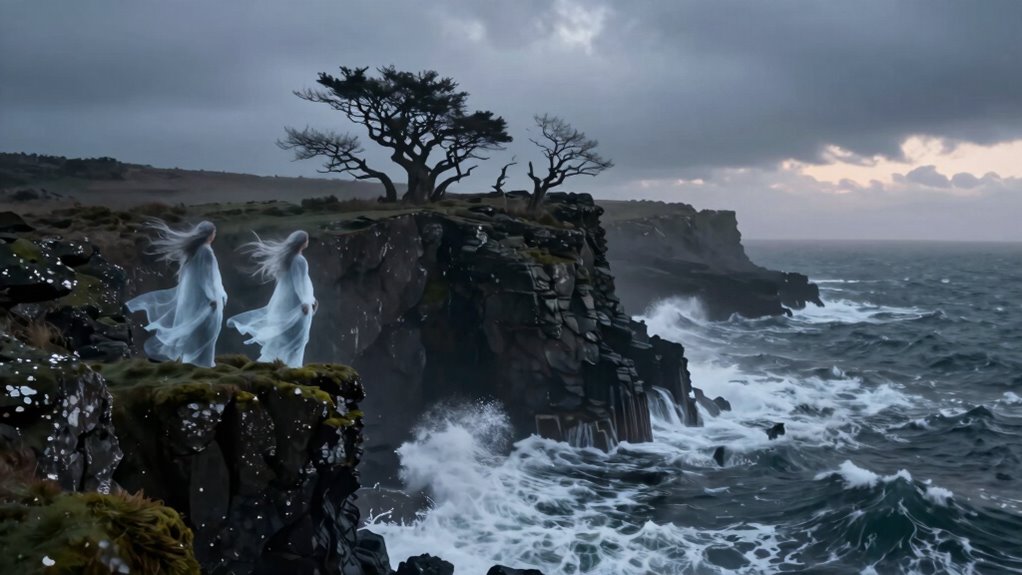
Have you ever wondered where the haunting legend of banshees originated? Many people think they’re just spooky stories told around campfires, but the truth runs deeper in fairy folklore and superstitious beliefs. Banshees are often depicted as ominous women whose wails predict death, but this image is a simplified version of a much more complex legend rooted in Irish tradition. These stories aren’t just random ghost tales; they’re woven into the fabric of ancient Irish culture and belief systems, where supernatural beings often played a role in explaining life’s mysteries.
In Irish fairy folklore, banshees aren’t necessarily evil spirits but are considered messengers or omens, connected to specific families or regions. The superstitious beliefs surrounding banshees suggest that their cries serve as warnings, allowing families to prepare for imminent tragedy. It’s not just about death; it’s about the community’s way of making sense of the unexplainable. Over time, these stories evolved, and the image of the wailing woman became a symbol of imminent loss rather than a malicious spirit. Many tales emphasize that banshees are tied to the land, and their appearances are often linked to particular family lineages, reinforcing the idea that they serve as protectors or warnings rather than malevolent entities.
People have often repeated the myth that banshees are inherently evil or that they haunt the living simply to cause fear. But if you look deeper into the legends, you’ll see that the core message is about respect for the supernatural and acknowledgment of life’s fragile nature. The idea that banshees are just harbingers of doom is a distortion of their true role in folklore. They are more like spiritual guides or intermediaries, whose cries remind us of the inevitable and encourage us to cherish our loved ones while we can. The superstitions surrounding banshees reflect an ancient attempt to grapple with mortality, and their stories serve as warnings to be mindful of the unseen world. Additionally, understanding the cultural significance of banshees helps us appreciate how folklore shapes our perceptions of life and death. Recognizing these stories as part of a broader cultural context allows for a richer understanding of their true meaning and importance.
Furthermore, these legends highlight the importance of respect for the supernatural, which was a fundamental aspect of Irish cultural identity and spiritual beliefs. Exploring these stories reveals how deeply superstitious beliefs are woven into everyday life, fostering a sense of connection to the spiritual realm that persists even today.
As an affiliate, we earn on qualifying purchases.
Frequently Asked Questions
Are Banshees Linked to Specific Irish Regions or Families?
You’ll find that banshees aren’t strongly linked to specific Irish regions or family associations. Instead, they’re part of broader Irish folklore, often seen as omens of death rather than tied to particular places or families. While some local legends may mention certain families or areas, banshees generally symbolize a universal Irish myth about impending tragedy, making their origins more regional in storytelling than in actual familial or geographical ties.
Do Banshees Appear in Modern Irish Folklore?
In contemporary Irish folklore, you might encounter whispers of the supernatural, where banshees subtly symbolize the weight of impending change or loss. These spectral figures still make appearances in stories and local legends, serving as reminders of folklore symbolism rooted in tradition. While not as prevalent as before, their presence in modern tales hints at how cultural echoes of supernatural encounters continue to shape Irish storytelling today.
What Are the Common Traits Used to Identify a Banshee?
You can identify a banshee by her supernatural warning signals, especially her haunting melodies that echo through the night. She’s often described as a woman with long, flowing hair, wearing a gray or white cloak, and sometimes a pale or ghostly appearance. Her wailing or keening sounds serve as an ominous sign of impending death, making her unmistakable in Irish folklore as a harbinger of tragedy.
How Have Banshees Influenced Irish Literature and Popular Culture?
You see banshees deeply influence Irish literature and popular culture by embodying supernatural encounters and mythological symbolism. They symbolize impending death and the spiritual domain, inspiring stories, poems, and films that explore Irish identity and folklore. Through these representations, banshees remind you of Ireland’s rich mythic traditions, blending the mystical with everyday life, and continue to captivate audiences by embodying the mysterious and supernatural aspects of Irish heritage.
Are There Any Real Historical Figures Associated With Banshee Legends?
You might wonder if real figures sparked banshee legends. Historically, superstitious beliefs linked Irish families to specific women, sometimes called “bean sidhe,” believed to foretell death. These stories evolved over folklore, transforming personal tragedies into haunting myths. One legend suggests that a woman cursed herself after a tragedy, becoming a spectral warning. Such stories show how folklore evolution turns individual grief into cultural symbols, blurring myth with history.
Conclusion
Don’t dismiss the banshee’s tale as mere myth. Dive deeper, and you’ll discover a dance of dread and duty woven into Ireland’s history. By breaking the ban’s blanket of misconception, you’ll better understand the sorrowful spirit’s story — one of warning, woe, and wonder. So, shed stereotypes, seize the stories, and see the spectral saga as something more than spooky folklore. Embrace the eerie essence, and let the legend linger a little longer.
Fall Picks
fall essentials
As an affiliate, we earn on qualifying purchases.