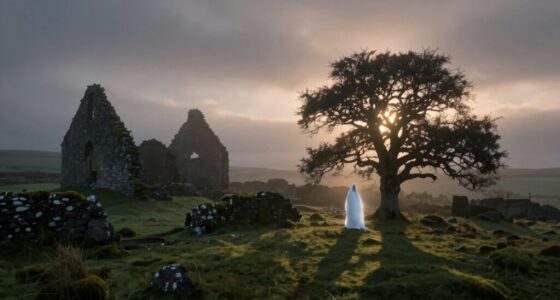

The myth of the ‘cursed full moon’ comes from centuries of folklore that link moon cycles to madness, crime, and misfortune. People have long believed the full moon causes strange events, but science shows no actual connection. These stories are cultural myths based on pattern recognition and bias, not facts. If you keep exploring, you’ll discover the real origins of these misconceptions and what modern research really says about the full moon’s influence.
Key Takeaways
- Folklore links the full moon to madness, supernatural events, and misfortune, forming the basis of the myth.
- Many beliefs about a cursed full moon originated from ancient stories explaining natural or inexplicable events.
- Human tendency to recognize patterns and confirm biases fuels the myth, despite lack of scientific evidence.
- Modern research shows no causal connection between the full moon and increased crime, accidents, or mental health issues.
- The “cursed full moon” is a cultural construct, amplified by stories and misconceptions, not backed by scientific facts.
Many people believe that the full moon brings misfortune or strange occurrences, but this idea is more myth than fact. This common belief is rooted in lunar superstition, a set of ideas that link the moon’s phases to human behavior and events. These beliefs have persisted for centuries, often fueled by folklore origins that seek to explain natural phenomena through stories and traditions. Historically, the full moon has been associated with everything from madness to supernatural happenings, but modern research shows no concrete evidence supporting these claims. Instead, these notions are cultural constructs passed down through generations, often exaggerated or misunderstood.
Lunar superstition has deep roots in various cultures worldwide. In ancient times, people observed the moon’s cycles closely, and their interpretations gave rise to stories that linked the full moon to heightened emotions, violence, or bad luck. For example, the term “lunatic” originates from the Latin “lunaticus,” meaning “moon-struck,” reflecting the long-standing belief that the moon influences mental health. Folklore origins often involve stories meant to explain inexplicable events, such as sudden crimes or accidents, which coincided with a full moon. Over time, these stories became ingrained as part of cultural tradition, reinforcing the idea that the full moon is cursed or dangerous. Additionally, the human tendency to notice patterns and assign meaning to coincidences contributes to the reinforcement of lunar myths over time.
Despite these longstanding beliefs, scientific studies have found no direct connection between the full moon and human behavior. Researchers have reviewed numerous studies and concluded that the perceived increase in misfortune or madness during a full moon is mostly a psychological effect, driven by expectation and confirmation bias. People tend to notice and remember strange or negative events that happen during a full moon more than those occurring at other times, creating a skewed perception. This phenomenon is known as the “full moon effect,” but it’s not supported by empirical evidence. Instead, it’s a prime example of how folklore origins and lunar superstition can distort our understanding of natural cycles.
Frequently Asked Questions
How Old Are the Earliest References to the Cursed Full Moon Myth?
You’ll find the earliest references to the cursed full moon myth dating back to ancient moon lore, with some origins from Chinese and European folklore around 1,000 to 1,500 years ago. These legends often link the full moon to supernatural events and curses. Over centuries, folklore origins evolved, blending myth and superstition, shaping how cultures perceive the moon’s mysterious influence. Your understanding of this myth reflects centuries of storytelling.
Are There Any Cultures That Celebrate the Full Moon Positively?
Many cultures celebrate the full moon positively through moon festivals and cultural celebrations. For example, Chinese Mid-Autumn Festival honors the moon with mooncakes and lanterns, symbolizing unity and prosperity. Similarly, Thai and Vietnamese communities hold moon festivals to celebrate harvests and family bonds. These celebrations highlight the moon’s positive significance, emphasizing gratitude, renewal, and community spirit rather than fear or curses.
What Scientific Explanations Contradict the Myth of the Cursed Full Moon?
Scientific explanations show that moon phases and lunar cycles don’t cause madness or disasters. You might notice that during a full moon, people often sleep less or act differently, but research links these changes to behavioral expectations, not lunar influence. The moon’s gravitational pull is too weak to affect human behavior markedly. So, the myth of a cursed full moon lacks scientific backing, and lunar cycles simply follow natural, predictable patterns.
Has the Cursed Full Moon Influenced Any Historical Events?
You might not realize it, but moon legends and folklore influence some historical events, especially during full moons. For example, during the Salem witch trials, the full moon‘s reputation for madness fueled accusations and hysteria. People believed the cursed full moon brought out evil or chaos, demonstrating folklore influence on societal reactions. These beliefs, rooted in moon legends, shaped perceptions and actions during critical moments in history.
Are There Modern-Day Rituals Related to the Cursed Full Moon?
Yes, you can participate in moon rituals inspired by modern folklore. Many people perform ceremonies during full moons to harness its supposed energy, like setting intentions or releasing negativity. These rituals often include meditation, lighting candles, or tarot readings. While rooted in tradition, they reflect contemporary beliefs about the moon’s influence, blending folklore with personal spirituality to create meaningful, modern practices that connect you to lunar cycles.
Conclusion
So, next time the full moon rises, remember it’s not cursed or haunted, just a brilliant ball of rock reflecting the sun’s light. The real mystery isn’t some supernatural curse, but how easily we’re drawn to fear what we don’t understand. Ironically, it’s often our own stories and fears that turn a beautiful, natural event into something sinister. Maybe the moon’s only crime is shining so brightly that it exposes our endless fascination with fear.