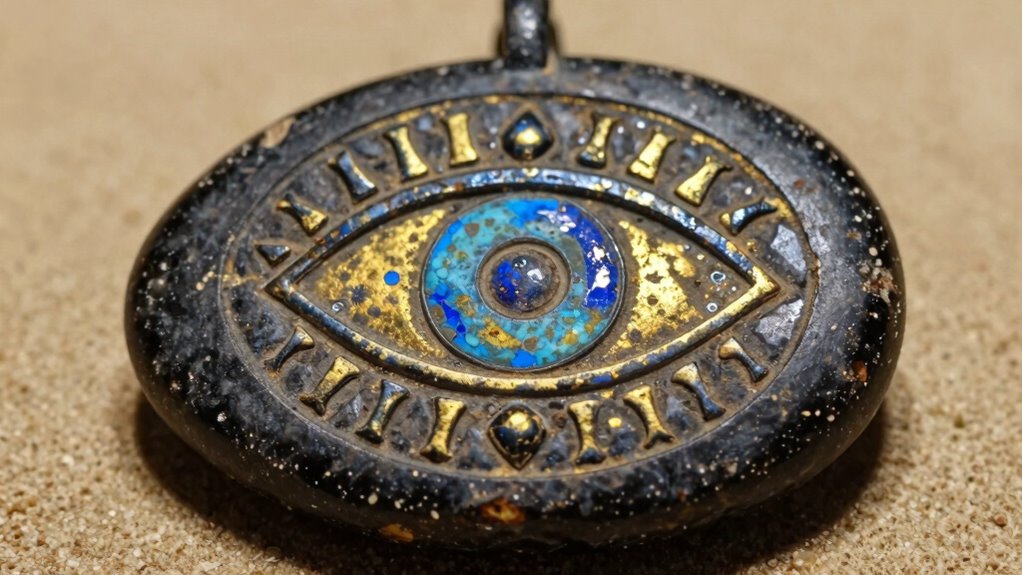

The ‘evil eye’ symbol comes from ancient cultures that believed envy could cause harm or bad luck. It serves as a protective amulet rooted in psychological and spiritual beliefs across the Mediterranean and Asia. The symbol acts as a shield, redirecting or absorbing negative energy driven by envy’s destructive power. Its enduring presence shows how humans have long sought ways to guard against unseen threats—if you look further, you’ll discover even deeper meanings behind this powerful image.
Key Takeaways
- The ‘evil eye’ symbol originates from ancient cultural beliefs that envy can cause harm or misfortune.
- It functions as a protective barrier, redirecting negative energy associated with envy or malevolent intentions.
- The symbol embodies a universal fear of envy’s destructive power, serving as a psychological shield.
- Historically, wearing eye-shaped amulets provides reassurance and a sense of control against unseen threats.
- Its enduring significance reflects a shared human desire to protect oneself from psychological and spiritual harm.
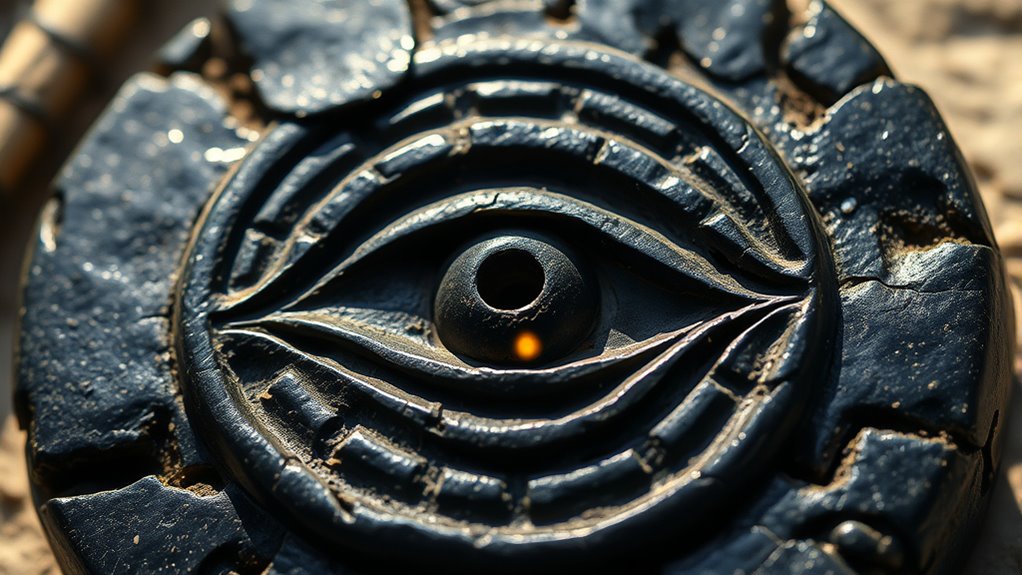
The ‘Evil Eye’ symbol, widely recognized across cultures for warding off harm and misfortune, has origins that are often misunderstood or oversimplified. Many believe it’s just a superstition, but its roots run deep in ancient cultural beliefs and psychological symbolism. When you see the eye-shaped amulet or talisman, you’re witnessing a representation of a universal fear: the power of envy and malevolent intentions. Throughout history, societies from the Mediterranean to Asia believed that envy could manifest as a destructive force, capable of causing illness, bad luck, or even death. The symbol functions as a protective barrier, redirecting or absorbing negative energy before it harms you.
In ancient cultures, the ‘Evil Eye’ was seen as a genuine threat, and people developed various methods to counteract it. For some, wearing eye-shaped jewelry or amulets served as a safeguard, acting as a psychological shield. These objects weren’t just talismans; they embodied a collective understanding that visual symbols could influence perception and reality. Psychologically, the eye acts as a mirror of the soul, and by displaying an image of an eye, you’re fundamentally acknowledging the power of perception and intention. It’s as if the symbol communicates, “I see your envy, but I am protected.” This creates a mental boundary that helps maintain emotional resilience in the face of negativity.
The symbolic power of the eye also taps into human psychology’s need for control. When you or someone else wears or displays an ‘Evil Eye’ talisman, it provides reassurance—an external reminder that you’re guarded against unseen threats. This belief in protection isn’t solely superstition; it’s rooted in the understanding that perceptions influence reality. The symbol’s psychological symbolism reinforces a sense of security and control, helping individuals cope with fears of misfortune rooted in envy or malevolence. Additionally, the persistence of these beliefs illustrates how cultural practices adapt to address the universal human concern of psychological protection.
In fundamentally, the ‘Evil Eye’ isn’t just a myth or superstition. It’s a powerful reflection of ancient cultural beliefs about the influence of envy and malevolent energy, combined with a psychological symbolism that offers comfort and protection. When you wear or see the symbol, you’re engaging with a shared human history of acknowledging unseen forces—whether spiritual or psychological—that threaten well-being. Its enduring presence proves that, across time and cultures, the desire to shield oneself from harm remains universal.
Frequently Asked Questions
How Has the Evil Eye Symbol Evolved Over Different Cultures?
You see that the evil eye symbol has evolved through diverse cultures, each adding unique touches to its meaning. Originally rooted in ancient Middle Eastern and Mediterranean traditions, it became a widespread cultural symbolism of protection and warding off negative energies. Over time, its design has adapted across regions—like Greece, Turkey, and India—reflecting local beliefs and historical origins, yet consistently serving as a powerful symbol against harm.
Are There Modern Variations of Evil Eye Protection Methods?
You’ll find modern variations of evil eye protection, like digital amulets and apps, acting as digital shields in today’s world. These modern talismans symbolize ongoing hope and safeguarding, blending tradition with technology. Just as the eye warded off harm in ancient cultures, today’s digital amulets serve as virtual charms, offering continuous protection. Embrace these symbols, whether in physical or digital forms, to keep negativity at bay in our fast-paced lives.
What Scientific Explanations Exist for the Evil Eye’s Effects?
Scientific explanations for the evil eye’s effects focus on psychological effects and cultural beliefs. You might experience anxiety or stress, which can lead to physical symptoms like headaches or fatigue, reinforcing the belief in its power. These effects are often driven by suggestion, placebos, or cultural conditioning, making the evil eye’s influence more about perception and belief systems than any measurable physical cause.
How Does the Evil Eye Influence Contemporary Jewelry Design?
You see the evil eye influence contemporary jewelry design through its powerful cultural symbolism. Designers incorporate its iconic blue eye to evoke protection and ward off negativity. This inspiration drives design innovation, blending tradition with modern aesthetics. By wearing such jewelry, you connect with a timeless cultural belief, making each piece not only stylish but also meaningful. The evil eye’s symbolism continues to inspire fresh, creative interpretations that resonate across diverse cultures.
Are There Specific Rituals Associated With Warding off the Evil Eye?
Think of ancient amulets as shields, guarding your spirit like a knight’s armor. Ritual practices, such as hanging an evil eye talisman or reciting protective prayers, act as your personal ward against negativity. You might also perform cleansing rituals or wear specific charms. These rituals help you channel positive energy, transforming the evil eye’s gaze into a symbol of protection, much like a fortress defending your inner peace.
Conclusion
You might be surprised to learn that over 70% of people worldwide still wear or display the evil eye symbol, believing it offers protection. Its origins date back thousands of years across various cultures, showing how universal the desire to ward off harm truly is. So next time you see this symbol, remember it’s more than just a pretty eye—it’s a powerful reminder of our shared human instinct to keep negativity at bay.