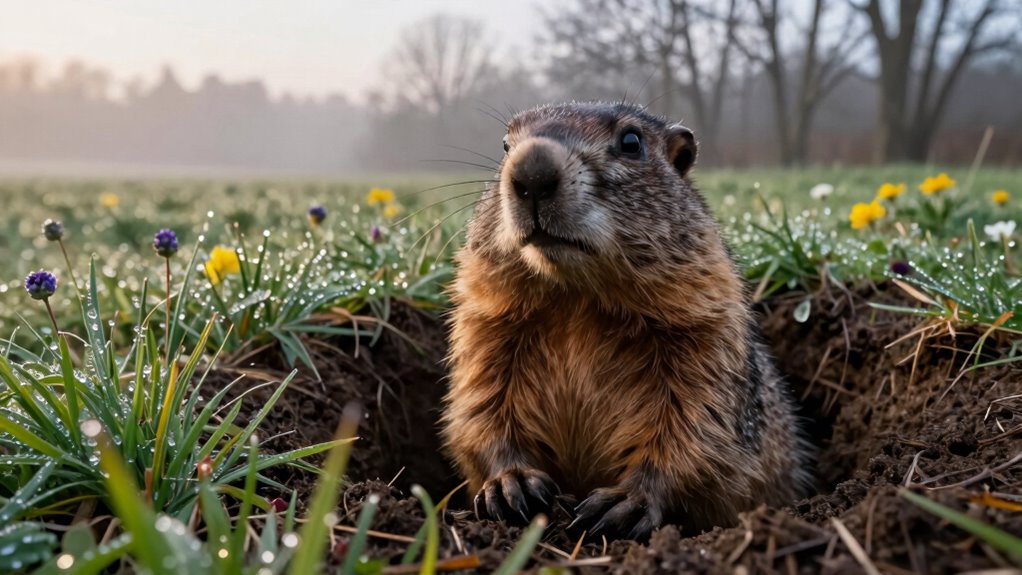

Groundhog Day isn’t just adorable; it’s a long-standing folklore weather ritual rooted in cultural beliefs and natural signs. On February 2nd, you watch to see if the groundhog sees its shadow, which indicates six more weeks of winter, or if it doesn’t, suggesting an early spring. While science shows weather patterns are much more complex, this tradition connects people to their ancestors’ reliance on nature’s cues and adds hope and community spirit. If you continue exploring, you’ll uncover the history behind this charming ritual.
Key Takeaways
- Groundhog Day is rooted in European folklore, adapted in North America as a superstition-based weather prediction.
- The tradition relies on observing the groundhog’s shadow to forecast the length of winter.
- It has no scientific basis; modern weather forecasting uses scientific meteorology instead of folklore.
- The ritual symbolizes hope for seasonal change and strengthens community bonds through shared cultural practice.
- Despite its lack of scientific accuracy, it remains an enduring cultural and emotional tradition.
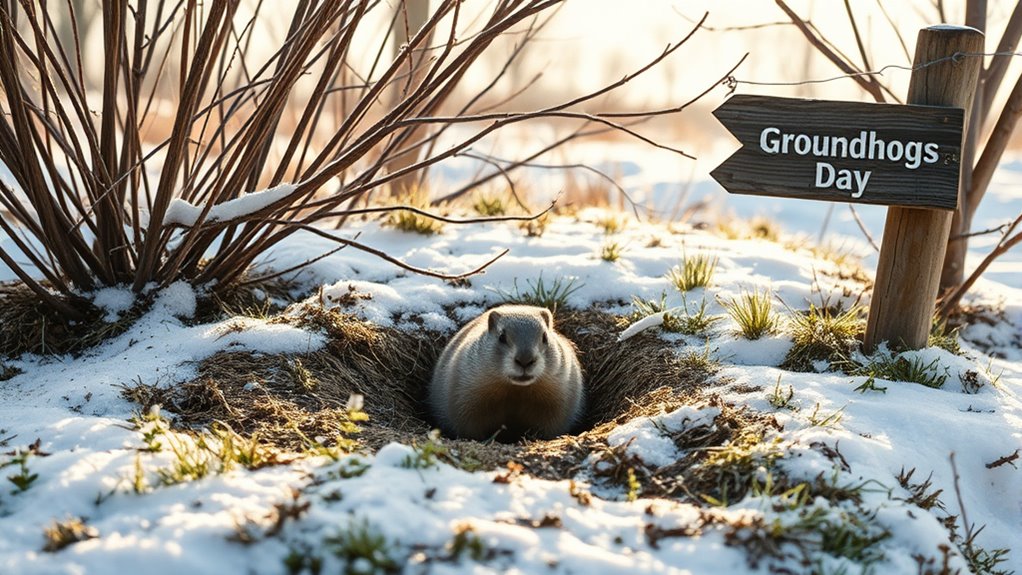
Have you ever wondered if a groundhog’s shadow can really predict the weather? Every February 2nd, millions of people tune in to see whether the groundhog will see its shadow, signaling six more weeks of winter, or not, indicating an early spring. This tradition isn’t just about weather forecasting; it’s rooted in a seasonal superstition that dates back centuries. The idea is simple: if the groundhog emerges from its burrow and spots its shadow due to clear, sunny skies, then winter will drag on. But if the day is overcast and no shadow appears, spring is just around the corner. This simple shadow prediction has become an enduring ritual, blending folklore with community celebration.
The charm of the groundhog legend lies in its connection to ancient beliefs about weather and seasonal change. It’s a folkloric practice that reflects humanity’s long-standing desire to understand and predict nature’s patterns. The seasonal superstition isn’t based on scientific evidence; instead, it’s a cultural tradition passed down through generations. People have long looked to the skies and the behavior of animals as indicators of upcoming weather, and the groundhog’s shadow became a symbol of this hope for prediction. Over time, this belief morphed into a fun, communal event with a bit of theatricality, complete with ceremonies, speeches, and festivities. Despite its lack of scientific validity, many find comfort and joy in the ritual, making it a cherished part of winter’s end.
You might find it interesting that the tradition originated from European weather lore, where a similar belief existed involving a variety of animals. When settlers brought this superstition to North America, they adapted it to the local groundhog, a creature abundant in the region. The process of shadow prediction hinges on a simple observational principle: sunny days produce shadows, and cloudy days don’t. This straightforward idea captures the imagination because of its directness and the visual certainty it provides—if you see the shadow, winter is likely to stick around, and if not, spring is on its way. It’s a playful way to engage with the natural world, blending superstition with hope. Additionally, the cultural significance of the event helps reinforce community bonds and local traditions.
While science now explains weather patterns through meteorology, the tradition persists because it’s become a cultural fixture. It’s a seasonal superstition that connects communities, evokes nostalgia, and adds a touch of whimsy to the winter months. Whether you believe in the groundhog’s forecast or not, the ritual reminds us of our ancestors’ reliance on nature’s cues—and their desire to find meaning and certainty in an unpredictable world. So each year, as the groundhog emerges, think of it not just as a cute animal but as a symbol of hope, tradition, and humankind’s age-old quest to predict what lies ahead.
Top picks for "groundhog cute folklore"
Open Amazon search results for this keyword.
As an affiliate, we earn on qualifying purchases.
Frequently Asked Questions
How Did Groundhog Day Originate Historically?
You might find it interesting that Groundhog Day originated from European cultural origins, particularly German folklore, where weather predictions relied on animal behavior. Historically, people believed that if a groundhog saw its shadow on February 2nd, winter would last longer; if not, spring would arrive early. This tradition was brought to America by German immigrants, evolving into the modern-day Groundhog Day, blending folklore with local customs and weather observation.
Are There Other Animals Involved in Similar Weather Rituals?
You’ll find that other animals, like bears and badgers, also play roles in folklore traditions predicting weather. For instance, in parts of Europe, the badger’s behavior signals the length of winter. Fascinatingly, animal symbolism in folklore reflects humans’ desire to understand nature’s patterns. Nearly 60% of weather-related folklore involves animals, emphasizing their importance in cultural traditions worldwide. These rituals connect us deeply to nature’s cycles and ancient beliefs.
What Scientific Basis Supports Groundhog Day Predictions?
Groundhog Day predictions lack scientific validity, as meteorological evidence shows weather patterns are too complex for a single animal to forecast. The tradition relies on folklore rather than scientific methods, meaning it shouldn’t be used for accurate weather prediction. While it’s a fun cultural ritual, you shouldn’t depend on a groundhog’s behavior to determine upcoming weather. Instead, trust meteorological science and weather forecasts for accurate information.
How Has Groundhog Day Evolved Culturally Over Time?
You’ve likely noticed how Groundhog Day has evolved through cultural adaptation and modern interpretations. Originally rooted in folklore, it now blends tradition with entertainment, drawing crowds and media attention. Over time, communities have transformed the event into a festive celebration, emphasizing local customs and humor. This shift highlights how cultural rituals can shift from superstitions to popular culture, making Groundhog Day a fun, shared experience that connects history with today’s pop culture.
Do Other Countries Celebrate Similar Weather Folklore Festivals?
Yes, other countries celebrate similar weather folklore festivals, showcasing diverse cultural variations. For example, in the UK, people observe St. Swithin’s Day to predict rain, while in Germany, Candlemas marks the end of winter with weather predictions. These festivals originate from folklore origins, where communities historically relied on nature signs to plan agricultural activities. You’ll find that many cultures have their own unique ways of blending folklore with weather prediction.
Conclusion
As you watch that furry forecast-maker peek from his burrow, remember you’re witnessing more than just a shadow. It’s a dance of folklore, a whisper of old weather tales woven into the fabric of tradition. Whether he sees his shadow or not, the ritual reminds you that nature’s stories are etched in the land’s heartbeat, inviting you to believe in the magic hidden in everyday moments—like a promise whispered by the changing seasons.