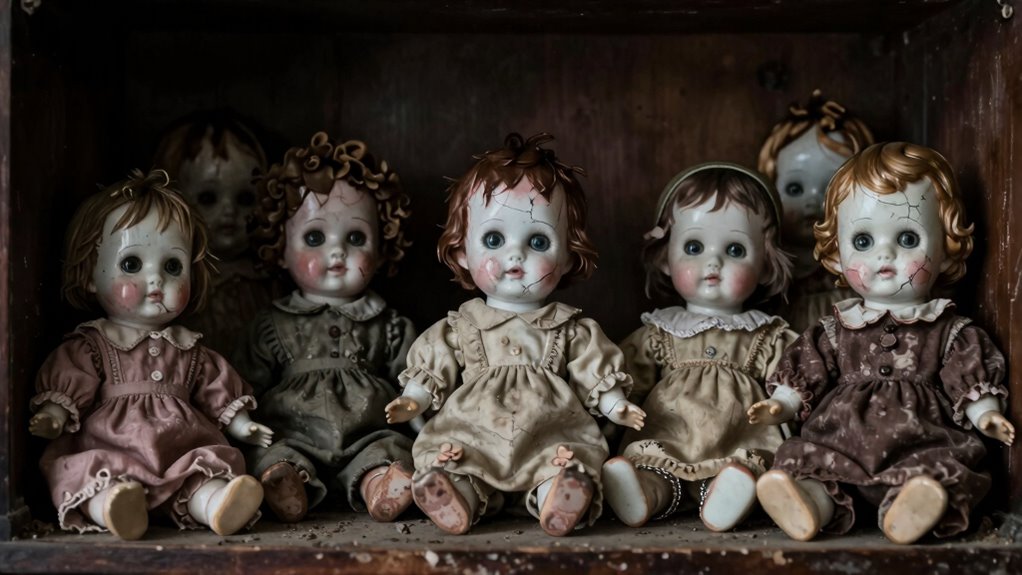

Many haunted doll stories stem from cultural myths that have been exaggerated or distorted over time. In truth, most legends reflect spiritual or protective beliefs rooted in traditions like Haitian Vodou or Japanese customs, where dolls symbolize connection, remembrance, or protection. Modern horror often twists these meanings into sinister tales for entertainment. If you want to uncover the real origins and meanings behind these stories, you’ll find fascinating insights ahead.

Get decor and gifts delivered free with Prime
- Fast, free delivery on millions of items
- Prime Video, Amazon Music and more included
- Member-only deals all year
Key Takeaways
- Traditional legends often depict dolls as protective or spiritual objects, not malevolent or cursed entities.
- Modern horror media exaggerates or distorts the cultural significance of haunted dolls for entertainment.
- Cultural origins show dolls as symbols of remembrance, connection, or spiritual communication, not evil spirits.
- Recognizing the cultural context clarifies that haunted doll stories are rooted in societal fears, not supernatural facts.
- Differentiating between myth and cultural symbolism helps dispel misconceptions about haunted dolls.
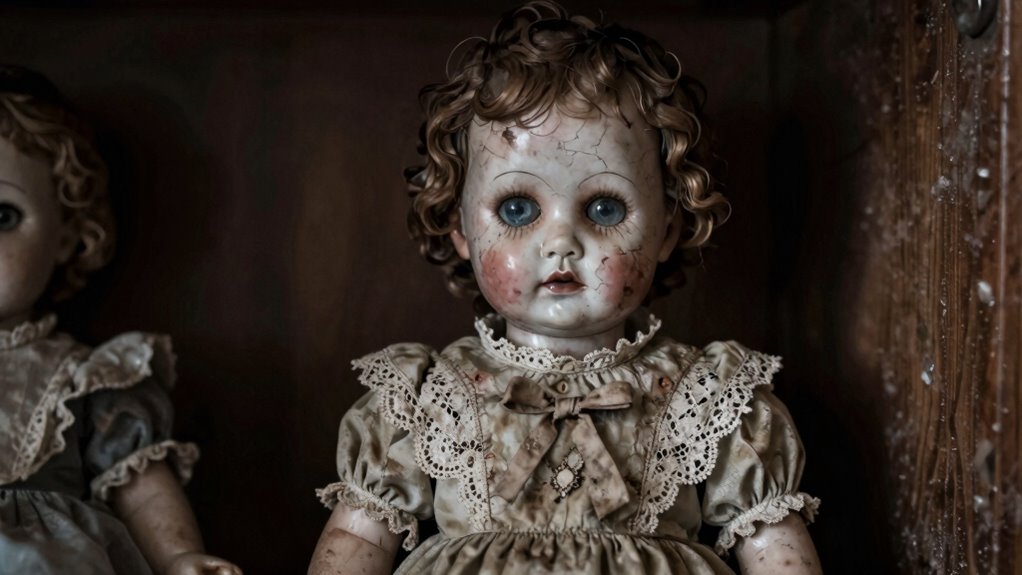
Many believe that haunted dolls are more than just spooky stories—they’re vessels for restless spirits. This belief isn’t new; it’s rooted in cultural origins that stretch across centuries and continents. In many societies, dolls have long been seen as more than simple toys. They often represent spiritual connections, serve as offerings, or act as conduits between worlds. For example, in Haitian Vodou, dolls are used in rituals to communicate with spirits or ancestors. Similarly, in Japan, traditional hina dolls are thought to carry protective qualities, embodying spiritual essence. These cultural origins lend a layer of seriousness and reverence to the idea that dolls can harbor spirits, which feeds into modern portrayals of haunted dolls as vessels of supernatural activity. Cultural significance plays a key role in shaping these beliefs, influencing how different societies perceive the spiritual power of dolls. Understanding the cultural context behind these legends helps clarify why such beliefs persist across different regions and traditions. Additionally, the symbolic meaning attributed to dolls in various cultures often reinforces their perceived spiritual importance, further fueling these legends.
In today’s pop culture, haunted dolls are often depicted as possessed or cursed objects, but these portrayals tend to exaggerate or distort the original legends. Movies and TV shows frequently portray dolls as malevolent entities that move on their own, often causing harm or summoning evil. These modern portrayals emphasize horror and suspense, transforming what was once a cultural or spiritual symbolism into entertainment. While these stories make for compelling horror, they often overlook the deeper roots of the legends. The idea that dolls could be inhabited by spirits is rooted in a mixture of cultural practices, fears, and misunderstandings about the supernatural. Instead of focusing solely on possession or evil spirits, some legends highlight dolls as protective talismans or symbols of loved ones, especially in cultures where ancestors play a significant role in daily life. Supernatural beliefs about dolls often reflect broader cultural anxieties about death and the unknown.
What many don’t realize is that the myth of haunted dolls has evolved over time. In some cases, stories about cursed or haunted dolls emerged from specific cultural contexts, but modern portrayals tend to universalize and sensationalize these legends for entertainment. The truth is, the stories often reflect cultural fears about death, spirits, and the unknown rather than actual supernatural phenomena. Whether you believe in spirits or not, understanding the cultural origins behind haunted dolls helps you see past the sensationalized modern portrayals. Recognizing that these legends are deeply rooted in specific cultural practices and beliefs can help you approach the stories with a more nuanced perspective. Haunted dolls, in their original contexts, might symbolize protection, remembrance, or spiritual connection—far from the malevolent objects depicted in contemporary horror.
As an affiliate, we earn on qualifying purchases.
Frequently Asked Questions
Are Haunted Dolls Real or Just Urban Legends?
Haunted dolls are mostly urban legends rather than real. You might see them as cultural symbolism or collector’s obsession, fueling spooky stories. These legends persist because they tap into fears and fascination with the supernatural, but there’s no solid evidence to prove they’re genuinely haunted. Most stories are rooted in folklore, making haunted dolls fascinating myths rather than actual phenomena, so you can enjoy them without fear.
What Are the Origins of Haunted Doll Stories?
Think of haunted doll stories as echoes from folklore traditions, rooted in centuries-old fears and superstitions. Their origins trace back to when doll manufacturing often involved spiritual or ritualistic practices, fueling tales of spirits inhabiting these objects. These stories grew through oral traditions, blending cultural beliefs with local legends. Over time, they transformed into the haunting legends we hear today, often exaggerated for entertainment, but their roots remain deeply embedded in history and myth.
Have Any Haunted Dolls Caused Actual Harm?
Yes, some haunted dolls are believed to have caused harm, often tied to cultural symbolism and psychological explanations. People think these dolls carry negative energy or spirits, leading to accidents or misfortune. Psychologically, fear and superstition can make individuals interpret normal occurrences as supernatural. While there’s no scientific proof, these stories persist, fueling the idea that haunted dolls can indeed cause harm through their symbolic meanings and psychological effects.
How Do Experts Explain Haunted Doll Phenomena?
Experts explain haunted doll phenomena through psychological explanations and cultural influences. You might experience perceived hauntings due to suggestibility, subconscious expectations, or the power of suggestion, which make the mind interpret normal movements or sounds as supernatural. Cultural influences also shape your beliefs, making you more likely to see dolls as haunted based on stories and media. These factors work together to create the illusion of paranormal activity, even when there’s no real supernatural cause.
Can Haunted Dolls Be Possessed by Spirits?
Haunted dolls can indeed be possessed by spirits through spirit attachment, where a spirit latches onto the doll, making it seem alive or active. Some believe this attachment can cause poltergeist activity, such as movement or strange noises. While skeptics see it as psychological or environmental, many claim that these spirits influence the doll’s behavior, making it a vessel for supernatural phenomena.
Conclusion
So, next time you hear about haunted dolls, remember to question the myth, to seek the story behind the legend, and to understand the truth beyond the tales. Don’t let fear feed the fiction, don’t let superstition shape your perspective, and don’t let the myths make the dolls seem more haunted than they really are. Because the real story, the true history, is often simpler—and sometimes, just a little less spooky.
Halloween Picks
halloween
As an affiliate, we earn on qualifying purchases.