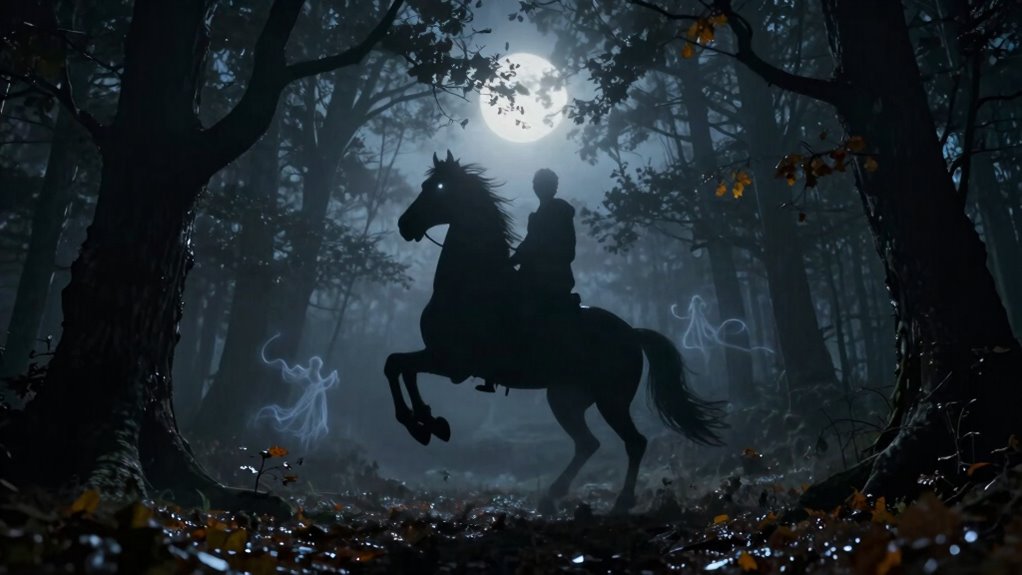

The legend of the Headless Horseman blends early American folklore, like Washington Irving’s story, with European ghost traditions, making it partly real and partly exaggerated over time. While sightings of a headless rider on horseback have been reported, many details were added later to enhance its spooky appeal, drawing on natural fears and local storytelling. If you keep exploring, you’ll uncover how these stories evolved and what truths behind them may exist.
Key Takeaways
- The headless horseman legend originated from early American folklore and European traditions, blending fact and myth.
- Washington Irving’s “The Legend of Sleepy Hollow” popularized and shaped the modern narrative.
- Early stories were simple warnings or explanations for natural phenomena, later elaborated into elaborate tales.
- Many reported sightings and details are added over time, mixing folklore, local fears, and entertainment.
- The core imagery of a headless rider persists, but specific stories and details have evolved and become mythologized.
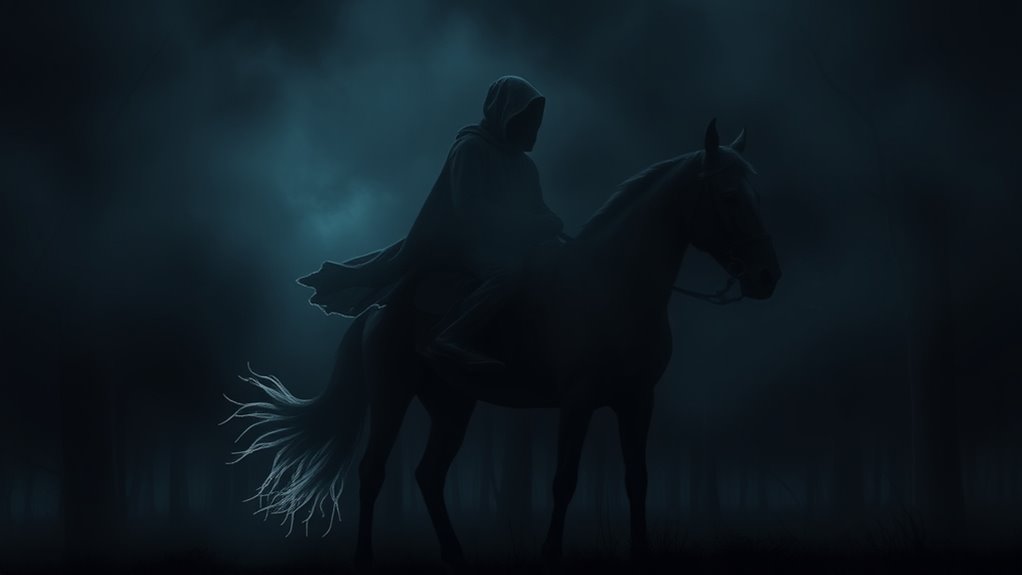
The Legend of the Headless Horseman has captivated audiences for generations with its eerie tale of a ghostly rider who haunts the quiet countryside. This story is deeply rooted in horseman folklore, a rich tapestry of legends that feature spectral sightings and ghostly riders. These tales often describe a rider without a head, moving through the night on a spectral steed, searching for something lost or seeking revenge. As you explore the history of this legend, you’ll find that many versions exist across different cultures, each adding its own twist to the story. The consistent theme, however, is the unsettling image of a headless figure mounted on a ghostly horse, creating a chilling image that persists in local stories and ghost lore.
The headless horseman legend endures through diverse cultures, haunting tales of spectral riders searching for lost causes or revenge.
You might wonder where this story originated or why it’s persisted so strongly in popular culture. The tale of the headless horseman is often linked to early American folklore, particularly in regions like Sleepy Hollow, where Washington Irving’s famous story cemented its place in literary history. But even before Irving’s version, various European traditions told of spectral horsemen appearing suddenly on dark, foggy nights. These sightings weren’t just stories to scare children; they served as warnings or explanations for unexplained phenomena. Spectral sightings of ghostly riders became a way to personify the unknown, turning frightening natural events or accidents into stories of supernatural riders. Additionally, the use of supernatural imagery in these legends amplifies their unsettling effect and keeps the stories alive in cultural consciousness.
The legend’s evolution is also shaped by the way communities interpret these sightings. Over time, stories grew more elaborate, blending fact with fiction. Sometimes, witnesses claimed to see a headless rider galloping through the shadows, especially during foggy evenings or stormy nights. These sightings weren’t just random; they became part of a local horseman folklore that explained strange sounds or mysterious lights. As you explore different accounts, you’ll notice how the story adapts, often reflecting fears or cultural values of the time. The legend’s endurance is rooted in its ability to tap into universal fears of the unknown and the uncanny, making spectral sightings of this headless figure a powerful symbol of supernatural mystery that persists in storytelling.
Frequently Asked Questions
Are There Any Real Sightings of the Headless Horseman?
You won’t find confirmed spectral sightings of the headless horseman, as most reports stem from folklore origins and local legends. People have shared stories of ghostly apparitions and eerie encounters, but these are typically considered part of folklore rather than verified sightings. The legend persists because of its cultural significance, but there’s no solid evidence to prove the headless horseman is real. It’s more about storytelling than actual encounters.
How Did the Legend Originate in Sleepy Hollow?
A picture is worth a thousand words, and the legend of Sleepy Hollow grew from local folklore evolution and regional adaptations. You can trace its roots to Washington Irving’s 1820 story, inspired by earlier European tales of headless riders. The tale morphed over time, blending local superstitions and stories, creating a haunting legend that captures the imagination. Irving’s vivid storytelling cemented Sleepy Hollow’s reputation as the home of the headless horseman.
Has the Story Influenced Modern Horror Stories?
Yes, the story has greatly influenced modern horror stories by inspiring themes of supernatural encounters and eerie folklore. You’ll notice its impact in how supernatural elements are woven into tales of ghostly riders and haunted landscapes. The folklore evolution from the Headless Horseman legend shows how legends transform into chilling narratives, shaping the horror genre’s use of supernatural themes, making stories more suspenseful and spine-tingling for audiences today.
Are There Any Historical Figures Linked to the Legend?
You’ll find no solid historical figures directly linked to the Headless Horseman legend, as it mainly stems from urban legends and folklore origins. These stories evolve over time, blending fact and fiction, making it hard to pin down real people behind the myth. The legend’s roots likely come from old tales of ghostly apparitions and supernatural riders, which have been passed down through generations, fueling the spooky folklore we still tell today.
What Are the Most Common Variations of the Legend Worldwide?
You’ll find that the most common variations of the Headless Horseman legend involve a headless rider haunting rural areas, forests, or battlefields. Cultural adaptations often incorporate local folklore symbolism, like spirits or vengeful ghosts, which deepen the story’s meaning. These versions emphasize themes of justice, revenge, or tragedy, making the legend resonate across different cultures while maintaining the core motif of a headless specter riding through the night.
Conclusion
So, as the story of the headless horseman haunts history and hearts, remember that legends often blur fact and fiction. While you might want to believe in the spooky specter, it’s the stories spun over time that truly shape the tale. Whether real or just a ruse, the haunting history hooks us. Keep curious, question quickly, and enjoy the eerie enchantment of this enduring legend forever etched in imagination.