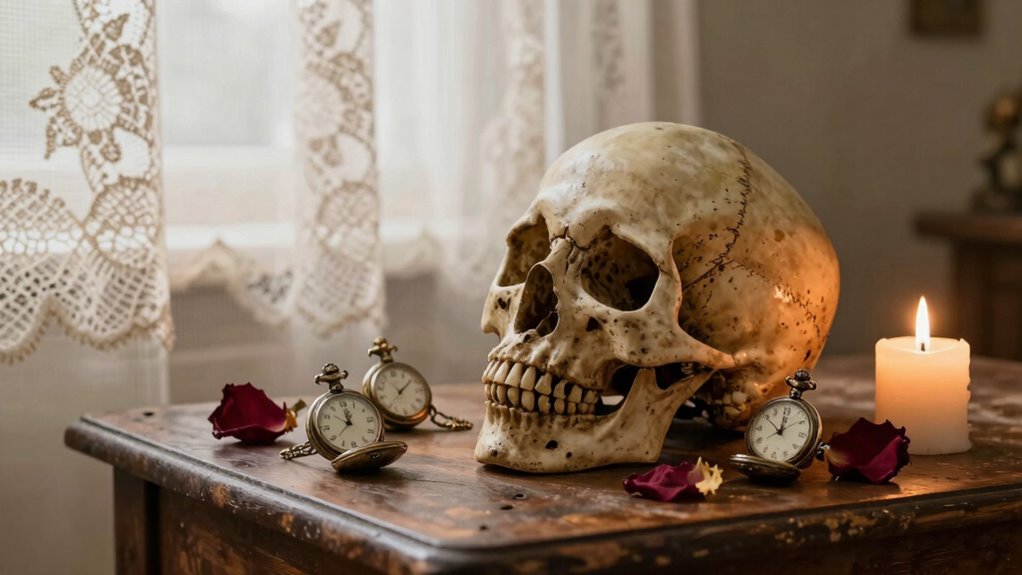

Memento mori isn’t morbid; it’s a meaningful reminder that death is a natural part of life, reflected in skull decor. Historically, skulls symbolized mortality, encouraging reflection and humility without fear. Over time, this symbolism has evolved into stylish, modern expressions of resilience, rebirth, and self-awareness. Embracing these symbols can inspire you to appreciate life’s fleeting beauty and live with purpose. If you explore further, you’ll discover the rich history and deeper meanings behind this enduring tradition.
Key Takeaways
- Memento mori reminds us of life’s brevity, encouraging reflection rather than fear, rooted in historical symbols like the skull.
- Skull decor evolved from symbols of mortality to representations of resilience, rebirth, and personal strength.
- Modern interpretations blend the awareness of life’s impermanence with aesthetic beauty, making it a meaningful, non-morbid symbol.
- Embracing skull imagery fosters mindfulness about mortality, inspiring living intentionally and appreciating each moment.
- Ultimately, skull decor celebrates the natural cycle of life and death, emphasizing purpose and self-awareness rather than morbidity.
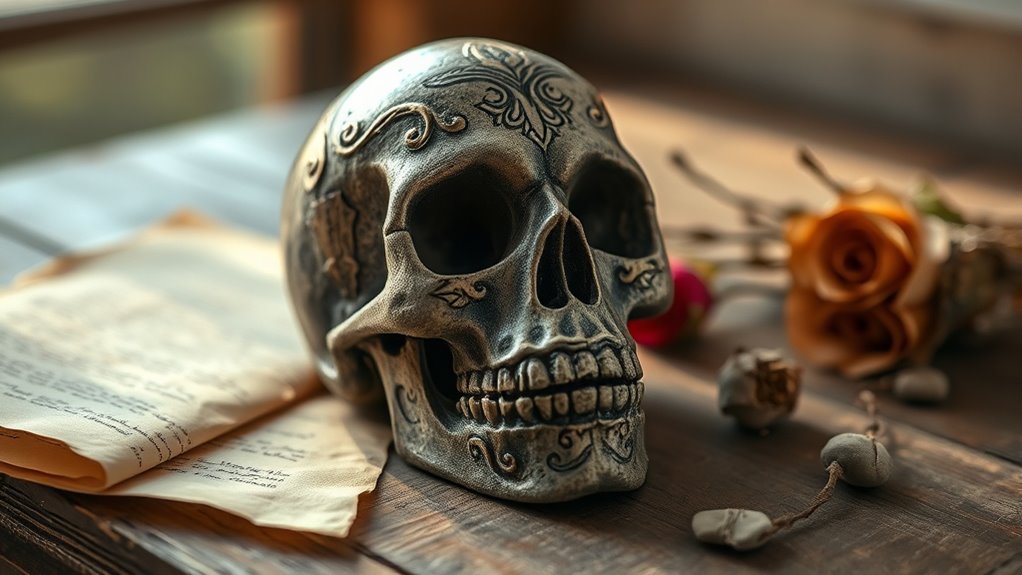
Throughout history, the concept of memento mori—reminding us of life’s brevity—has inspired both philosophical reflection and artistic expression. It’s a powerful reminder that life is fleeting, urging us to reflect on what truly matters. When you see skull decor, whether in art, jewelry, or home accents, you’re engaging with a symbol that carries deep roots in history symbolism. For centuries, skulls served as memento mori, a visual prompt to contemplate mortality and live intentionally. In early European art, skulls often appeared in vanitas paintings, emphasizing the transient nature of worldly possessions and pleasures. These symbols weren’t meant to evoke fear but to inspire mindfulness and humility. Over time, the symbolism evolved, and in modern interpretations, skull decor has taken on a broader, sometimes more playful tone. Today, you might see skulls incorporated into fashion, tattoos, or decor with an aesthetic that balances morbidity and beauty. This shift reflects a contemporary view that embraces mortality as part of life’s natural cycle, rather than something to hide or fear.
Modern interpretations of skull symbolism often challenge traditional notions of death, transforming it into a symbol of resilience, rebirth, or even rebellion. You might choose skull decor not just for its edgy appeal but to remind yourself of life’s impermanence and the importance of living fully. The skull, once a stark memento mori, now also symbolizes strength and individuality. Artists and designers frequently use skull imagery to provoke thought or express personal philosophies, blending historical symbolism with contemporary style. Whether as a subtle accessory or a bold statement piece, skull decor invites you to confront mortality in a way that’s meaningful rather than morbid. It’s a reminder that death is universal, but your attitude toward it can shape how you live now. The enduring symbolism of the skull continues to inspire, encouraging you to reflect on your values and priorities. Recognizing the symbolic significance of skulls helps deepen your understanding of their role in cultural expression and personal symbolism. Ultimately, skull decor isn’t about fear; it’s about embracing life’s fleeting nature with awareness and purpose, honoring the history symbolism behind it while adapting it to fit your modern life.
Frequently Asked Questions
How Did Memento Mori Originate Historically?
You should know that memento mori originated in ancient Rome and medieval Europe, where funeral rituals and artistic symbolism served to remind people of mortality. Artists used skulls and other symbols to encourage reflection on life’s fleeting nature. These reminders helped individuals focus on spiritual growth rather than material pursuits, turning mortality into a meaningful part of cultural and religious practices rather than something morbid.
Are Skull Decorations Culturally Specific or Universal?
Skull decorations are both culturally specific and have regional variations, reflecting diverse cultural symbolism. In Mexico, skulls symbolize celebration and remembrance during Día de los Muertos, while in Western cultures, they often serve as reminders of mortality. You’ll find regional variations in style and meaning, but universally, skull decor prompts reflection on life and death. It’s a powerful symbol that resonates differently across cultures, making it both universal and uniquely meaningful.
Can Skull Decor Be Used in Modern Interior Design?
Ever wondered if skull decor fits in modern interiors? Absolutely, it does! Contemporary trends embrace bold, symbolic pieces, making skull decor a striking focal point. Its cultural symbolism adds depth and meaning, blending edgy aesthetics with personal expression. You can incorporate skull accents into your space through artwork, accessories, or furniture, creating a unique vibe. Are you ready to transform your home with this powerful, timeless motif?
What Materials Are Commonly Used for Skull-Themed Decor?
You’ll find skull-themed decor crafted from materials like resin, ceramic, metal, and wood, each chosen for artistic craftsmanship and material durability. Resin and ceramic offer detailed, intricate designs, while metal provides strength and a modern edge. Wooden skulls add warmth and texture. Consider durability and style when selecting, ensuring your decor pieces reflect your personal taste and stand the test of time.
How Does Skull Decor Influence Personal Mindset or Philosophy?
Remember, what you focus on grows. Skull decor can spark a mindset transformation by reminding you of life’s fleeting nature and encouraging philosophical symbolism. It prompts you to cherish each moment, embrace mortality, and live intentionally. This powerful visual cue helps shift your perspective from fear to acceptance, fostering a deeper appreciation for life’s transient beauty and inspiring you to prioritize what truly matters.
Conclusion
Remember, embracing memento mori isn’t about fear; it’s about appreciating life’s fleeting nature. Did you know that 78% of people who reflect on mortality report feeling more grateful and fulfilled? By incorporating skull decor as a reminder, you can inspire yourself to live intentionally every day. So, next time you see skulls, think of them as symbols of meaning and mortality—motivating you to cherish each moment rather than fear it.