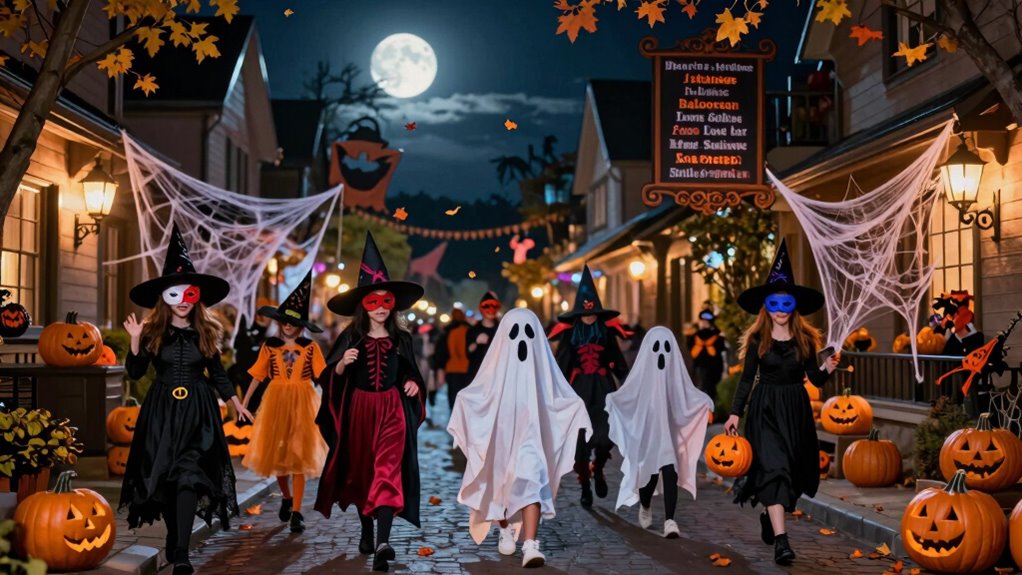

The many names for Halloween, like “All Hallows’ Eve,” “Fright Night,” or “Witch’s Night,” reveal its deep roots in history, folklore, and cultural traditions. These terms highlight its origins from harvest festivals, spiritual rituals, and folk beliefs, as well as its evolution into playful and spooky celebrations. Each name offers a glimpse into how this holiday’s identity has shifted over time, and if you look closer, you’ll uncover even more fascinating stories behind them.
Key Takeaways
- Halloween names like “All Hallows’ Eve” reflect its religious origins linked to All Saints’ Day.
- Variations such as “Fright Night” highlight the holiday’s playful and spooky themes.
- Names derived from folklore, like “Witch’s Night,” emphasize its roots in witchcraft and supernatural symbolism.
- The evolution of names shows a shift from spiritual rituals to festive, community-centered celebrations.
- Different names reveal cultural influences and how Halloween has retained mystery, mischief, and spiritual significance over centuries.
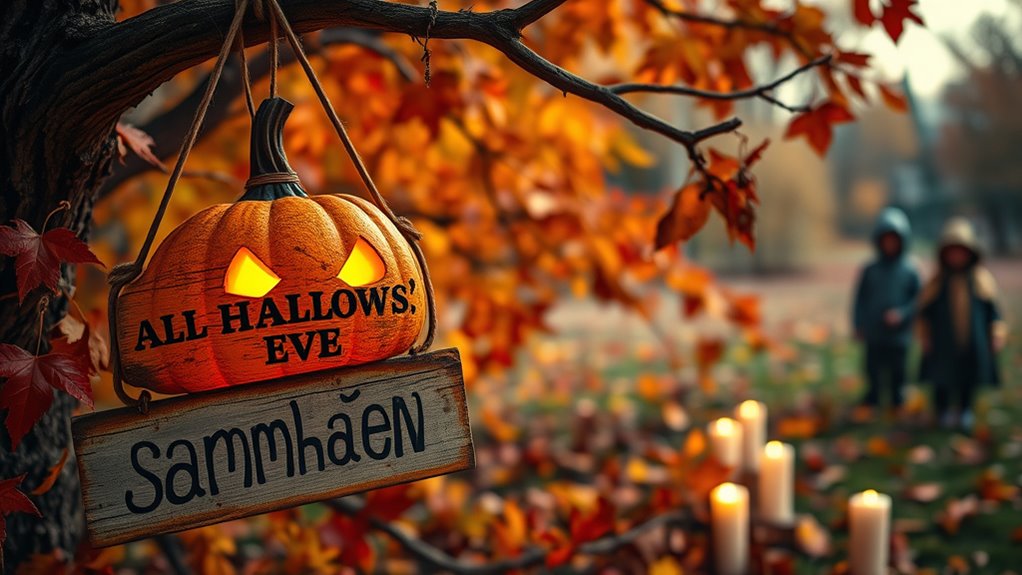
Ever wondered where the spooky and playful names associated with Halloween originate? The roots of many of these names trace back to the history of harvest festivals and the evolution of spooky symbolism over centuries. Long before Halloween became a global celebration, ancient cultures marked the end of the harvest season with festivals that honored the changing seasons and the spirits believed to wander among us. These early harvest festivals, like the Celtic Samhain, signaled the boundary between the living and the dead, fostering rituals meant to ward off evil spirits and honor ancestors. As time went on, these traditions blended with other cultural practices, gradually shaping the playful yet eerie names we associate with Halloween today.
The evolution of spooky symbolism is central to understanding the many names for Halloween. Over centuries, symbols like pumpkins, black cats, and witches transformed from mere folklore into iconic representations of the holiday’s mysterious nature. Originally, these symbols served practical or spiritual purposes—carved turnips to scare away spirits or black cats seen as omens. As stories and superstitions grew, so did the names that reflect this spooky charm. Words like “All Hallows’ Eve” highlight its religious origins, while modern nicknames such as “Witch’s Night” or “Spook Night” emphasize the playful, spooky atmosphere that’s become part of our cultural identity.
Additionally, the symbolism associated with Halloween has evolved from superstitions to a broader cultural iconography, influencing the variety of names used across different regions. These names reveal how Halloween has evolved from solemn rituals to a festive occasion filled with costumes, tricks, and treats. For instance, “All Hallows’ Eve” underscores its connection to the Christian observance of All Saints’ Day, while “Hallowe’en” captures the linguistic evolution over time. Other terms like “Ghost Night” or “Fright Night” emphasize the holiday’s focus on ghosts, monsters, and supernatural fun. Each name encapsulates a different aspect of Halloween’s layered history—its spiritual origins, its folk traditions, and its modern-day revelry. Recognizing these names helps you see how the holiday’s identity has shifted, yet retained its core elements of mystery, mischief, and remembrance.
Frequently Asked Questions
Are There Regional Variations in Halloween Names Worldwide?
Yes, there are regional variations in Halloween names worldwide. You’ll notice different slang and linguistic diversity shape what people call the holiday, like “All Hallows’ Eve” in English-speaking countries or “Noche de Brujas” in Spanish-speaking regions. These regional slang terms reflect local customs and cultural influences, making the holiday unique wherever you go. So, exploring Halloween names reveals much about local traditions and linguistic diversity across the globe.
How Did the Term “Samhain” Influence Modern Halloween Traditions?
You might think Halloween just popped up overnight, but its roots trace back to samhain, the ancient Celtic festival marking the end of harvest and start of winter. Samhain’s influence on modern customs is huge—think costumes, bonfires, and spooky stories. Its origins of samhain celebrations show how it was a time to honor spirits, which now fuels our haunted houses and trick-or-treating. Basically, we’re still celebrating the ancient, spooky spirit of samhain!
Do Different Names for Halloween Reflect Distinct Cultural Beliefs?
Different names for Halloween do reflect distinct cultural beliefs, shaping how you perceive the holiday’s significance. The cultural significance of Halloween names shows how language influences perceptions—names like Samhain or All Hallows’ Eve highlight spiritual or historical roots, while others emphasize fun or fear. These variations reveal how cultures interpret the holiday, influencing traditions, symbols, and the overall atmosphere you experience during Halloween celebrations.
When Did “Halloween” Become the Dominant Term Globally?
Halloween’s rise to global dominance happened gradually, like a tide shaping shores over centuries. The historical evolution of Halloween terminology shows how language shifts influenced its naming, spreading from Ireland to worldwide. By the 20th century, “Halloween” became the dominant term, thanks to media, commercialization, and cultural exchange. These changes solidified “Halloween” as the name that echoes across nations, transforming a Celtic festival into a universally recognized celebration.
Are There Historical Names for Halloween That Are No Longer Used?
You’ll find that historical naming conventions for Halloween include terms like “Samhain,” which was used in Celtic traditions, and “All Hallows’ Eve,” dating back to medieval times. Over the centuries, these names have evolved, and some, like “Trick or Treat,” emerged later. Today, “Halloween” is dominant, but exploring these older terms reveals the rich evolution of Halloween terminology and its cultural roots.
Conclusion
As you see, Halloween’s many names reflect its rich history and cultural significance. Each name reveals a different aspect of the celebration, reminding you that understanding its roots deepens your appreciation. Remember, “A rose by any other name would smell as sweet,” showing that the true spirit of Halloween lies in the memories and traditions you create, no matter what you call it. Embrace the history and enjoy the magic of this special night.