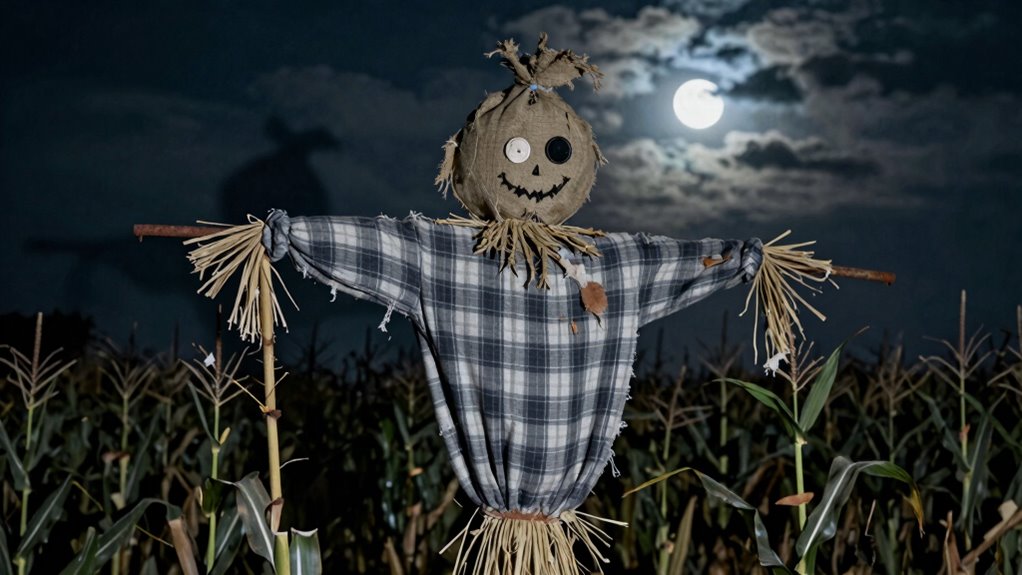
Scarecrows have long symbolized protection, warding off birds and evil spirits to safeguard crops and harvests. But folklore also depicts them as haunted or cursed objects, capable of movement or supernatural activity, with legends describing their eerie, life-like presence. Their dual role as guardians and sinister mysteries reflect cultural beliefs about spirits, protection, and fear. To uncover more about their fascinating past and supernatural associations, keep exploring their rich folkloric history.
Key Takeaways
- Scarecrows originated as symbols of protection, warding off birds and evil spirits during harvest seasons.
- They are imbued with spiritual significance, believed to house spirits or serve as protective vessels.
- Legends depict haunted scarecrows that move, cry, or possess supernatural powers, fueling fears of possession.
- Their dual symbolism embodies both guardianship and fear, representing hope and potential malevolence.
- Cultural folklore links scarecrows to supernatural encounters, making them icons of both protection and eerie, haunted figures.
Scarecrows have long been more than simple farm tools; they’re woven into the folklore and legends of many cultures. You might think of them as just decoy figures meant to scare away birds, but historically, they carry deeper meanings rooted in haunted legends and cultural symbolism. In some traditions, scarecrows are believed to be more than lifeless dummies—they’re thought to possess protective qualities or even serve as vessels for spirits. Their eerie appearance and silent vigil have inspired stories of ghostly encounters, haunted legends that suggest these figures can ward off or attract supernatural forces. This duality is central to their symbolism: to some, they’re guardians of crops, warding off evil spirits, while others see them as haunted symbols, embodying the boundary between the living and the dead.
Throughout history, scarecrows have been associated with spiritual and supernatural beliefs. In rural communities, villagers often viewed them as protectors not just of harvests but also of the land itself. Folklore suggests that scarecrows could house spirits or serve as conduits for ancestral protection, which is why many cultures imbue them with symbolic significance. Their presence is thought to keep malevolent spirits at bay, especially during harvest festivals or seasonal changes when the boundary between worlds is believed to be thinnest. These cultural symbols reinforce the idea that scarecrows are guardians, not just for crops but for spiritual well-being as well. Interestingly, some legends depict scarecrows as haunted objects that can become possessed or animated by spirits, blurring the lines between the natural and supernatural.
Scarecrows serve as spiritual guardians, protecting crops and the land from malevolent forces during harvest seasons.
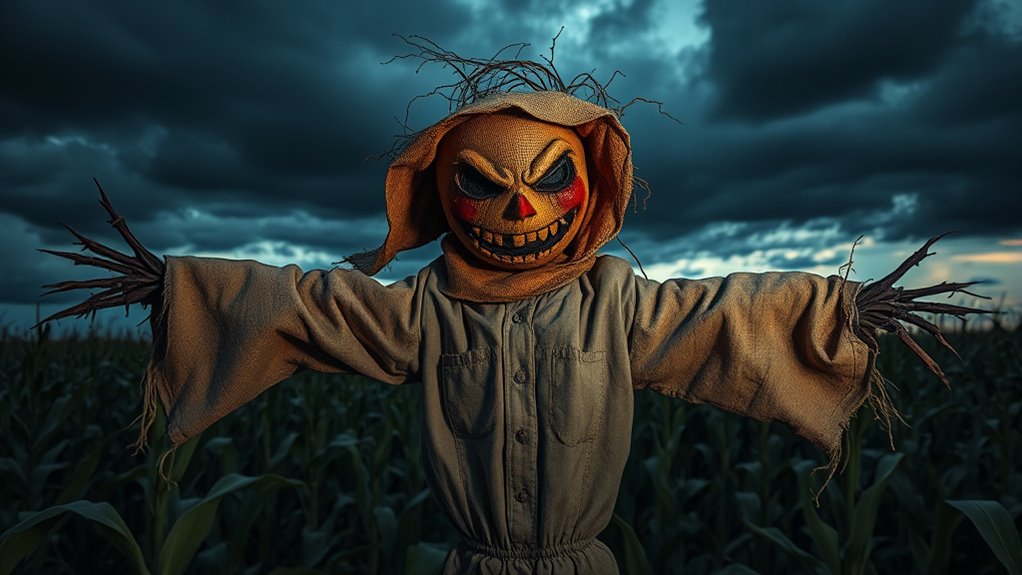
However, their haunted legends also give scarecrows a darker reputation. Tales of haunted fields often describe scarecrows that seem to move or change position overnight, as if possessed by restless spirits. Some legends tell of scarecrows that cry out or appear to have a life of their own, blurring the line between the natural and supernatural. These stories fuel fears that scarecrows can become haunted objects, cursed or inhabited by spirits seeking revenge or lingering from beyond the grave. Their unsettling silent stare and twisted forms make them ideal symbols of the uncanny, embodying fears that something otherworldly lurks behind their simple wooden frames.
In essence, scarecrows symbolize a complex blend of protection and terror. They’re cultural icons rooted in ancient beliefs, embodying both the hope of safeguarding crops and the fear of haunted legends that remind us of the supernatural forces lurking just beyond our perception. Whether viewed as benevolent guardians or haunted remnants of folklore, scarecrows continue to evoke fascination and unease, standing as silent sentinels at the intersection of tradition and superstition.
Frequently Asked Questions
How Did Scarecrows Originate in Ancient Cultures?
You might find that scarecrows originated in ancient agricultural rituals, where farmers used them to protect crops from pests and evil spirits. Their folklore origins trace back to various cultures, like ancient Egypt and Greece, where figures resembling scarecrows appeared in myths and rituals. These early practices aimed to invoke protection, blending practical farming needs with spiritual beliefs, shaping the scarecrow’s role from a simple guardian to a symbol woven into cultural stories.
Are There Specific Materials Believed to Enhance Scarecrow Protective Powers?
You sense the eerie stillness as traditional textiles and organic materials come together, believed to amplify a scarecrow’s protective aura. Wrapping it in rough burlap or old clothes, you think about how these materials blend with straw and wood, creating an unsettling figure that wards off spirits and pests alike. These natural elements, steeped in folklore, seem to forge a stronger barrier, transforming mere scarecrows into symbols of primal protection.
What Are Some Lesser-Known Superstitions Associated With Scarecrows?
You might not realize it, but some lesser-known superstitions link scarecrows to bird symbolism, believing they can attract or repel certain birds during harvest festivals. For example, placing a scarecrow in a specific direction supposedly influences bird behavior, protecting crops better. Others think that dressing scarecrows with items like feathers or shiny objects can enhance their power, ensuring a bountiful harvest and warding off evil spirits during these festivals.
Do Scarecrow Legends Vary Significantly Across Different Regions?
You’ll find scarecrow legends vary substantially across regions due to different regional beliefs and folklore variations. In some areas, scarecrows are seen as protectors warding off evil spirits, while in others, they’re believed to trap spirits or bring bad luck. These cultural differences shape how communities interpret scarecrow symbolism, making their legends rich and diverse. Your understanding deepens when you explore how local folklore influences scarecrow stories worldwide.
How Have Scarecrows Influenced Modern Horror Stories and Media?
You see, scarecrows influence modern horror stories and media through their urban symbolism, representing fear, death, or the uncanny. In cinematic portrayals, filmmakers amplify these themes, transforming scarecrows into sinister figures that evoke unease or terror. Their unsettling appearance and eerie presence make them perfect for horror genres, tapping into primal fears and creating memorable, chilling scenes that resonate with audiences worldwide.
Conclusion
As you explore the folklore of scarecrows, you realize they’re more than just farmers’ protectors—they’re like silent sentinels guarding centuries of stories. From symbols of hope to harbingers of terror, they’ve woven themselves into the fabric of our fears and beliefs. So, next time you see a scarecrow standing still in a field, remember, it’s not just a figure of straw—it’s a storyteller whispering secrets from a long-lost world.