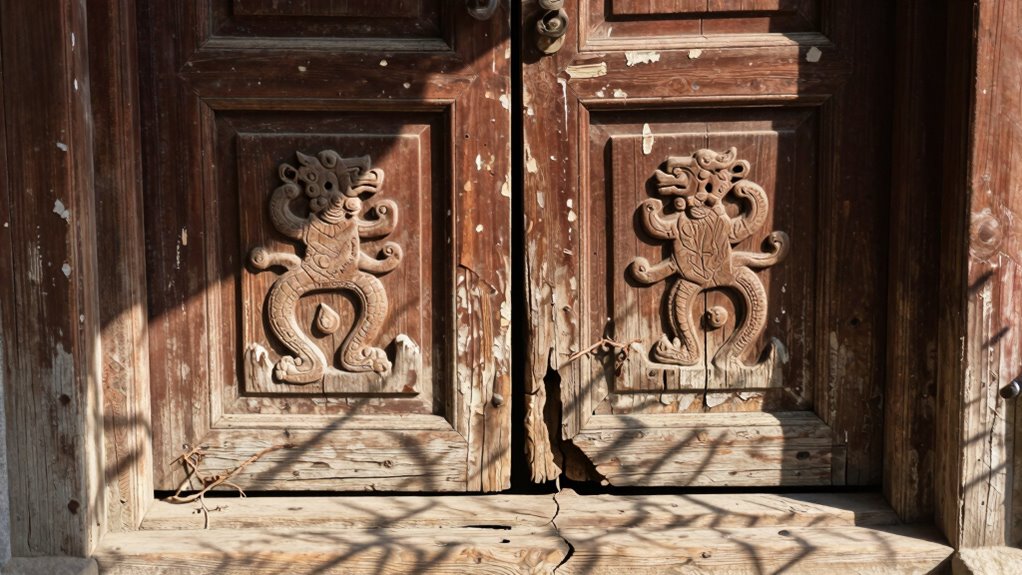

In folklore, thresholds are seen as powerful, magical boundaries that influence luck, spirits, and energies. They serve as gateways between worlds, symbolizing passages and protection. Many cultures believe that crossing or decorating doorways can attract good fortune or ward off evil. Rituals and charms reinforce their significance as liminal spaces. If you keep exploring, you’ll uncover even deeper connections behind the mystical role thresholds play in human belief systems.
Key Takeaways
- Thresholds are viewed as liminal spaces that connect the physical and spiritual worlds, making them inherently magical.
- Doorways serve as boundary points where spirits, energies, and luck can pass through or be warded off.
- Cultural rituals and charms are used at thresholds to protect homes and influence positive or negative energies.
- Stepping over a threshold symbolizes a significant transition or rite of passage, emphasizing its mystical importance.
- Superstitions associate thresholds with safeguarding against malicious entities and attracting good fortune.
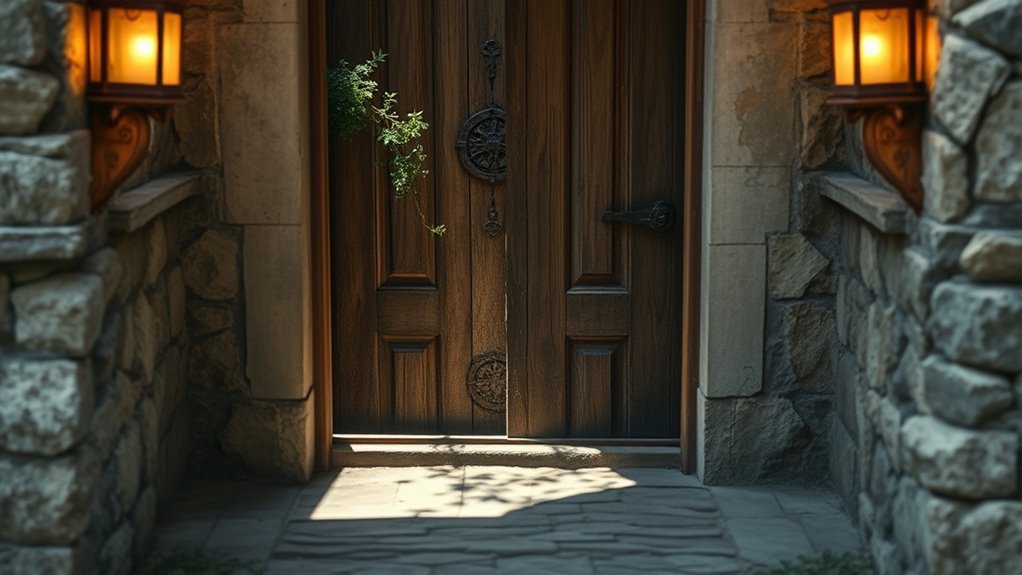
The doorway rule in folklore is a fascinating belief that certain thresholds can influence the way spirits, luck, or energies behave around us. You might have heard stories or traditions where crossing a specific doorway feels like entering a different domain—one where luck shifts or spirits are more active. This idea isn’t random; it’s rooted in superstitious beliefs that view thresholds as powerful symbols, holding the potential to either invite positive energies or ward off negative influences. Throughout history, many cultures have assigned significant cultural symbolism to doorways, considering them as boundary lines that separate the mundane from the supernatural or sacred. In some traditions, stepping over a threshold is seen as a rite of passage or a moment that marks a shift—such as entering a home or a sacred space. You might remember old customs where you’re asked to remove your shoes before crossing the threshold, symbolizing respect and a cleansing of negativity. These superstitious beliefs often stem from the idea that doorways serve as portals, where energies can pass freely, making it essential to manage what crosses that boundary carefully. For example, in ancient folklore, it was believed that spirits or malicious entities could enter your home through open doorways, so specific rituals or charms were used to protect the space. The cultural symbolism assigned to thresholds varies widely, but it consistently underscores the doorway’s role as a liminal space—an intersection between different states of being or realms. Cultural symbolism plays a big role here, as different societies assign unique meanings to thresholds. In some cultures, the main door is decorated with symbols or charms meant to attract good luck and ward off evil, reinforcing the doorway’s role as a barrier and a gateway. The act of crossing a threshold often symbolizes a shift in energy—either welcoming prosperity or repelling misfortune. This belief influences how people treat doorways, from placing protective objects nearby to performing rituals before entering new spaces. You may notice that many superstitions about thresholds involve specific gestures or words—like knocking three times or saying a prayer—because these actions are thought to influence the energies that pass through. The doorway acts as a boundary that holds both physical and spiritual significance, making it a focal point for superstitions and cultural practices. Whether you believe in spirits or simply appreciate the symbolism, understanding the cultural symbolism behind doorways reveals why these thresholds are regarded as more than just physical boundaries—they are seen as magical points that shape the flow of luck, energy, and spirits around us.
Top picks for "doorway rule folklore"
Open Amazon search results for this keyword.
As an affiliate, we earn on qualifying purchases.
Frequently Asked Questions
How Did the Doorway Rule Originate Historically?
You see, the doorway rule originates from ancient cultural beliefs that thresholds hold special significance, acting as boundaries between worlds. Historically, many societies regarded thresholds as places of power, where spirits could enter or exit, so they established customs to protect or honor these points. These practices stem from cultural origins that emphasize the magical and protective nature of thresholds, shaping traditions that still influence us today.
Are There Cultures That Do Not Observe the Doorway Rule?
Sure, some cultures toss the doorway rule out the window, so to speak. In places like Japan, doorways often hold less ritual significance, favoring cleanliness or spiritual purity instead. Cultural variations abound, and not everyone treats thresholds as mystical gateways. If you’re thinking thresholds are universally enchanted, think again—many societies see them simply as practical passageways, not portals to the supernatural. So, no, not all cultures observe the doorway rule!
What Modern Practices Are Influenced by the Doorway Rule?
Modern practices influenced by the doorway rule include architectural symbolism like doorways framing entrances and exits, which psychologically affect your perception of space and shift. You might notice that crossing a threshold often signifies a fresh start or change, tapping into subconscious beliefs about thresholds being magical or protective. These practices create a sense of boundary, emphasizing the symbolic power of doorways in daily life, rituals, and design.
Can the Doorway Rule Be Applied to Digital or Virtual Thresholds?
Yes, you can apply the doorway rule to digital symbolism and virtual rituals. When you cross a virtual threshold, like entering a website or joining an online space, it creates a symbolic boundary. This boundary marks a passage, making the experience feel more meaningful. By recognizing these digital thresholds, you can enhance your virtual rituals, emphasizing the importance of beginnings and endings in online interactions, much like traditional doorways.
Are There Scientific Explanations for the Perceived Magic of Thresholds?
You might think thresholds are just symbolic, but science suggests otherwise. The perceived magic of thresholds stems from psychological effects and environmental cues that trigger our brains to switch contexts or roles. When you cross a doorway, your mind adjusts, making you more receptive to change. So, while it seems mystical, it’s really just your brain responding to subtle cues and shifting perceptions, not actual magic.
Conclusion
So, next time you hesitate at a doorway, remember—you’re not just stepping into a room, you’re crossing into a domain of ancient magic. That threshold isn’t just a piece of wood; it’s a mystical barrier that’s been guarding secrets for centuries. Maybe, just maybe, all those folklore fears weren’t so silly after all. Or maybe it’s just a doorway—either way, you’ve been warned: step carefully, or risk releasing centuries of superstition with one careless door swing.