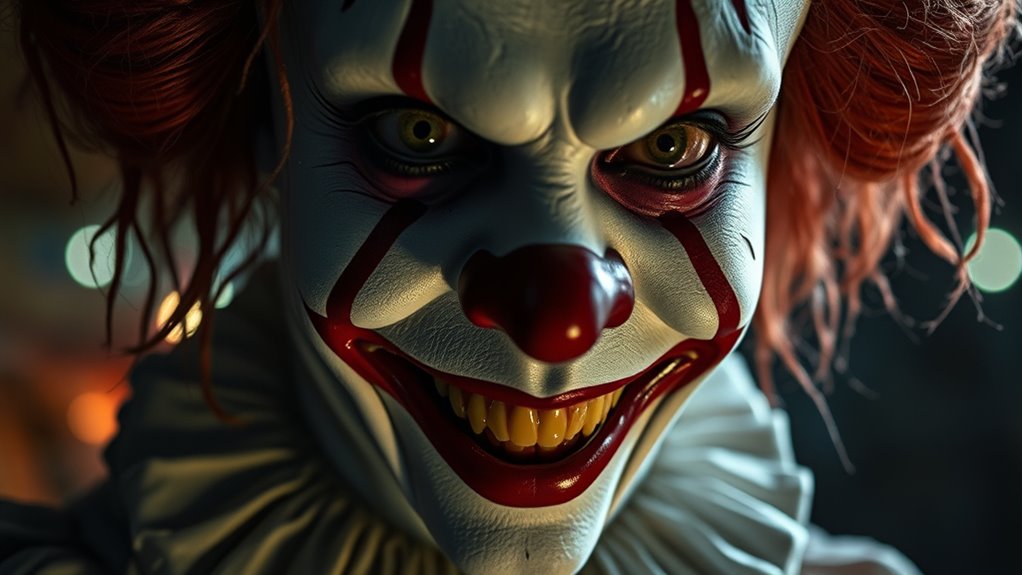
Clowns started as cheerful entertainers in circuses, designed to evoke laughter with exaggerated features and silly antics. Over time, media stories, horror movies, and real-life crimes featuring sinister-looking clowns shifted their image into something frightening. Their exaggerated makeup and masks tap into subconscious fears, especially the uncanny valley effect. If you want to discover how cultural stories and media reinforced these fears, keep exploring how the clown’s reputation changed over the years.
Key Takeaways
- Clowns originated as humorous entertainers in circuses, designed to evoke joy and laughter.
- Exaggerated features and masks created uncanny, unsettling effects that triggered subconscious fears.
- Horror media and movies, like Stephen King’s “It,” popularized the sinister clown image.
- Real-life criminal acts involving disguised clowns reinforced their association with danger.
- Media coverage and cultural stories transformed clowns from friendly performers into symbols of fear.
Have clowns always been frightening, or is their scary reputation a recent development? When you look back, you’ll see that the history of circuses and their performers played a significant role in shaping how we perceive clowns today. Originally, the circus was a joyful spectacle, filled with acrobats, animals, and comedic acts meant to entertain families. Clowns emerged as comedic relief, their exaggerated makeup and silly antics designed to evoke laughter and delight. But as time went on, certain elements began to create psychological triggers that shifted their image from funny to frightening.
The evolution of the clown persona isn’t just about costume and makeup; it’s rooted in deeper psychological reactions. When you consider the history of circuses, you notice how the clown’s exaggerated features—big red noses, painted smiles—are intended to be humorous. Yet, the same exaggerated traits can tap into subconscious fears. For some, these masks become uncanny, triggering discomfort because they distort familiar human features in unsettling ways. This uncanny valley effect can cause a sense of eeriness or unease. The psychological triggers are subtle but powerful: the contrast between a smiling face and the potential for malevolence, or the feeling that behind those painted smiles lies something unpredictable or sinister.
As decades passed, this unsettling aspect of clowns became more pronounced in popular culture. Horror stories, movies, and media began to emphasize the sinister side of clowns, amplifying fears rather than alleviating them. Characters like Pennywise from Stephen King’s “It” capitalized on the fear of the clown as a predator lurking behind a friendly facade. This portrayal feeds into a collective anxiety, making many people associate clowns with danger or malevolence. The psychological triggers now seem to be wired into our cultural consciousness, turning what was once harmless entertainment into something more ominous.
The fear also grew because of real-life incidents involving criminal acts committed by individuals disguised as clowns. These stories reinforced the idea that clowns could be malevolent, a far cry from the original cheerful performers. So, your perception of clowns as frightening might be influenced by a mix of their cultural evolution, the psychological triggers rooted in their exaggerated features, and the dark stories associated with them. Additionally, the media’s portrayal of sinister clowns has contributed to cultural fears, further cementing their frightening reputation. What started as a simple act of comedy has, over time, morphed into a symbol of fear for many, illustrating how cultural narratives and psychological triggers can transform a figure once meant to bring joy into something terrifying.
Frequently Asked Questions
How Did Clowns’ Costumes Influence Their Scary Image?
Your clown costume, especially the makeup and symbolism, plays a big role in making them seem scary. Bright, exaggerated makeup distorts facial features, creating an unsettling look, while costume symbolism, like oversized shoes or dark colors, adds to the eerie vibe. These elements make clowns appear unpredictable and sinister, tapping into fears and transforming their traditionally joyful image into something menacing.
Were There Specific Events That Triggered the Fear of Clowns?
You might have been spooked by specific events that triggered your fear of clowns, like chilling urban legends or childhood experiences that painted them as sinister figures. These stories spread like wildfire, turning innocent clowns into haunting specters in your mind. That childhood memory of a clown’s eerie smile or a spooky tale told in shadows can etch itself deeply, transforming a harmless clown into a symbol of dread over time.
How Do Cultural Differences Affect Clown Perceptions Worldwide?
Cultural differences shape how you perceive clowns through cultural stereotypes and regional symbolism. In some places, clowns symbolize joy and entertainment, while in others, they evoke fear or mistrust. You might find that certain colors, costumes, or behaviors carry specific meanings based on your culture, influencing whether you see clowns as friendly figures or unsettling ones. These varied perceptions highlight how cultural context deeply impacts your view of clowns worldwide.
Did Media Portrayals Contribute to the Fear of Clowns?
Media sensationalism and horror films heavily contributed to your fear of clowns. When movies depict clowns as sinister or frightening, they shape your perception and reinforce the idea that they’re scary. This portrayal, amplified by sensational headlines and horror genres, makes you associate clowns with danger and evil. Over time, these negative images become ingrained, turning a playful figure into a symbol of fear in your mind.
Are There Psychological Reasons Behind Clown Phobias?
You might develop a clown phobia due to psychological reasons like childhood trauma, which creates lasting fear responses. Cognitive biases, such as the tendency to interpret ambiguous clown behaviors as threatening, also play a role. Your brain may associate clown features with danger or unpredictability, reinforcing your fear. These psychological factors combine to make clowns seem scary, even if you can’t pinpoint the exact reason for your phobia.
Conclusion
So, next time you see a clown, remember, their creepy reputation didn’t happen overnight. It’s easy to dismiss it as just a scare tactic, but history, media, and our fears all play a part. Sure, not every clown is scary, but the unsettling ones remind us how perceptions can shift. Whether you love or fear clowns, understanding their dark turn helps you see beyond the makeup and into our collective fears.