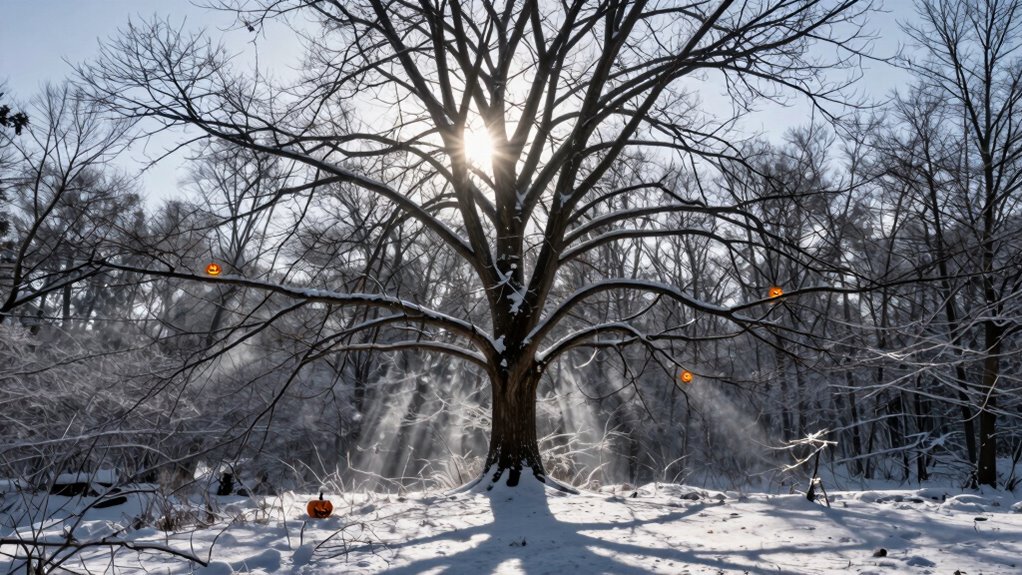

You might think winter solstice and Halloween are just seasonal events, but they share a spooky link rooted in ancient rituals celebrating light’s return and spirits’ presence during the dark season. The solstice marks the rebirth of the sun, while Halloween evolved from Celtic traditions honoring spirits and liminal times. Both symbolize confronting darkness and seeking renewal. Keep going to discover how these traditions intertwine in ways most people overlook.
Key Takeaways
- Both events originate from ancient rituals honoring darkness and the return of light during winter’s longest nights.
- Halloween evolved from Celtic Samhain, a festival marking spirits’ return, linked to beliefs about crossing between worlds.
- The winter solstice symbolizes renewal and hope, while Halloween symbolizes confronting fears and spirits of the dead.
- Modern traditions like lights and candles reflect ancient practices to chase darkness and influence natural cycles.
- Both celebrations serve as cultural attempts to manage winter’s darkness and affirm life’s renewal despite spooky symbolism.
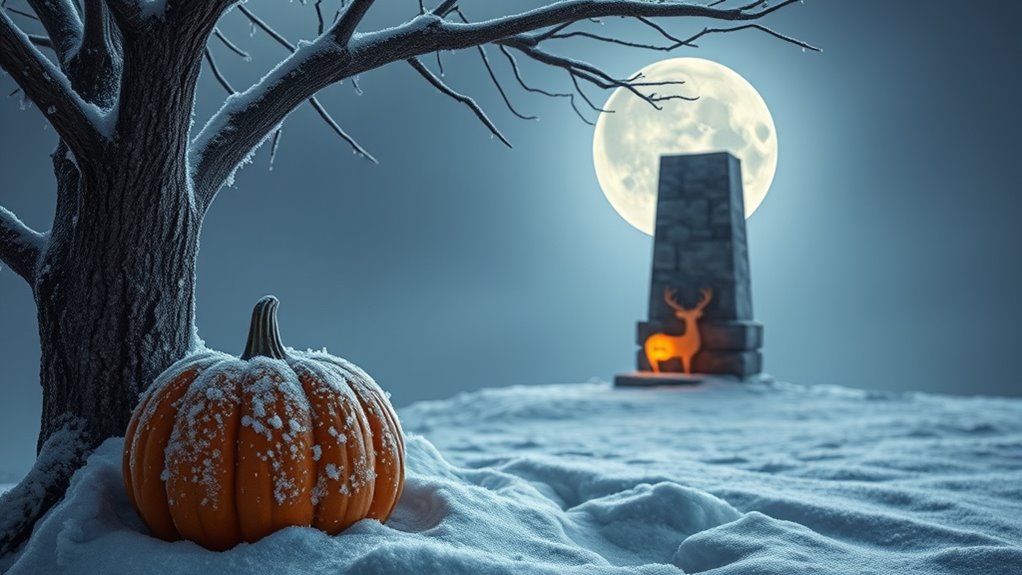
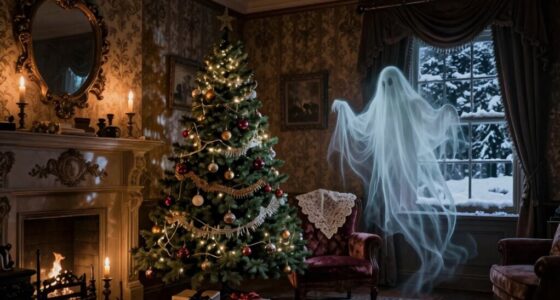
Have you ever wondered how the winter solstice and Halloween, two widely celebrated events during the coldest months, compare? At first glance, they seem worlds apart—one marked by astronomical phenomena, the other by spooky costumes and candy. Yet, both are deeply rooted in ancient rituals and seasonal symbolism that have persisted through centuries. The winter solstice, occurring around December 21st or 22nd in the Northern Hemisphere, signifies the shortest day and longest night of the year. Historically, many ancient cultures, from the Romans to the Celts, observed this event as a time to honor the rebirth of the sun. They believed that by celebrating the return of longer days, they could influence the sun’s cycle and ensure the coming of spring. These rituals often involved lighting fires, candles, or torches—symbolic acts meant to chase away darkness and welcome the returning light. The seasonal symbolism during this time revolves around renewal, hope, and the triumph of light over darkness. It’s no wonder that modern winter festivities often include lights, candles, and bright decorations that echo these ancient practices.
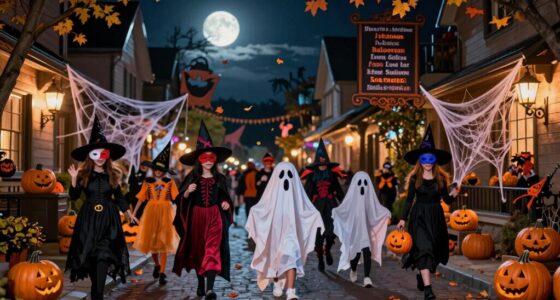
Halloween, on the other hand, has its roots in the Celtic festival of Samhain, which marked the end of the harvest season and the beginning of winter. During Samhain, people believed that the veil between the living and the dead was thinnest, making it easier for spirits to roam the earth. To ward off these spirits or appease them, ancient Celts dressed in costumes and made offerings. As centuries passed, these rituals evolved into Halloween, a celebration that combines elements of fear, fun, and seasonal transitions. The spooky symbolism of Halloween—ghosts, ghouls, and witches—originates from these ancient beliefs, representing the spirits that were thought to return during this liminal time. Over time, Halloween became less about appeasing spirits and more about playful scares, costumes, and community gatherings, but the underlying theme of confronting darkness remains.
Both events encapsulate humanity’s attempt to understand and influence the natural world during the darkest days of winter. The winter solstice’s ancient rituals reflect a reverence for renewal and hope, emphasizing the promise of longer days ahead. Halloween’s eerie traditions symbolize confronting fears, honoring spirits, and the cycle of life and death. Despite their differences, both celebrations serve as cultural reminders of our ancestors’ desire to find light amid darkness, whether through symbolic fires or spooky costumes. They reveal how deeply human history is intertwined with the changing seasons, and how ancient symbolism continues to shape modern traditions during this chilly, contemplative time of year.
Frequently Asked Questions
How Did Halloween Originate From Ancient Solstice Celebrations?
You might not realize it, but Halloween originated from ancient solstice celebrations, blending pagan rituals with beliefs about mythical creatures. During these festivals, people honored spirits and ancestors, often dressing up to ward off evil spirits. Over time, these customs evolved into Halloween, where costumes and spooky themes still reflect those early pagan rituals and the idea of confronting mythical creatures and spirits during the dark, mysterious season.
Are There Any Common Symbols Between Winter Solstice and Halloween?
You’ll notice that both celebrations share symbols like candles and harvest festivals. Candles symbolize comfort, light, and hope, linking the dark, cold winter solstice to Halloween’s haunting hues. Harvest festivals mark fruitful fruition, mirroring Halloween’s harvest-themed traditions. This shared symbolism highlights a seasonal cycle of darkness and light, reminding you of the enduring connection between ancient agricultural practices and modern spooky celebrations, uniting these festivals under a common cultural canopy.
Do Different Cultures Connect Winter Solstice and Halloween Traditions?
Yes, different cultures connect winter solstice and Halloween traditions through shared cultural rituals and mythological origins. You’ll find that many societies celebrate the changing seasons with ceremonies honoring spirits or ancestors, blending myth and tradition. These rituals often mark shifts or ward off evil, reflecting a universal human desire to understand and influence the natural world. By exploring these cultural rituals, you see how diverse groups link the winter solstice with Halloween’s spooky roots.
How Have Modern Holidays Influenced Traditional Solstice and Halloween Rituals?
Like a painter blending colors, modern holiday commercialization and cultural adaptation shape your celebrations today. You might notice how Christmas has absorbed Halloween’s spooky elements or how Halloween’s eerie symbols now appear in winter festivals. These influences transform traditional solstice and Halloween rituals, making them more accessible but also commercialized. You see it in themed decorations, costumes, and festivities that reflect a mix of old customs and new trends.
What Scientific Phenomena Link the Timing of Winter Solstice and Halloween?
You might not realize it, but cosmic cycles and shadow phenomena link the timing of winter solstice and Halloween. As the Earth aligns with its orbit, these points mark significant shifts in light and darkness. Shadow phenomena, like longer nights and mysterious shadows, intensify during this period. These natural patterns influence cultural practices, creating a shared sense of progression, eeriness, and reflection that both holidays celebrate in different ways.
Conclusion
So, next time you celebrate Halloween or mark the winter solstice, remember they’re more connected than you might think. Both festivals tap into our deep-rooted fears and hopes, revealing that history often repeats itself in spookier ways. Don’t overlook the bigger picture; sometimes, history repeats itself, and the shadows of the past still linger in our traditions. Embrace the link, and you’ll see how these holidays reflect our shared human experience—hidden in plain sight.