
The witch trials of the 16th and 17th centuries created powerful stereotypes that still shape Halloween imagery today. Society’s fears and suspicions led to persecutions that painted witches as wicked women with pointed hats, broomsticks, and cackling crones. These images became symbols of misunderstood outsiders and societal fears. If you look closer at Halloween traditions, you’ll see these historical fears hidden behind the playful costumes and spooky decorations. Exploring more reveals how deeply history influences modern celebrations.
Key Takeaways
- Historical witch trials created enduring stereotypes of witches as wicked women, influencing Halloween imagery today.
- Persecutions linked to societal fears and misunderstandings, shaping symbolic representations of witches in modern culture.
- Literature and media romanticized witch stereotypes, reinforcing iconic images like pointed hats and broomsticks.
- Halloween symbols reflect long-standing societal fears, suspicion, and efforts to marginalize those who deviate from norms.
- Recognizing the historical origins of witch imagery deepens understanding of Halloween’s cultural significance and resilience.
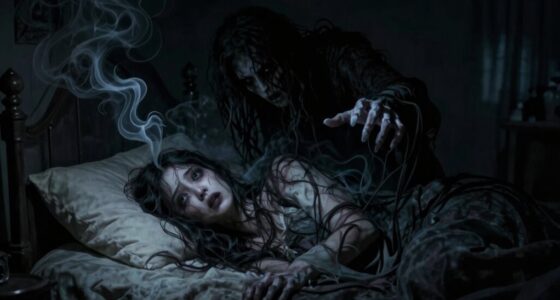
Have you ever wondered how Halloween came to be associated with witches and spooky imagery? The roots of this connection stretch back centuries, shaped by a long history of societal fears and misunderstandings. During the early modern period, countless individuals, mostly women, faced severe consequences simply for practicing alternative spiritualities or holding beliefs outside the mainstream. This era, marked by widespread historical persecution, fueled the image of witches as dangerous, malevolent figures. These persecutions weren’t isolated incidents; they reflected a broader societal tendency to demonize anyone who was different or perceived as a threat. Over time, these fears transformed into stereotypes that persisted in popular culture, casting witches as wicked, cackling women with broomsticks and pointed hats. Today’s Halloween imagery draws heavily from these modern stereotypes, which have been reinforced through literature, movies, and media portrayals. The enduring cultural impact of these historical events continues to influence how witches are depicted today.
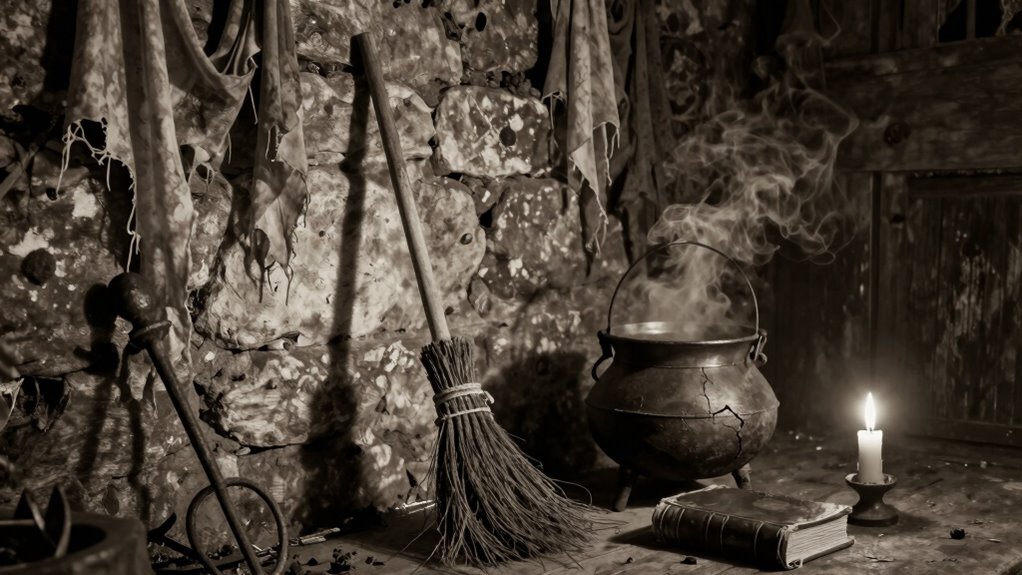
As you celebrate Halloween, you might notice how these images of witches are embedded in decorations, costumes, and stories. Yet, behind this playful facade lies a history of real fear and injustice. The witch hunts of the 16th and 17th centuries, particularly in Europe and colonial America, led to the execution of thousands of accused witches. These events created a lasting cultural imprint, one that is often simplified or sensationalized in modern times. The stereotypes—crones cackling over cauldrons, flying on broomsticks—are rooted in centuries of historical persecution, where accusations often stemmed from social, political, or religious conflicts rather than actual evidence. Over the years, these images were romanticized or exaggerated, turning real fears into caricatures that now serve as Halloween symbols.
Today, Halloween’s witches are more symbolic than literal, but their origins remain tied to those dark, persecutory times. The association persists because it’s easy to tap into a shared cultural memory of fear and suspicion. Yet, understanding the history behind these symbols can deepen your appreciation for the holiday’s complexity. The witch imagery you see today is a blend of modern stereotypes and historical echoes of persecution. Recognizing this helps you see beyond the spooky surface and appreciate how deeply intertwined Halloween is with centuries of societal fears, misunderstandings, and attempts to control or marginalize those who deviated from the norm. In celebrating, you’re part of a tradition that, knowingly or not, continues to reflect those ancient stories of fear, suspicion, and ultimately, resilience.
Frequently Asked Questions
How Did Witch Trials Influence Modern Halloween Costumes?
The historical influence of witch trials directly shapes your Halloween costume design today. You often see costumes featuring pointy hats, wart-covered noses, and dark cloaks, all inspired by the stereotypical images from that era. These elements became iconic symbols, allowing you to embody a witch with authentic historical roots. This connection to history makes your costume more recognizable and adds a layer of storytelling to your Halloween look.
Are There Any Real Witch Trial Artifacts Displayed During Halloween?
You might find some historical artifacts from witch trials displayed during Halloween events or museums, but they’re usually part of modern displays rather than authentic relics. These artifacts help tell the story of the witch hunts, giving you a glimpse into the past. Museums often showcase historical artifacts related to witch trials, allowing you to learn more while celebrating Halloween’s spooky traditions.
Why Are Witches Associated With Evil in Halloween Traditions?
You associate witches with evil in Halloween traditions mainly due to historical misconceptions and cultural stereotypes. These false ideas painted witches as malevolent, fueling fear and suspicion during the witch trials. Over time, these stereotypes persisted, shaping Halloween imagery with witches as sinister figures. This legacy of misconceptions keeps the dark, mysterious image alive, even though modern interpretations often portray witches more playfully or fantastically.
How Did the Imagery of Witches Evolve Over History?
You might think witches always looked spooky, but their imagery has drastically evolved through history. Medieval symbolism painted them as evil, but folklore evolution transformed them into mischievous or wise figures. Over centuries, stories added features like pointy hats and brooms, shaping Halloween imagery. Today, you see witches as a mix of scary and playful, showing how folklore and cultural shifts continually reimagined these mystical figures, making them icons of Halloween fun.
Do Halloween Celebrations Worldwide Incorporate Witch Trial Symbolism?
You’ll find that Halloween celebrations worldwide often incorporate witch trial mythology, reflecting historical fears and superstitions. Many festivals include costumes and decorations inspired by witches, blending historical imagery with modern witchcraft practices. This fusion keeps the symbolism alive, reminding you of past persecutions while celebrating contemporary spiritual practices. The enduring influence of witch trials on Halloween showcases how history continues to shape cultural festivities across the globe.
Conclusion
As you carve a jagged smile into your pumpkin, remember the dark history behind those pointed hats and bubbling cauldrons. The shadowy figures of accused witches still whisper through Halloween’s flickering lanterns, their stories etched into every ghostly silhouette and eerie glow. So, as you don your costume and step into the night, you’re walking through a centuries-old tapestry of fear and fascination — a haunting reminder of how history continues to shape your spooky celebrations.