
To quickly build animal ears and tails, choose flexible, lightweight materials like foam or felt for easy shaping. Use hot glue or sewing to attach ears to headbands or clips and create fluffy tails with faux fur wrapped around wire frames. Secure everything with strong connectors for comfort and movement. Add details like inner ears or whiskers to boost realism. Keep practicing these simple techniques, and you’ll discover even more tips to enhance your designs.

Get decor and gifts delivered free with Prime
- Fast, free delivery on millions of items
- Prime Video, Amazon Music and more included
- Member-only deals all year
Key Takeaways
- Use lightweight foam or felt for fast, flexible construction of ears and tails.
- Attach features securely with hot glue or staples for quick, durable assembly.
- Shape wire frames to quickly form natural curves and structures.
- Incorporate pre-made faux fur or textured materials for instant realistic or whimsical effects.
- Focus on symmetrical, simple designs with minimal detailing for rapid, effective builds.
As an affiliate, we earn on qualifying purchases.
Choosing the Right Materials for Swift Animal Features

When selecting materials for creating animal ears and tails, you need to prioritize flexibility and durability to achieve a natural look and feel. These qualities help your creations mimic animal behavior more convincingly while withstanding wear. Consider choosing foam, felt, or silicone, as they offer the right balance of pliability and resilience. Using eco-friendly materials also supports habitat conservation efforts, reducing environmental impact. Additionally, selecting sustainable options assures your craft aligns with responsible practices, reflecting respect for wildlife and their ecosystems. By focusing on durable, flexible, and eco-conscious materials, you’ll create realistic animal features that are both functional and environmentally mindful, making your projects more authentic and sustainable. Incorporating trustworthy custodians in your project can help ensure the safety and quality of your materials and supplies.
Crafting Basic Ear Shapes With Foam or Felt

To craft your basic ear shapes, start by choosing between foam and felt, considering how flexible or sturdy you want the ears to be. Next, shape your material carefully, securing it with glue or stitching to hold the form. It is also helpful to look at beach experiences for inspiration on smooth, natural shapes and textures. With these steps, you’ll create clean, ready-to-attach ears for your project.
Subheading 1: Selecting Foam or Felt
Choosing the right material is vital for shaping realistic animal ears. Foam and felt are popular options because they’re lightweight, flexible, and easy to work with. When selecting foam, opt for craft foam or upholstery foam based on the ear’s rigidity needed. Felt provides a soft, fabric-like texture perfect for a natural look. To guarantee your ears look professional, consider fabric patterns that match your desired animal’s fur or skin tone. Safety considerations are also essential—choose non-toxic, child-safe materials, and avoid sharp tools or adhesives that could cause injury. Cut your foam or felt into the basic shapes, keeping in mind how the material will bend and hold its form, which helps you create natural-looking ears with ease. Additionally, understanding color accuracy can help you select materials that better match your animal’s natural hues for a more realistic appearance.
Subheading 2: Shaping and Securing Shapes
Once you’ve cut out your foam or felt pieces into the desired shapes, the next step is to shape and secure them to form natural-looking ears. To achieve realistic texture patterns, gently curve and bend the material, using your fingers or shaping tools. For foam, heat can help mold curves smoothly; for felt, sewing or gluing along edges creates clean contours. Incorporate color blending by layering different shades or lightly airbrushing edges to add depth. Secure the shapes with hot glue or sew along the edges, ensuring the curves hold firmly. Pay attention to symmetry, and adjust the shape as needed. These techniques help create ears that look natural, with textured patterns and seamless color transitions enhancing their realism. Additionally, proper preservation techniques can help maintain the shape and texture of your crafted ears over time.
Assembling and Attaching Ears to Headbands or Clips
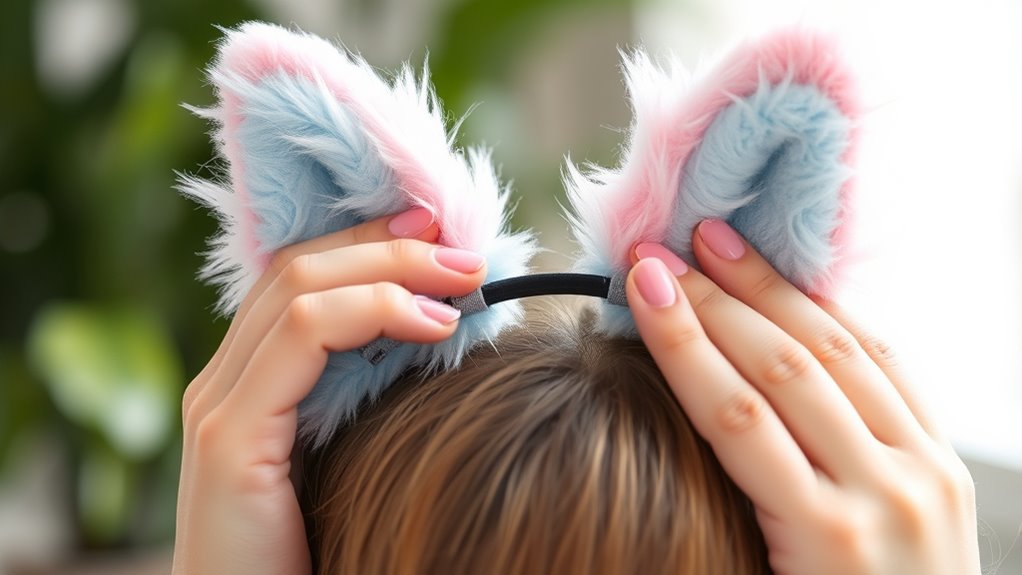
When attaching your animal ears to headbands or clips, start by selecting the right materials to guarantee durability and comfort. Make sure you secure the ears firmly so they don’t fall off during wear, and consider how to customize for a comfortable fit. With the right approach, your finished accessory will stay secure and feel great to wear. Additionally, choosing high-quality materials can help prevent issues like slipping or damage over time.
Choosing the Right Materials
Selecting the right materials is essential for securely attaching animal ears to headbands or clips, guaranteeing they stay in place and look natural. Focus on sturdy yet flexible options like craft foam, felt, or lightweight fabric, which work well with various animal ear patterns. Consider tail length variations if you plan to incorporate tails, choosing materials that complement the ears’ durability. Use hot glue or strong adhesive to bond the materials securely, but avoid excess that could be visible or cause stiffness. Keep in mind the overall look you want: softer fabrics for a more realistic appearance or stiffer materials for a cartoonish style. Proper material selection ensures your animal ears stay comfortable, durable, and seamlessly integrated into your headgear. Additionally, paying attention to the lightweight fabric used can help achieve a more natural and comfortable fit.
Attaching Ears Securely
To securely attach your animal ears to headbands or clips, start by positioning the ears where you want them and marking the spots for attachment. Consider animal behavior and habitat considerations to choose the most natural placement—such as upright ears for alertness or floppy ears for relaxed animals. Use strong adhesive or hot glue, applying it evenly to the base of each ear. Press the ears firmly onto the headband or clip, holding them in place until secure. For added stability, sew or staple the ears if possible. Verify the attachments are symmetrical and aligned with the animal’s natural ear placement. Confirm the glue or stitches are sturdy before wearing. Proper attachment prevents shifting and keeps your costume looking realistic. When working with adhesives, ensure you select the appropriate paint sprayer for a clean, even application of glue or paint to achieve the best results.
Customizing for Comfort
Ensuring your animal ears are comfortable to wear is essential for a natural look and a positive experience. To customize for comfort, choose soft, lightweight materials for the ears and secure them firmly to headbands or clips. If the ears are too tight, they may cause discomfort or affect your animal behavior, making your costume less convincing. Adjust the attachment points to distribute weight evenly, preventing strain on your head or hair. Test the fit by wearing the ears for a while, ensuring they stay in place during pet training or active movement. Remember, comfortable ears help you stay confident and maintain a natural appearance, making your costume more convincing and enjoyable to wear. Proper customization boosts both comfort and authenticity. Glycolic acid can be used to improve skin texture, which may enhance the overall appearance of your costume.
Creating Fluffy Tails Using Faux Fur and Wire
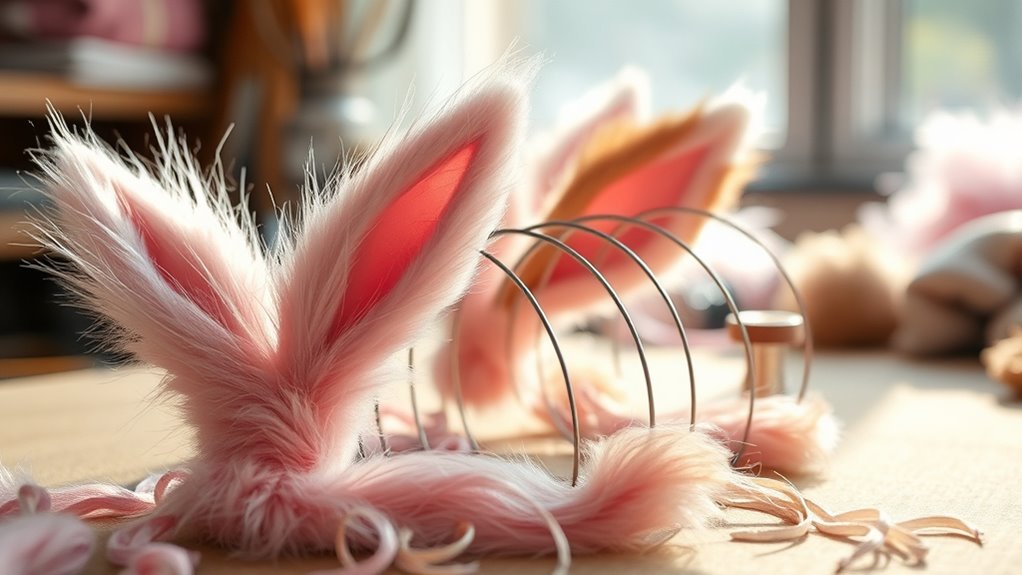
Creating fluffy tails with faux fur and wire is a straightforward process that allows you to craft realistic and plush accessories. Start by shaping a wire frame to match the tail’s desired length and curve, providing structure and flexibility. Choose faux fur that resembles the animal’s tail you’re replicating, considering color and texture. Attach the fur to the wire frame by wrapping or sewing it securely, ensuring the fur’s fibers are brushed out to achieve a fluffy appearance. As you work, think about animal behavior—study how tails move and fluff in different situations. This attention to detail can enhance your craft’s authenticity. Using eco-friendly faux fur also supports habitat conservation efforts by minimizing environmental impact, making your project both creative and environmentally conscious. Additionally, selecting sustainable materials can help reduce your ecological footprint during crafting.
Securing Tails for Comfortable Wear and Movement

When attaching your tail, prioritize secure fastening methods that allow for comfortable wear and freedom of movement. Use strong but flexible connectors, like adjustable straps or elastic bands, to guarantee the tail stays in place without restricting your motion. If you’re using a clip or pin for tail attachment, double-check that it’s firmly secured but easy to remove when needed. Avoid overly tight attachments that can cause discomfort or limit movement flexibility. Consider sewing the tail directly onto a waistband or harness for a more stable fit, especially if you’ll be moving around a lot. The key is balancing security with comfort, so your tail stays securely in place while allowing you to move naturally and comfortably throughout your day. Understanding tableware materials can also help in choosing the right attachment method that won’t damage the tail or clothing.
Painting and Detailing for Realistic or Whimsical Effects

Painting and detailing for realistic or whimsical effects can greatly enhance the charm of your animal ears and tails. When you start painting your animal ears and tails, consider how color techniques can create either a realistic or whimsical look. Using different shades and blending methods adds depth and vibrancy to your project. Don’t forget to add textured details to enhance the tactile feel and visual interest. Incorporating community engagement can also inspire new ideas and techniques for your designs.
Color Techniques for Effect
To achieve the desired effect on animal ears and tails, selecting the right color techniques is essential. Use color blending techniques to create smooth progressions, whether aiming for realistic or whimsical looks. Focus on matching animal fur patterns by layering shades carefully, adding depth and dimension. Experiment with gradients to evoke emotion—soft pastels for gentle charm or bold hues for playful energy. Incorporate highlights and shadows strategically to enhance realism or whimsy. Remember, subtle shifts in tone can evoke warmth or excitement. Additionally, exploring different hackathon formats can help refine your creative techniques through collaborative projects and feedback. Here’s a quick reference:
| Technique | Purpose | Effect |
|---|---|---|
| Color Blending | Seamless transition | Realistic, soft look |
| Highlighting | Brighten focal points | Depth, vibrancy |
| Shadowing | Add dimension | Realism, contrast |
| Pattern Detailing | Mimic fur markings | Authenticity, whimsy |
Adding Textured Details
Adding textured details brings your animal ears and tails to life by creating tactile interest and visual depth. To achieve this, focus on effective texture mapping, which involves applying surface patterns that mimic fur, scales, or feathers. Carefully select materials that enhance realism or whimsy, such as matte paints for soft fur or glossy finishes for sleek tails. Use fine brushes or sponges to add subtle variations, highlighting natural grain or whimsical accents. Layer different textures to build complexity—think soft shading combined with rougher details for contrast. Your choice of material ensures durability and the desired aesthetic. Consider incorporating pet hair management techniques to add realistic fur textures effectively. By paying attention to texture mapping and material selection, you’ll give your creations an authentic or playful look that truly stands out.
Adding Extra Features: Whiskers, Inner Ear Details, and More
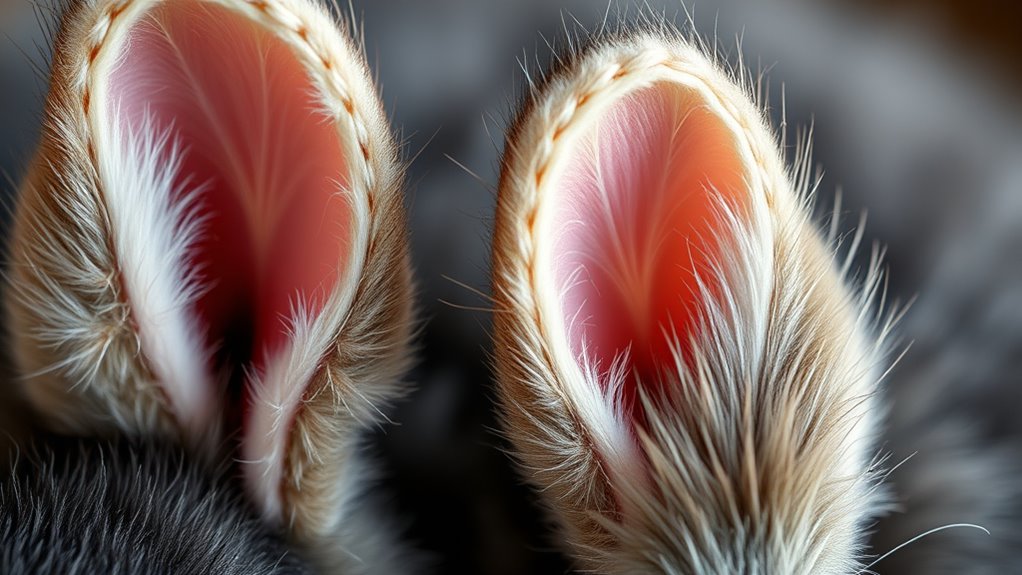
Enhancing animal ears and tails with extra features like whiskers and inner ear details can bring your drawings to life. Adding delicate whiskers helps suggest sensitivity and personality, while inner ear details reveal anatomy and movement mechanics. When illustrating ears, consider how they twitch or tilt, reflecting mood and alertness—this adds realism and depth. Incorporate subtle lines to show ear folds and inner structures, making your characters more expressive. Don’t forget animal scent markers; tiny scent gland areas can add authenticity to your creatures. Support hours for various parks can also influence the best time to observe real animals’ behavior, helping you improve your character designs. Whiskers, inner ear textures, and movement mechanics work together to create a more dynamic and believable animal. These details elevate your quick builds, transforming basic shapes into lively, expressive characters.
Tips for Customizing Sizes and Shapes for Different Animals

Different animals have unique ear and tail shapes that reflect their species and behavior. When customizing sizes and shapes, observe real animals to understand how their features relate to movement and personality. For example, a fox’s bushy tail or a rabbit’s long ears can add authenticity and charm. Keep animal behavior in mind—active animals might need flexible, lightweight features, while more stationary ones can have sturdier designs. Always prioritize costume safety; avoid overly large or heavy parts that could cause discomfort or injury. Use lightweight foam or fabric to maintain balance and mobility. Scaling features appropriately ensures your costume looks realistic while remaining comfortable. Additionally, studying animal anatomy can help you create more accurate and natural-looking features. By aligning shapes with real animal traits and considering safety, you create more convincing, enjoyable costumes that reflect true animal diversity.
Quick Fixes and Troubleshooting Common Crafting Challenges

When crafting animal ears and tails, you may encounter common issues like parts drooping, uneven shapes, or difficulty attaching them securely. To fix drooping ears, reinforce them with wire or stiffen with glue. For uneven shapes, reshape with hot tools or trim excess material carefully. If attaching parts feels loose, use stronger adhesives or sew in additional support. Keep in mind, adding animal sound effects for your costume creates a more lively look—so guarantee your ears and tails move naturally. To prevent clutter, use costume storage solutions like hanging hooks or clear bins for easy access and protection. Additionally, choosing high-quality materials can significantly improve the durability and appearance of your animal accessories. These quick fixes help you troubleshoot efficiently, ensuring your animal accessories stay sturdy and realistic, ready for any event or performance.
Finishing Touches to Make Your Animal Accessories Stand Out

To make your animal accessories truly stand out, focus on adding small but impactful finishing touches that bring them to life. Incorporate animal symbolism to give your pieces deeper meaning, like using specific colors or patterns associated with certain animals. Consider cultural significance—adding motifs or embellishments that reflect traditions can enhance their uniqueness. Use subtle details such as painted markings, tiny charms, or textured elements that complement the overall design. These finishing touches not only highlight craftsmanship but also convey a story or cultural context, making your accessories more intriguing. Remember, sometimes less is more; a well-placed detail can transform a simple creation into a meaningful statement piece. Paying attention to design principles ensures your animal accessories truly stand out and resonate.
Frequently Asked Questions
How Can I Make My Animal Ears More Durable for Long-Term Wear?
To make your animal ears more durable for long-term wear, you should focus on adding ear padding for comfort and reinforcement techniques for strength. Use sturdy materials like foam or felt, and secure them with hot glue or sewing. Reinforce the edges and joints with additional stitches or fabric glue to prevent tearing. Regularly check and repair any weak spots to make sure your ears stay intact and comfortable during extended use.
What Are the Best Adhesives for Attaching Ears Without Damage?
Did you know that skin-safe glues account for over 80% of adhesives used in costume making? For attaching ears without damage, opt for skin-safe glues like medical-grade adhesives or silicone-based options. They provide a strong hold yet allow easy adhesive removal without harming your skin. Always test a small area first to ensure compatibility. Using these adhesives helps you wear your ears comfortably and safely, even for long-term use.
How Do I Customize Tails for Different Animal Species Accurately?
To customize tails for different animal species accurately, you need to study their species-specific anatomy, focusing on tail length, shape, and fur texture. Use tail shaping techniques like flexible wire framing to mimic natural curves and proportions. Adjust the tail’s base for proper attachment and guarantee it aligns with the creature’s anatomy. Practice shaping and refining each tail to match the unique characteristics, creating a realistic and convincing look.
Can I Waterproof Faux Fur or Felt for Outdoor Use?
You can waterproof faux fur or felt for outdoor use, and it’s surprisingly simple! Use waterproofing techniques like spray-on sealants designed for fabrics, or apply a clear waterproof coating for extra protection. When choosing outdoor fabrics, look for water-resistant or waterproof options, and always test a small area first. These techniques guarantee your tails stay dry and fluffy, even in the rain, making your costume both durable and weatherproof.
What Safety Tips Should I Follow When Working With Wires and Adhesives?
When working with wires and adhesives, prioritize electrical safety by unplugging devices before handling wires, and avoid overloading circuits. Always wear gloves to protect your skin from adhesive fumes and spills, and work in a well-ventilated area. Follow manufacturer instructions carefully, and keep adhesives away from heat sources. Use tools properly to prevent injury, and dispose of excess materials responsibly to guarantee a safe workspace.
Conclusion
Now you’re ready to create animal ears and tails that are fun, fast, and fabulous. Choose your materials, craft your shapes, attach with confidence, and add your personal touches. Whether you’re customizing sizes, fixing challenges, or adding details, you’ll bring your animal accessories to life with ease. With quick builds and creative flair, you’ll turn simple supplies into standout pieces that capture the charm and personality of any animal.
Fall Picks
fall essentials
As an affiliate, we earn on qualifying purchases.