To host a community costume parade, start by securing necessary permits and choosing a safe, accessible route that minimizes congestion. Promote the event early through social media and community boards, encouraging diverse and creative costumes around a central theme. Coordinate safety measures, logistics, and volunteers for a smooth day. Focus on engaging participants with fun activities and post-event community celebrations. Keep organizing details in mind, and you’ll discover more tips to guarantee your parade’s success.
Key Takeaways
- Secure necessary permits, select a safe route, and coordinate with local authorities to ensure compliance and safety.
- Plan logistics, safety measures, and parade day activities, including route setup, volunteer roles, and emergency preparedness.
- Promote the event early through social media and community outreach, emphasizing a unifying theme and inclusive costume guidelines.
- Encourage creative costume ideas aligned with the theme, organize contests, and foster community participation for maximum engagement.
- Post-event, showcase costumes and community art, gather feedback, and build relationships to ensure lasting community involvement.

Haunted Hill Farm Soul Sucker Demon Reaper with Child by Tekky, Motion-Activated Talking Halloween Animatronic for Creepy Indoor or Covered Outdoor Halloween Decorations, Plug-in or Battery Operated
Premium Life-size Animatronic: Soul Sucker is perfect for indoors or a covered outdoor area so place our evil...
As an affiliate, we earn on qualifying purchases.
Planning and Permitting
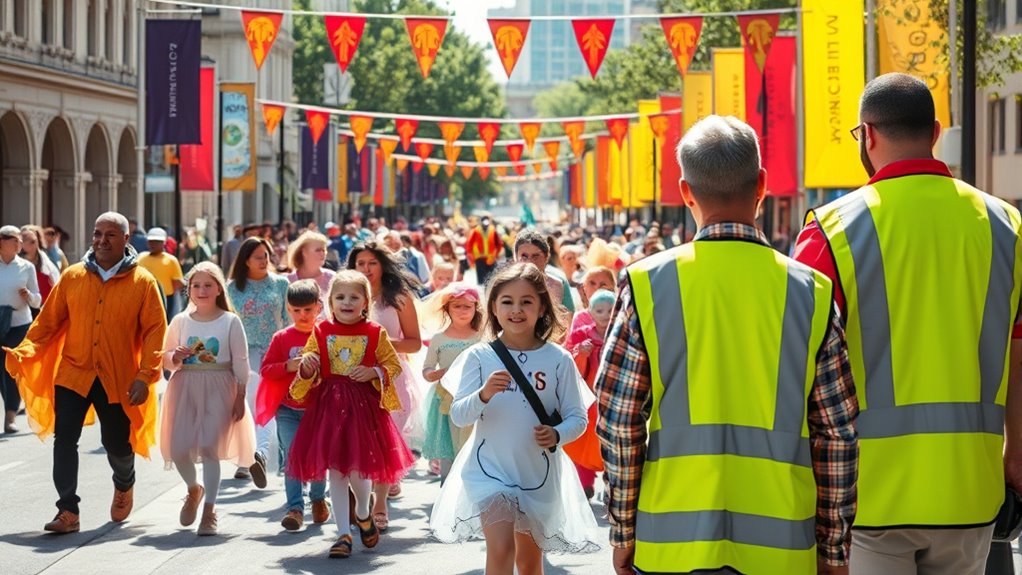
Before hosting a community costume parade, you need to understand the necessary planning and permitting steps. First, check with local authorities about permits required for public gatherings. You’ll also need to coordinate parade timing to avoid conflicts with other events or holidays. When considering costume materials, guarantee they meet safety standards—avoid flammable or obstructive items that could pose risks. Prepare a detailed plan outlining your parade route, start and end times, and any necessary street closures or permits. Securing these permits early helps prevent last-minute issues. Communicate clearly with city officials and community leaders to ensure compliance. Proper planning and permits set a solid foundation, making your parade safe, organized, and enjoyable for everyone involved. Additionally, understanding public safety guidelines can help you prepare for emergencies and ensure a successful event.
Haunted Hill Farm 4.4-Ft Animatronic Impaled Zombie, Halloween Animatronic, Creepy Party Decoration, Spooky Décor, Macabre Gift for Horror Movie Lovers, Voice-Activated Lights & Sound, Life-Size
Premium Life-Size Animatronic: Frighten guests and trick-or-treaters with this premium quality spine-chilling Halloween decoration
As an affiliate, we earn on qualifying purchases.
Selecting the Parade Route

When choosing your parade route, you need to assess the community space to guarantee it can comfortably accommodate participants and spectators. Think about how the parade will flow from start to finish to keep it organized and lively. Considering these points helps create a smooth, enjoyable experience for everyone involved. Additionally, evaluating the available space for display ensures that the parade route can support the size and number of floats and costumes.
Assess Community Space
Choosing the right parade route is essential to guarantee a smooth and enjoyable community event. You need to assess the available community space to ensure it can handle your expected crowd. The venue capacity determines how many spectators and participants you can accommodate comfortably. Look for areas with enough room for floats, costumes, and spectators without causing congestion or safety issues. Consider public parks, downtown streets, or open plazas that can be closed off safely. Use this table to evaluate options:
| Location | Community Space Size | Venue Capacity | Accessibility | Safety Features |
|---|---|---|---|---|
| Park A | Large open area | 500+ | Easy access | Fencing, lighting |
| Downtown Street | Wide street | 300+ | Public transit | Crosswalks |
| Plaza B | Open plaza | 200+ | Parking nearby | Emergency exits |
Additionally, understanding the importance of venue capacity and crowd management can help you choose the safest and most enjoyable route.
Consider Parade Flow
Selecting the parade route requires careful planning to guarantee smooth flow and safety for all participants and spectators. You want to make certain the parade moves seamlessly from start to finish, preventing congestion or delays. Think about how the parade flow will work, especially during the participant lineup, to avoid bottlenecks. Choose a route wide enough to accommodate costumes and floats and consider the location of entrances and exits. Keep spectators safely positioned away from the parade path, and plan for easy access to emergency services.
- Map out a clear route that minimizes sharp turns and congestion
- Coordinate the participant lineup to keep the parade organized
- Ensure ample space for floats and costumes to move freely
- Identify potential choke points and plan solutions in advance

Spirit Halloween 4 Ft 6 In Scary Sitting Scarecrow Animatronic, Multicolor
Bring any Halloween display to life by adding this Scary Sitting Scarecrow Animatronic to your home decor. This...
As an affiliate, we earn on qualifying purchases.
Gathering Participants and Promoting the Event
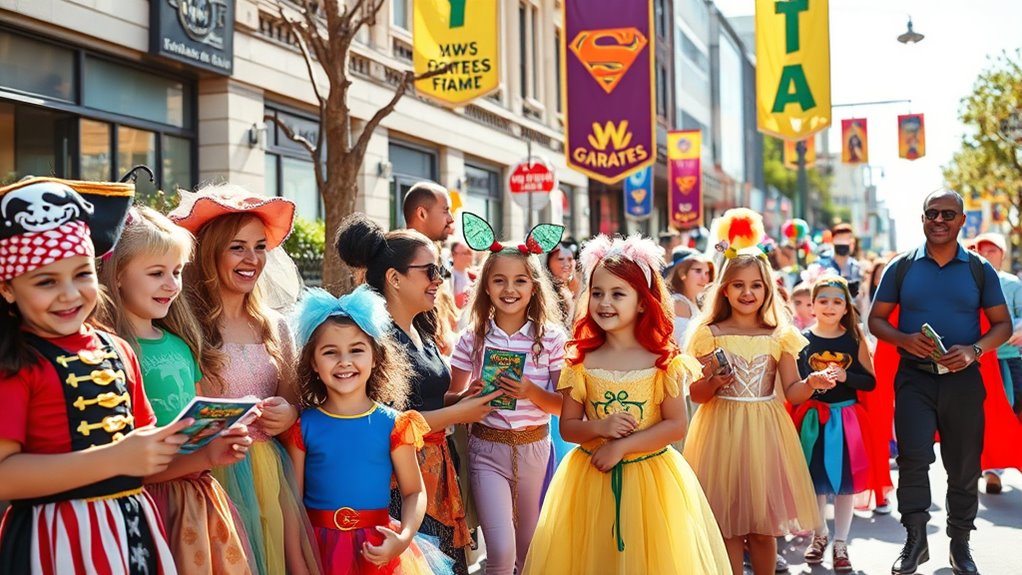
To successfully gather participants and promote your community costume parade, you need to spread the word effectively and encourage community involvement. Use social media, flyers, and community boards to reach a broad audience. Highlight how fun costume design can be and emphasize any participant incentives, like prizes or recognition, to motivate participation. Encourage local schools, clubs, and organizations to join by sharing details early and offering group registration options. Personal outreach, such as calling local businesses or community leaders, can also boost involvement. Make it clear that everyone’s creativity is welcome, and showcase past costumes or ideas to inspire excitement. The more accessible and rewarding you make the event, the more enthusiastic people will be to join in. Incorporating proper storage techniques for costumes can help participants keep their outfits in top condition for the event.

Haunted Hill Farm Lifesize 5.5-Ft Animatronic Scary Talking Clown Holding Knife with Touch Activated Lights and Sound, Battery-Operated Indoor or Covered Outdoor Halloween Decoration
Lifesize Halloween Animatronic: This clown is perfect for indoors or a covered outdoor area so you can display...
As an affiliate, we earn on qualifying purchases.
Organizing Costumes and Themes
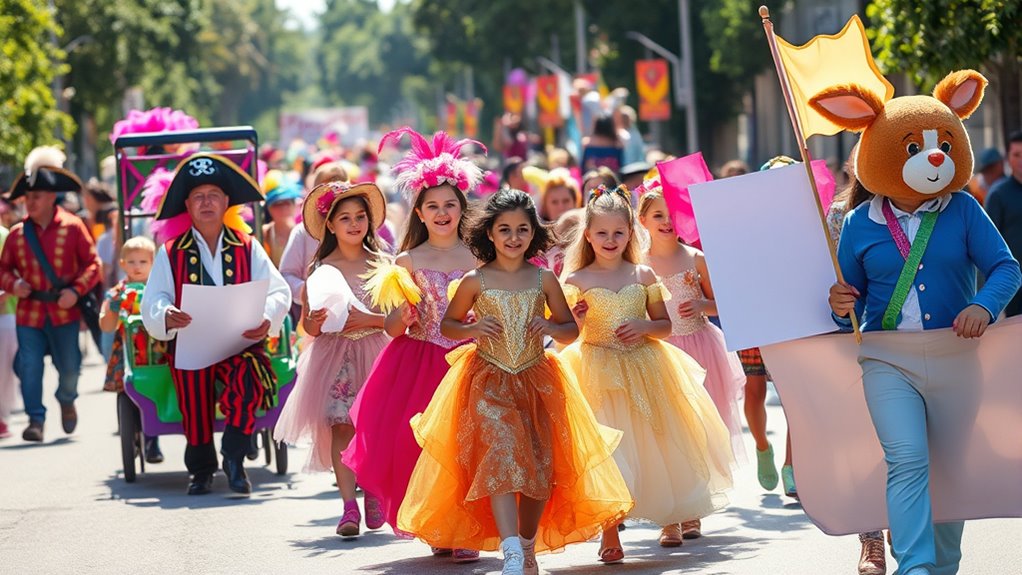
Choosing a central theme helps unify the parade and sparks excitement among participants. You’ll want to set clear costume guidelines to guarantee safety and coordination. Encourage everyone to get creative, making the event fun and memorable for all. Incorporating diverse and inclusive themes can also enhance the sense of community and ensure everyone feels welcome to participate. Dynamic communication exercises can be used beforehand to help participants connect and collaborate effectively.
Selecting a Central Theme
A well-defined central theme sets the tone for your community costume parade and helps participants organize their costumes more easily. Choosing a clear theme encourages creativity and guarantees a cohesive event. When selecting your costume themes, consider what resonates with your community’s interests and values. A strong theme can boost community involvement by inspiring everyone to participate enthusiastically. To help you get started, think about themes like classic fairy tales, historical eras, or favorite movies. Make sure your theme is broad enough to accommodate different age groups and backgrounds. This approach fosters inclusivity and fun. Remember, the right theme can turn your parade into a memorable celebration that brings your community closer together. Incorporating color accuracy and thoughtful contrast ratios in your decorations can also enhance visual appeal and create a more immersive experience.
Coordinating Costume Guidelines
Once you’ve settled on a central theme, organizing costume guidelines guarantees that the parade runs smoothly and maintains a cohesive look. Clearly outline safety requirements, such as avoiding sharp accessories or long, tripping hazards, to ensure costume safety for all participants. Emphasize the importance of theme consistency by suggesting color schemes or specific styles that align with the chosen motif. Providing examples helps participants create costumes that fit well within the overall parade vision. Communicate these guidelines early through flyers, social media, or community boards, so everyone has ample time to prepare. By establishing clear, consistent rules, you help foster a fun, safe environment where creativity thrives within the theme’s framework. Incorporating vintage decor elements or classic styles can also inspire participants to craft costumes that enhance the parade’s overall aesthetic.
Encouraging Creative Costumes
To inspire participants to bring their most imaginative ideas to life, emphasize the fun of thinking outside the box when organizing costumes and themes. Encourage creativity by suggesting unique concepts that spark excitement. Promote the use of DIY accessories to personalize costumes and make them stand out. Organize engaging costume contests with categories like funniest, most creative, or best homemade. Offer inspiration through theme ideas such as retro, fantasy, or futuristic costumes. Make sure everyone feels comfortable exploring different styles and ideas. Sharing examples and encouraging collaboration can boost enthusiasm. Remember, the goal is to celebrate originality and fun. By fostering an environment that rewards creativity, your parade will be vibrant and memorable for all participants. Additionally, incorporating creative costume ideas can help ensure a diverse and lively parade atmosphere.
Arranging Safety and Logistics
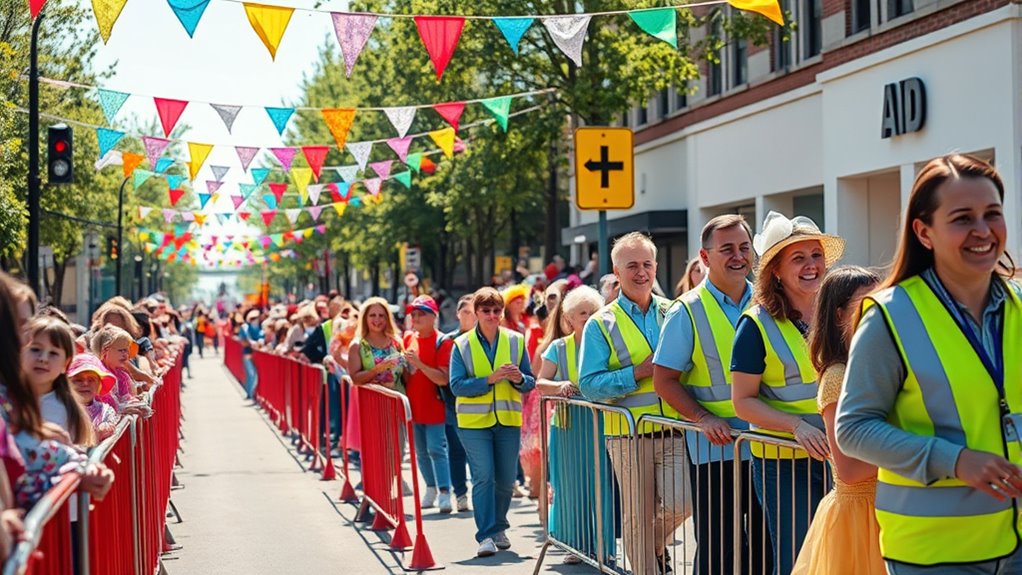
Ensuring safety and smooth logistics is essential for a successful community costume parade. Start by evaluating potential hazards and making sure you have the right safety equipment, like cones, barriers, and first aid kits, readily available. Develop a clear emergency plan that includes contact information for local authorities and designated safe zones. Coordinate with volunteers to monitor crowded areas and assist with any issues that arise. Confirm that parade routes are free of obstructions and clearly marked. Consider traffic control measures and ensure participants and spectators stay within designated areas. By prioritizing safety equipment and thorough emergency planning, you create a secure environment where everyone can enjoy the festivities without worry. Proper attention in creative practice will keep the parade organized and fun for all.
Preparing for the Parade Day
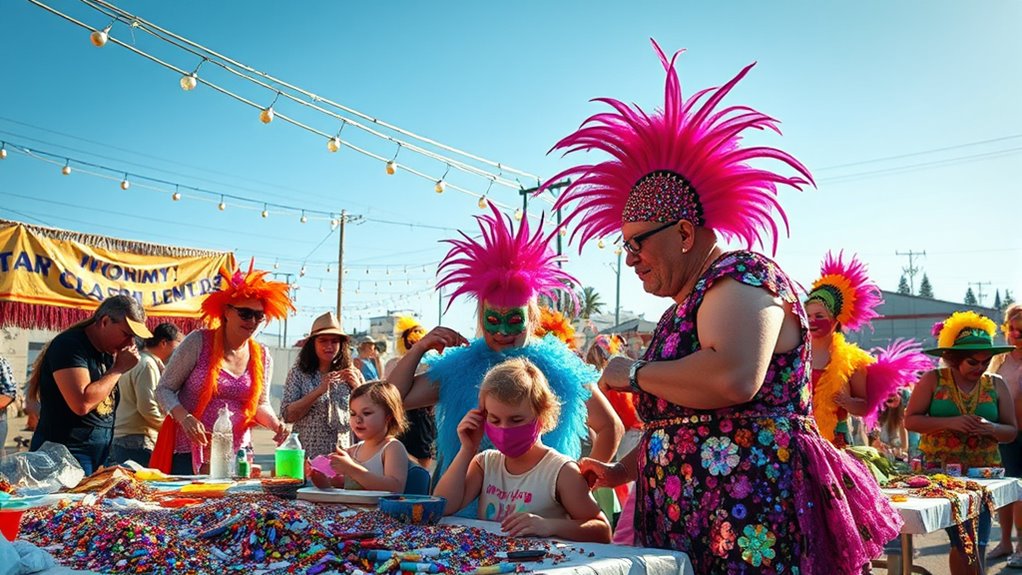
Are you ready to make parade day run smoothly? Preparing for the big day involves finalizing costume designs and coordinating parade music. Ensure all costumes are ready, fitting, and comfortable for participants. Double-check that costume accessories are secure and appropriate. Confirm the playlist or live music arrangements, making sure sound systems are working well. Create a schedule for costume assembly and parade lineup to keep things organized. Assign volunteers to assist with costume adjustments and music setup. Practice the parade route with volunteers, emphasizing timing for costume reveals and music cues. Communicate last-minute updates to participants. By planning these details, you’ll create a cohesive, lively atmosphere that celebrates creativity and community spirit. Additionally, review costume comfort and safety to ensure all participants are comfortable and secure during the parade.
Post-Event Activities and Community Engagement

After the parade wraps up, engaging with your community through post-event activities helps strengthen connections and celebrate everyone’s efforts. Consider showcasing community art projects created during the event, such as photos, costumes, or murals, to highlight local talent and creativity. Hosting a small exhibition or display encourages community members to appreciate local art and fosters pride. Additionally, support local vendors by organizing a market or food stalls that feature their products. This not only boosts local businesses but also keeps the community engaged beyond the parade. Sharing photos and stories from the event on social media keeps the momentum going and invites ongoing participation. Incorporating community engagement strategies can deepen relationships and ensure the event’s positive impact endures. These activities help build a vibrant, connected community that values creativity, local support, and shared experiences.
Frequently Asked Questions
How Can I Encourage Inclusive Participation From Diverse Community Groups?
You can encourage inclusive participation by actively promoting cultural representation and emphasizing accessibility options. Reach out to diverse community groups, invite them to showcase their traditions, and highlight their contributions through flyers and social media. Guarantee the parade is accessible for all by providing ramps, clear signage, and assistance. Create a welcoming environment where everyone feels valued, respected, and enthusiastic to participate, celebrating the richness of your community’s diversity.
What Are Creative Ways to Incorporate Local History Into Costumes?
Why settle for boring costumes when you can turn local legends into stunning outfits? Use historical inspiration and local legends to craft unique costumes that tell a story, like dressing as a famous town founder or a mythical creature from local folklore. Incorporate vintage fabrics, historical accessories, or iconic landmarks to make your costume stand out. This creative approach not only celebrates history but also sparks curiosity and pride among community members.
How Do I Handle Unexpected Weather Changes on Parade Day?
If unexpected weather hits on parade day, you should activate your rain contingency plan. Quickly move participants to designated shelter solutions like tents or nearby indoor spaces. Keep extra umbrellas and rain ponchos on hand to protect costumes and attendees. Communicate clearly with participants about weather updates and shelter locations. Staying flexible and prepared guarantees everyone stays safe, dry, and enjoys the parade despite the weather surprises.
What Incentives Can I Offer to Increase Volunteer Involvement?
Think of volunteers as the vibrant costumes in your parade—when recognized, they shine brighter. To boost involvement, offer incentives like exclusive access to costume contests or small rewards. Recognize their efforts publicly, perhaps with volunteer awards, to make them feel valued. A story from a local event showed that volunteers who received recognition were 30% more likely to return. Your appreciation fuels their enthusiasm, ensuring a memorable parade.
How Can I Measure the Event’s Success and Gather Feedback?
You can measure your event’s success by analyzing participant surveys for feedback and insights. Additionally, track social media metrics like engagement, shares, and comments to gauge community interest and excitement. Collecting both quantitative data from these sources helps you understand what worked well and what needs improvement. Use this information to plan better future events, ensuring your community feels involved and valued.
Conclusion
Remember, as with any great story like Robin Hood’s, your parade is a tale of community and creativity. When you plan thoughtfully and involve your neighbors, you create a moment that echoes through time, much like a legendary legend. Embrace the magic of the day, knowing you’re weaving a vibrant chapter in your community’s story. Together, you turn a simple parade into a timeless memory, inspiring others to dream and celebrate.