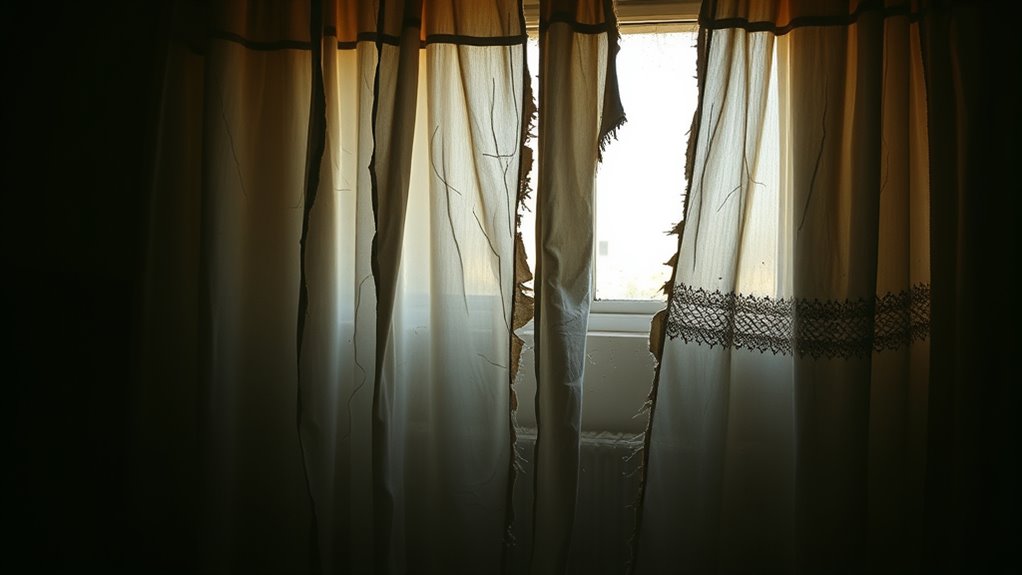

To create DIY creepy curtains and tattered fabrics, choose dark, distressed textiles like burlap, lace, or frayed netting. Use sharp scissors and tools to tear and cut irregular edges, then stain or dye fabrics with tea, coffee, or fabric dye for an aged, haunted look. Layer and hang fabrics unevenly for a spooky vibe, adding embellishments like cobwebs or creepy silhouettes. Keep experimenting with techniques to perfect your haunted decor—more tips await if you keep exploring.
Key Takeaways
- Use dark, distressed fabrics like lace, burlap, or layered textiles with torn edges to create a haunted, tattered appearance.
- Cut uneven, jagged tears with sharp scissors and gently fray fabric edges for an authentic worn look.
- Distress fabrics further with dyeing, staining, or bleach techniques to add age and eerie effects.
- Hang curtains asymmetrically at varying lengths using mismatched hooks or rusty rods for a spooky, chaotic vibe.
- Decorate with cobwebs, eerie silhouettes, and flickering lights to enhance the creepy atmosphere of your tattered fabric display.
Choosing the Right Fabrics for a Haunted Look
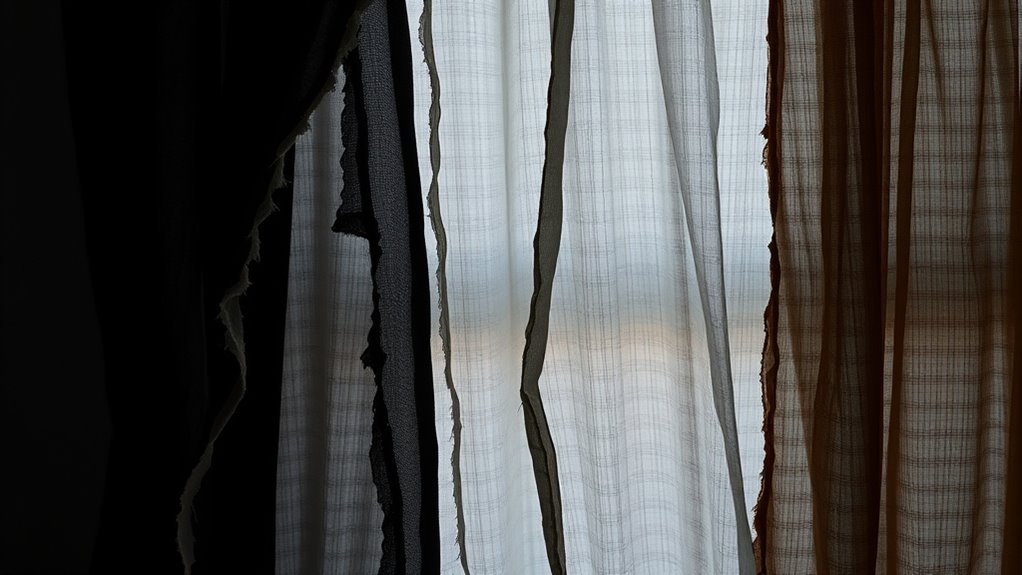
To create spooky curtains that truly set a haunted mood, choosing the right fabrics is essential. Start with fabric pattern selection; opt for tattered-looking materials like lace, burlap, or distressed textiles to evoke an eerie vibe. Patterns such as torn edges, subtle skull motifs, or ghostly designs can enhance the haunted feel. Color coordination is equally important—dark shades like black, deep gray, or blood-red work well to create a spooky atmosphere. Layering different textures and shades adds depth and dimension, making your curtains more convincing and unsettling. Avoid overly bright or cheerful fabrics, as they’ll undermine the haunting effect. Instead, focus on muted, somber tones and distressed patterns that evoke decay and mystery, turning your curtains into a perfect spooky backdrop.
Cutting and Tearing Techniques for a Tattered Effect

Achieving a convincingly tattered look on your curtains involves careful cutting and tearing techniques that create irregular, distressed edges. To enhance the fabric texture, you’ll want to vary your methods. First, use a sharp pair of scissors to cut uneven, jagged lines—this forms the base of the distressed effect. Second, gently tear the fabric along the cut edges to create natural frays and layers, mimicking wear over time. Third, incorporate basic sewing techniques like zigzag stitching along the edges to prevent excessive unraveling while maintaining a ragged appearance. Additionally, understanding fabric types and their wear patterns can help you choose the most suitable approach for a realistic effect. These methods allow you to control the level of damage, adding depth and authenticity to your curtains. Remember, the key is to work gradually, focusing on irregularity for a truly tattered, haunted look.
Creating Ripped and Frayed Edges With Scissors and Tools
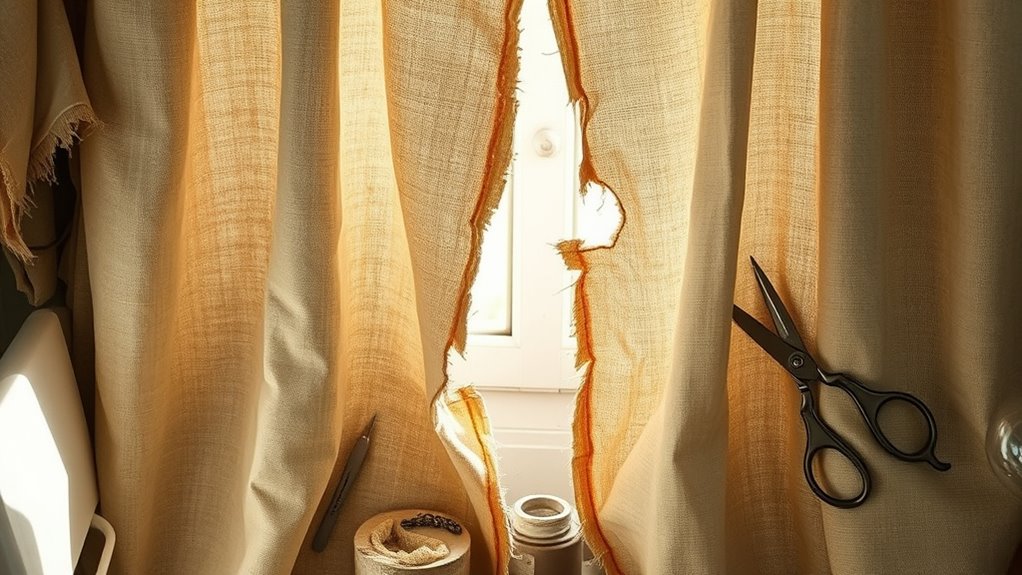
Building on your cutting and tearing techniques, shaping the edges of your curtains into ripped and frayed finishes adds a realistic, aged appearance. Use sharp scissors carefully to create uneven tears, mimicking natural wear. For more distressed effects, employ tools like scalpels or sandpaper, but prioritize fabric safety to avoid accidental cuts or damage. When fraying edges, gently pull on loose threads to enhance the distressed look, but be cautious not to rip too much, which can compromise the fabric’s integrity. Incorporate sewing techniques, such as reinforcing weak spots with stitches, to prevent excessive tearing. Always work on a stable surface and keep your tools sharp for precision. This approach ensures your curtains look authentically aged while maintaining durability for your spooky décor. Halloween celebrations in different countries influence the styles and themes of the costumes and decorations you choose.
Dyeing and Staining Fabrics for an Aged Appearance
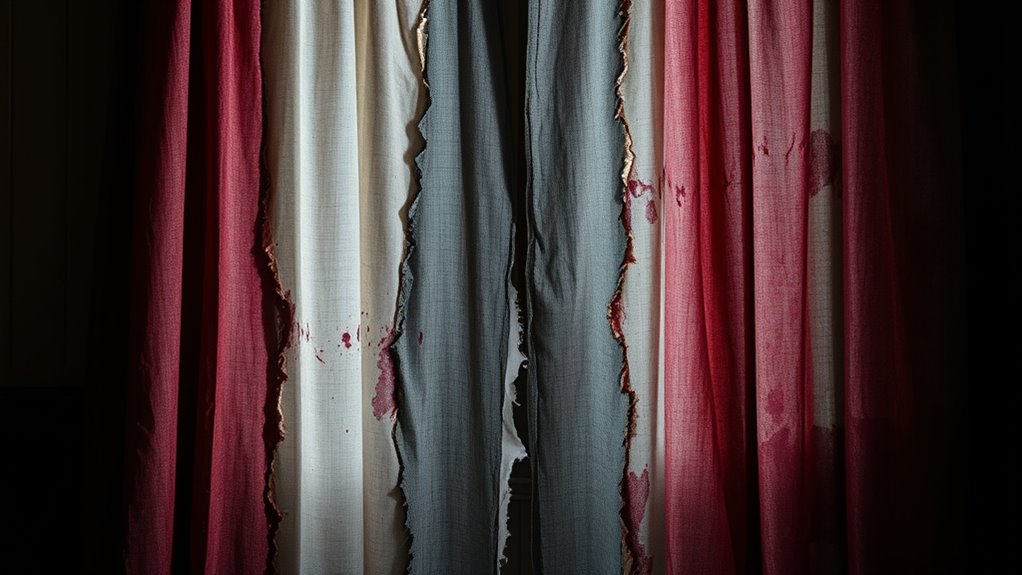
Dyeing and staining fabrics is a straightforward way to give your curtains an authentic aged look. To guarantee fabric preservation, choose dyeing techniques that are gentle and effective. First, select a dye type, such as tea, coffee, or fabric dye, that achieves your desired tone. Second, prepare your dye bath properly, maintaining the right temperature and concentration for even coloring. Third, experiment with techniques like soaking or blotting to create varied, distressed effects that mimic natural aging. These methods allow you to control the intensity and pattern of discoloration. Remember, the key is to work gradually, checking progress frequently, so you avoid over-staining. Proper application of dyeing techniques can transform fresh fabric into a haunting, timeworn masterpiece perfect for your creepy curtains. Additionally, understanding home improvement principles can help you select the best materials and methods for your project.
Adding Distressed Details With Paint and Bleach

To add authentic distressed details to your curtains, you can use paint and bleach to create a worn, aged look. Start by choosing fabric that responds well to these treatments—natural fibers like cotton or linen work best. When it comes to fabric selection, avoid synthetic materials, as they won’t bleach or paint as effectively. For paint application, use a dry brush or sponge to dab on uneven patches, emphasizing areas where natural wear might occur. To achieve a distressed effect with bleach, dilute it with water and apply it sparingly with a spray bottle or sponge. Allow the fabric to sit for a few minutes, then rinse and blot. This process creates subtle, authentic distressing that enhances your creepy, tattered aesthetic. Additionally, understanding fabric suitability for distressing can help you achieve more consistent and satisfying results.
Hanging and Arranging Your Creepy Curtains for Maximum Impact
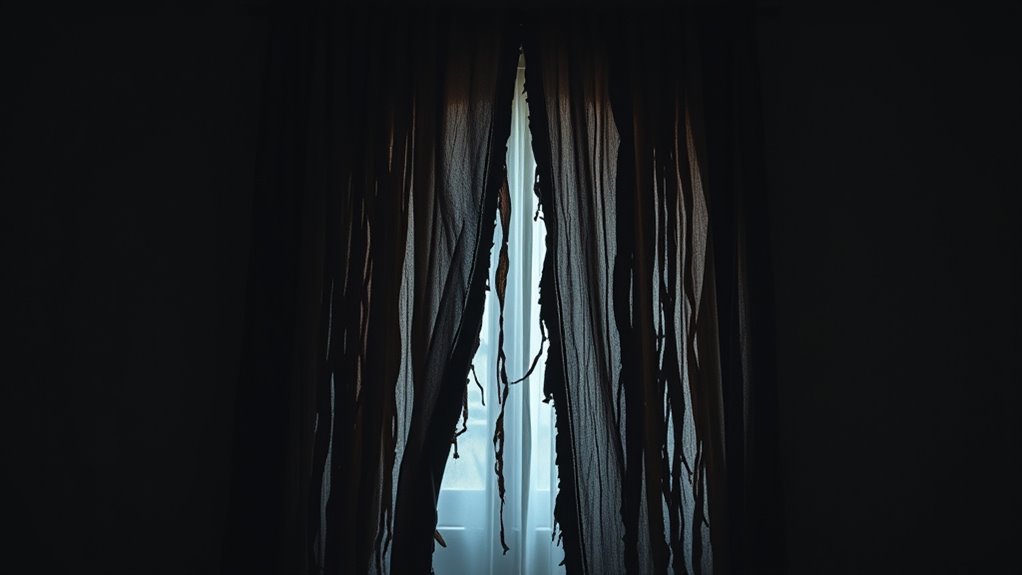
Start by selecting spooky fabrics that set the right eerie tone, then layer different textures to add depth. Experiment with creative hanging techniques, like uneven lengths or draping, to enhance the creepy effect. These choices will make your curtains stand out and create a haunting atmosphere. Incorporate vintage decor to further elevate the spooky aesthetic and add a touch of rustic charm.
Choose Spooky Fabrics Carefully
Choosing the right fabrics is essential for creating a truly spooky curtain that sets the perfect eerie mood. Focus on fabric durability to guarantee your curtains withstand handling and time, especially if you plan to reuse or adjust them. Color selection is equally important; dark, muted tones like black, gray, or deep reds evoke a chilling atmosphere. When selecting fabrics, consider:
- Texture: Rough or tattered materials like burlap or distressed cotton enhance creepiness.
- Opacity: Heavier fabrics like canvas or velvet block light, adding to the mystery.
- Color palette: Stick to dark, muted shades that blend well with spooky themes.
- Fabric properties: Using fabrics with fabric durability ensures your creepy curtains remain intact and maintain their eerie appearance over multiple uses.
Layer for Depth Effect
Layering your curtains creates a richer, more haunting atmosphere that draws the eye and enhances the overall creepiness. Use fabric layering to add depth by combining different textures and lengths, making the curtains appear more tattered and weathered. Mix fabrics in various shades to achieve seamless color blending, which adds an eerie, layered look. Hang lighter, semi-transparent fabrics behind darker, opaque ones to create shadows and visual complexity. Allow some fabric pieces to hang unevenly or cascade loosely for a disheveled, abandoned feel. This layering technique creates a sense of dimension and mystery, making your creepy curtains more immersive. Incorporate visual complexity by varying fabric transparency and layering for a more dynamic, unsettling effect. Focus on uneven arrangements and subtle color variations to maximize the depth effect and truly captivate your viewers.
Use Creative Hanging Techniques
To create a truly unsettling atmosphere, you need to think carefully about how you hang and arrange your curtains. Start by sourcing fabric with textures and colors that evoke decay or darkness, ensuring they match your overall theme through color coordination. Next, experiment with different hanging techniques to maximize impact:
- Use uneven lengths or drape fabrics asymmetrically to create a tattered, abandoned look.
- Suspend curtains from mismatched hooks or rusty rods for a distressed vibe.
- Layer fabrics at different depths and angles to add shadow play, enhancing the creepy effect.
- Consider the tax implications of your creative choices to ensure your spooky setup remains budget-friendly and sustainable.
Incorporating Additional Haunted Elements and Embellishments
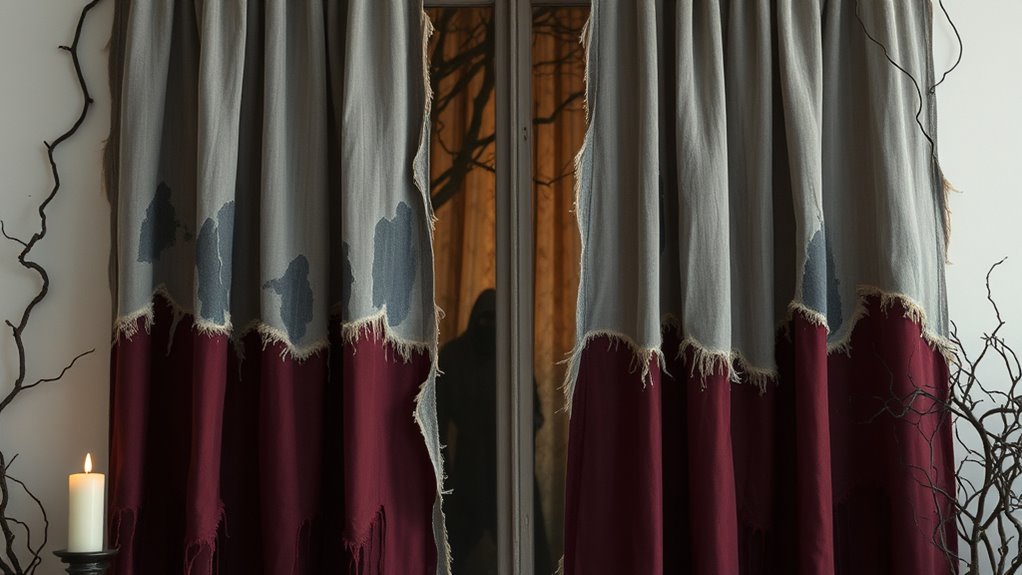
To make your creepy curtains truly stand out, consider adding spooky embellishments that create a haunted atmosphere. You can incorporate details like faux cobwebs, eerie figures, or flickering lights to enhance the effect. These haunted touches will make your display more immersive and unsettling for anyone who sees it. Incorporating wax-free candle techniques can also add a unique, eco-friendly glow that complements your haunted theme.
Spooky Embellishment Ideas
Adding haunted elements and embellishments can instantly elevate your creepy curtains from simple fabric to a spine-chilling display. To achieve this, consider adding ghostly patterns with fabric paint or stencils, creating an unsettling visual effect. Incorporate eerie textures like tattered lace, shredded burlap, or distressed netting to add depth and a haunted feel. You can also attach small accessories such as faux cobwebs, plastic spiders, or dried leaves to enhance the spooky atmosphere. For a more layered look, combine these elements:
- Ghostly patterns with stenciled fabric or printed designs
- Eerie textures through distressed or shredded fabrics
- Haunted accessories like cobwebs and creepy props
Additionally, using self-watering pots or moisture-retaining fabrics can help keep your fabric materials in optimal condition for long-lasting spooky displays. These embellishments will make your curtains genuinely unsettling and perfect for a haunted house or spooky themed event.
Adding Haunted Details
Enhancing your curtains with haunted details brings an extra layer of spookiness that captivates viewers. Focus on fabric texture to create a distressed, aged look—think tattered edges, frayed seams, or uneven cuts. Incorporate a dark, moody color palette with shades like deep blacks, ghostly grays, and eerie greens to set a haunting tone. Add embellishments like faux cobwebs, dried leaves, or silhouettes of bats and spiders to amplify the haunted vibe. Use fabric paints or dyes to stain or create ominous patterns, giving your curtains a worn, haunted appearance. Small details, such as dangling charms or sewn-on embellishments, can make a big impact. By carefully selecting textures and colors, you transform simple fabrics into chilling, haunted curtains that truly evoke a spooky atmosphere. Incorporating color accuracy into your fabric choices can help achieve more realistic and eerie effects under different lighting conditions.
Tips for Maintaining and Reusing Your Haunted Textiles
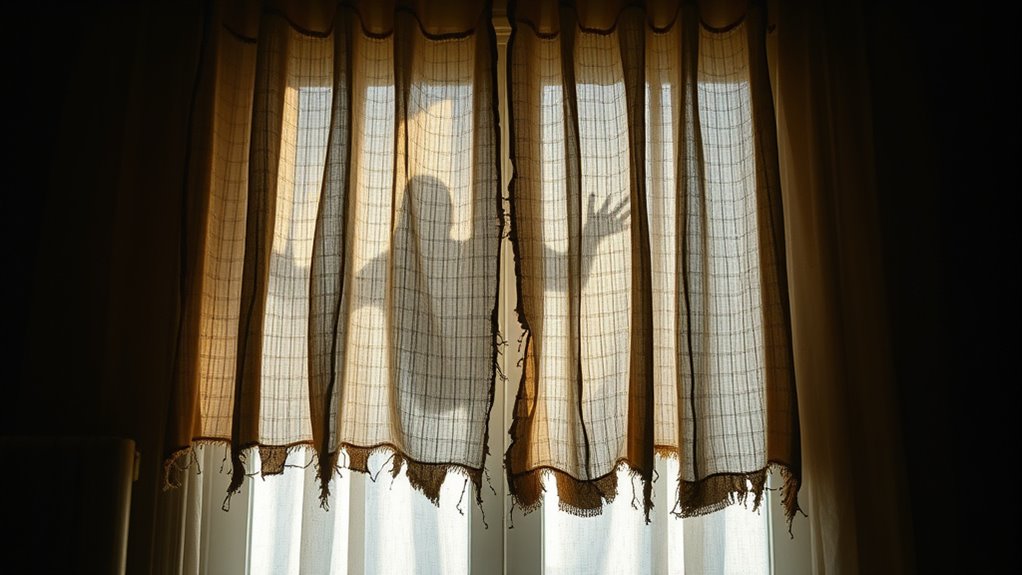
Maintaining your haunted textiles guarantees they stay eerie and effective year after year. To assure longevity, focus on fabric preservation by storing them in a cool, dry place, and avoid direct sunlight that can fade colors. Regularly check for stains and promptly perform stain removal using gentle, fabric-safe solutions to prevent permanent damage. Here are some tips:
- Clean with mild detergent to preserve fabric integrity.
- Use a soft brush or vacuum to remove dust and cobwebs.
- Repair tears or frayed edges early to prevent further damage.
- Monitoring local climate conditions can help prevent fabric deterioration over time.
Frequently Asked Questions
How Can I Make My Curtains More Weathered-Looking Naturally?
To make your curtains look more weathered naturally, start by using aged fabric or artificially distress new fabric with simple distressing techniques. You can sand the edges lightly, fray the hems, or use a mixture of bleach and water to fade certain areas. Rub the fabric with pumice stone or sandpaper to create worn spots, giving your curtains an authentically aged and tattered appearance that enhances their spooky vibe.
Which Fabrics Are Best for Durability and Creepiness?
You should choose heavy-duty fabrics like burlap, canvas, or linen, as they offer excellent durability factors. These fabrics naturally develop a weathered, creepy look over time, especially when you add frayed edges or stains. Avoid delicate materials that tear easily. By selecting these sturdy options, your curtains will last longer and enhance the spooky, aged aesthetic you’re aiming for, ensuring they stay creepy and durable through use and weather.
How Do I Prevent Tears From Enlarging Over Time?
To prevent tears from enlarging over time, you should focus on fabric reinforcement and tear prevention. Sew in lightweight interfacing or use fabric glue along the edges of weak spots to strengthen the material. Additionally, avoid pulling or tugging on the fabric, and handle it gently. Regularly inspect your curtains for small tears, and repair them promptly with matching thread to keep tears from spreading and maintain your creepy aesthetic.
Can I Create a Layered Haunted Curtain Effect Easily?
Yes, you can create a layered haunted curtain design easily using layered fabric techniques. Start by choosing different textures and colors, such as tattered black, gray, or sheer fabrics, and layer them unevenly for a spooky, haunted effect. Use clips or safety pins to keep layers in place, and add some tattered edges or frayed hems. This approach creates depth and an eerie atmosphere, perfect for your haunted curtain display.
What Safety Tips Should I Follow When Dyeing Fabrics at Home?
When dyeing fabrics at home, prioritize fabric safety by wearing gloves and protective clothing to prevent skin contact. Make certain proper dyeing ventilation by working in a well-ventilated area or outdoors to avoid inhaling fumes. Follow manufacturer instructions carefully, and keep dyes away from children and pets. Always rinse clothes thoroughly after dyeing, and dispose of leftover dye responsibly. These safety tips keep your workspace safe and your fabrics beautifully dyed.
Conclusion
So there you have it—your DIY haunted curtains are practically begging to scare. With torn edges, spooky stains, and a touch of paint, you’ve turned plain fabric into a haunted masterpiece. Just remember, the more tattered and distressed, the more terrifying. Keep them hanging for maximum creepiness, and don’t forget, a little bleach goes a long way—literally. Now stare at your spooky creation and marvel at how you’ve turned fabric into fright!