When preparing invitations and RSVPs, you should include the event’s date, time, and location clearly, along with any dress code or special instructions. Make certain to specify how guests can respond, whether via email or phone, and include an RSVP deadline. Providing details like parking and event schedule helps guest planning. Adding personal touches and keeping the design cohesive makes your invitation inviting. Keep these essentials in mind to ensure a smooth event, and there’s more to explore on how to perfect each detail.
Key Takeaways
- Clearly specify the event’s date, time, location, and dress code.
- Include RSVP deadline, contact details, and response instructions for guests.
- Mention any gift registry, theme, or special instructions relevant to the event.
- Use a consistent and attractive design that reflects the event’s mood and style.
- Provide additional details like parking, schedule, or dietary considerations for smooth planning.
Essential Details to Include in Your Invitations
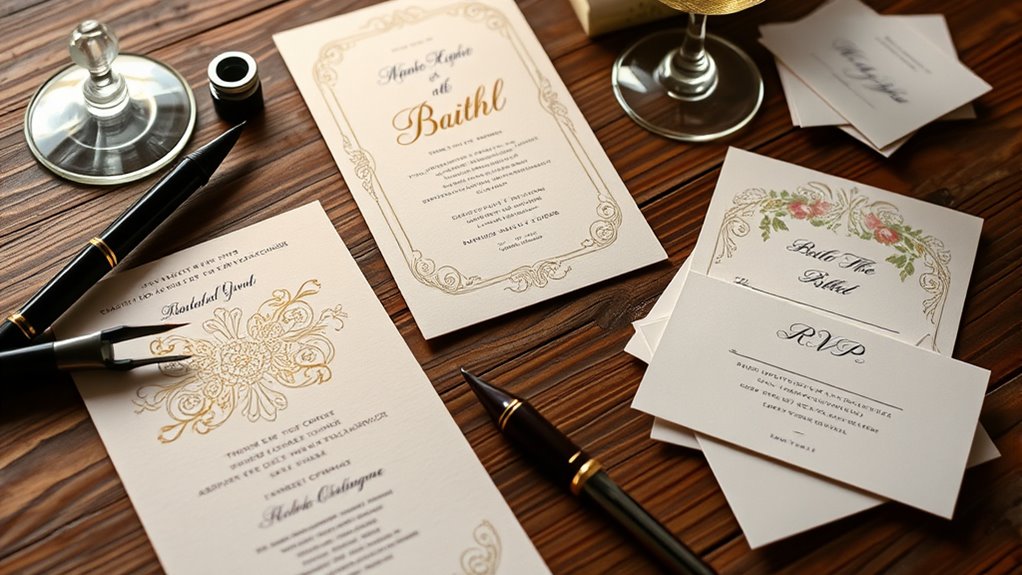
When creating your invitations, including all essential details guarantees your guests have everything they need to attend comfortably. Clear invitation wording should specify the event’s date, time, and location. Mention the dress code if applicable, so guests know what to wear. Don’t forget to incorporate the RSVP deadline, giving your guests ample time to respond. This helps you plan seating, catering, and other arrangements effectively. If you have a gift registry or special instructions, include those details as well. Make sure your contact information is clear, whether it’s an email or phone number. Being precise and thorough minimizes confusion and ensures your guests arrive prepared and on time. Properly including these details sets the tone for a smooth and enjoyable event.
Design and Personalization Tips for Invitations
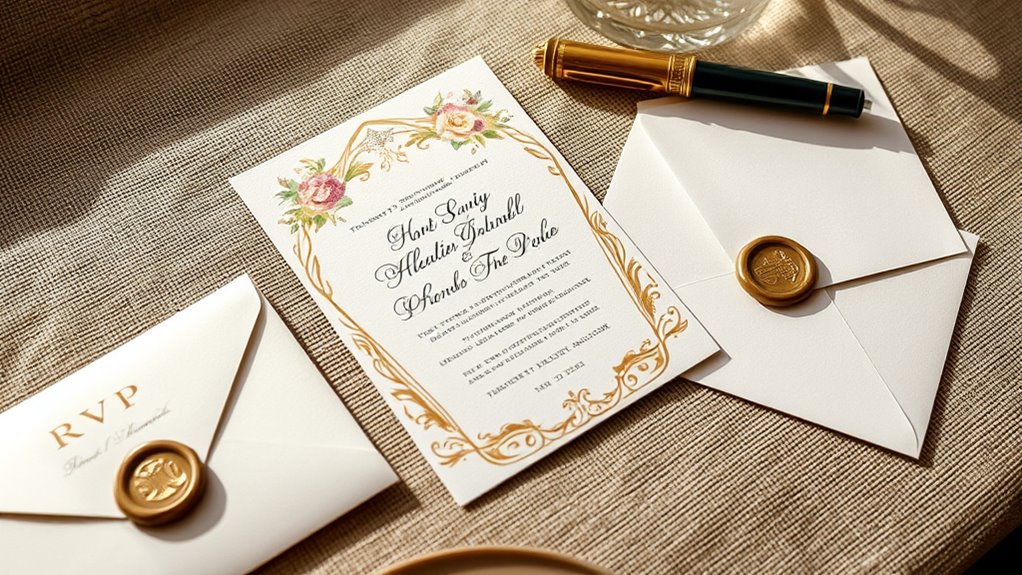
Choosing the right design and personalization for your invitations can make a lasting impression and set the tone for your event. Start by selecting a color scheme that reflects your theme and mood—soft pastels for a romantic vibe or bold hues for a lively celebration. Your typography choices are equally important; opt for fonts that match your event’s style, whether elegant script or modern sans-serif. Keep readability in mind, avoiding overly intricate fonts that might confuse guests. Incorporate personalized touches like monograms, illustrations, or custom borders to add a unique flair. Consistency in your design elements helps create a cohesive look. Remember, your invitation should visually communicate the event’s personality while inviting guests to feel excited from the moment they see it. Additionally, understanding electric bike speeds can inspire dynamic and energetic design elements that reflect movement and excitement.
Clear Instructions for RSVP Responses
| Response Method | Deadline | Additional Notes | |
|---|---|---|---|
| Jan 10 | Use subject line “RSVP” | ||
| Phone | Jan 10 | Call during business hours | |
| Website | Jan 10 | RSVP at www.yourwebsite.com | Incorporate clear communication to ensure guests understand the importance of prompt responses. |
Important Information to Communicate for a Smooth Event
Ensuring your guests have all the necessary information is key to a smooth event. Clearly communicate the event theme so attendees understand the vibe and expectations. Mention the dress code explicitly, whether it’s formal, casual, or themed attire, to help guests dress appropriately. Include details about the event’s location, date, and start time, along with any parking or transportation info. If there’s a specific schedule or activities planned, share that too. Providing this information upfront minimizes confusion and helps guests come prepared. When your invitations highlight the event theme and dress code, your guests will feel confident and comfortable, setting the tone for a successful, enjoyable gathering. Clear, precise details make all the difference. Additionally, consider tea brewing tips to create a welcoming atmosphere for your guests.
Follow-Up Strategies After Sending Invitations
Once you’ve sent out your invitations with all the necessary details, the next step is to follow up to confirm your guests will attend. Checking in helps refine your guest list and guarantees you have accurate numbers for planning. Reach out via email or phone a week after sending invitations, especially for those who haven’t responded. This follow-up keeps your event timeline on track and prevents last-minute surprises. Be polite and clear, reminding guests of the event date and asking for their RSVP. Confirming attendance also allows you to accommodate any special needs or dietary restrictions. Consistent follow-up reduces the risk of miscommunication and assures you have a solid guest list to work with as your event approaches. Additionally, utilizing guest management tools can streamline this process and help you stay organized.
Frequently Asked Questions
How Early Should I Send Out Invitations for My Event?
You should send out your invitations at least six to eight weeks before your event to give guests enough time for planning and RSVP. Timing considerations are essential, especially for holidays or destination events, which may require even earlier invites. Sending invitations too early can cause forgetfulness, while too late might limit attendance. Aim for a balance that allows your guests ample notice without risking last-minute cancellations.
What Should I Do if a Guest Doesn’t RSVP?
Imagine you’re in a scene from a vintage movie, clutching a telegram for your guest. If someone doesn’t RSVP, you should do a guest follow-up with a friendly call or message. Use RSVP tracking to stay organized, checking who’s responded. A gentle reminder often prompts guests to confirm. Keep it polite and casual—sometimes people forget, and a quick nudge helps you finalize your headcount smoothly.
Can I Include Dress Code Details on the Invitation?
Yes, you can include dress code details on the invitation to guarantee guests know what to wear. It’s good invitation etiquette to be clear about the dress code, whether it’s casual, semi-formal, or black-tie. Mentioning this information helps guests dress appropriately and avoids confusion. Just keep the wording concise and polite, and place the dress code details near the event specifics for easy reference.
Is It Necessary to Include a Map or Directions?
You should definitely include a map or directions on your invitation to enhance event accessibility and guest convenience. Some might think it’s unnecessary, but clear guidance guarantees everyone finds the venue easily, avoiding confusion or delays. By providing detailed directions, you make your event more welcoming, especially for guests unfamiliar with the location. This small addition shows you care about their experience, helping everything run smoothly from start to finish.
How Do I Handle Last-Minute RSVP Changes?
When handling last-minute RSVP changes, you should promptly update your guest list management and use RSVP tracking tools to keep everything organized. Contact guests directly to confirm new plans and note their responses in your system. This helps avoid confusion and ensures everyone receives timely updates. Staying proactive with your RSVP tracking allows you to adapt arrangements quickly and smoothly, making your event planning more efficient.
Conclusion
Make your invitations clear, make your design engaging, and make your instructions simple. Communicate essential details, communicate your personality, and communicate your expectations. By doing so, you’ll create invitations that inform, invite, and inspire. Remember, every detail counts—every word, every image, every instruction. When you focus on clarity, consistency, and care, you’ll ensure your event is memorable from the first glance to the final RSVP. Make it inviting, make it unforgettable, and make it yours.