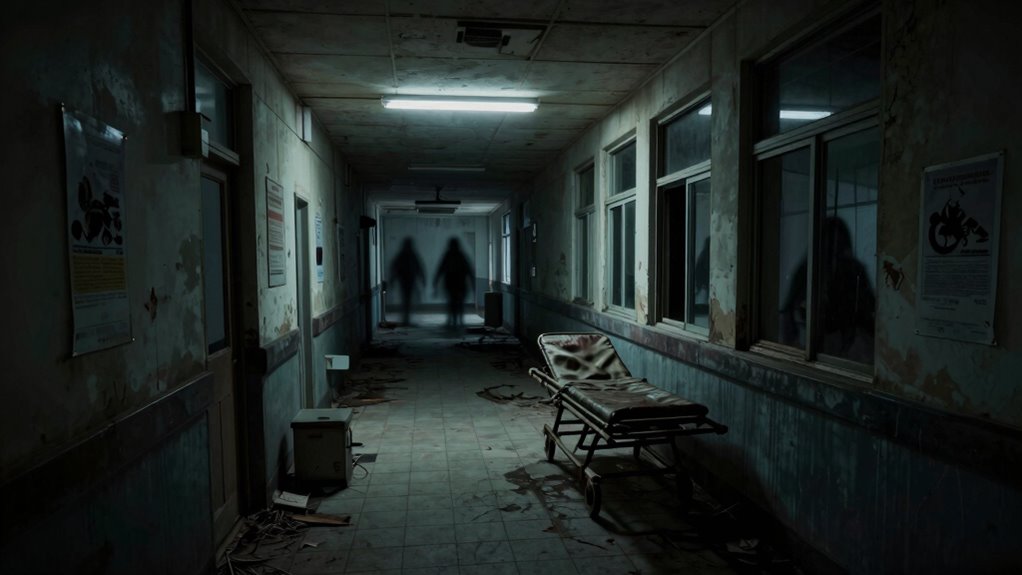

Urban legends like the haunted hospital start from real events, like accidents or disappearances, that people twist into stories over time. Community fears of death, the unknown, and supernatural sights fuel these tales. Vivid details, eerie environments, and generations of storytelling keep the legend alive, shaping local culture. As stories evolve and new sightings appear, the legend strengthens and takes on a life of its own. If you keep exploring, you’ll uncover how these myths continue to grow.
Key Takeaways
- Urban legends like the haunted hospital develop from real events, which become exaggerated and mythologized over generations.
- Folklore roots link stories to local tragedies, ghostly encounters, or unresolved trauma, fueling collective fears.
- Environmental features such as eerie architecture and nighttime settings enhance the supernatural atmosphere, reinforcing the legend.
- Stories evolve through new retellings, adding details and sightings, ensuring the legend remains relevant and vivid.
- These legends serve as cautionary tales, reflect cultural fears, and shape community identity through shared storytelling.
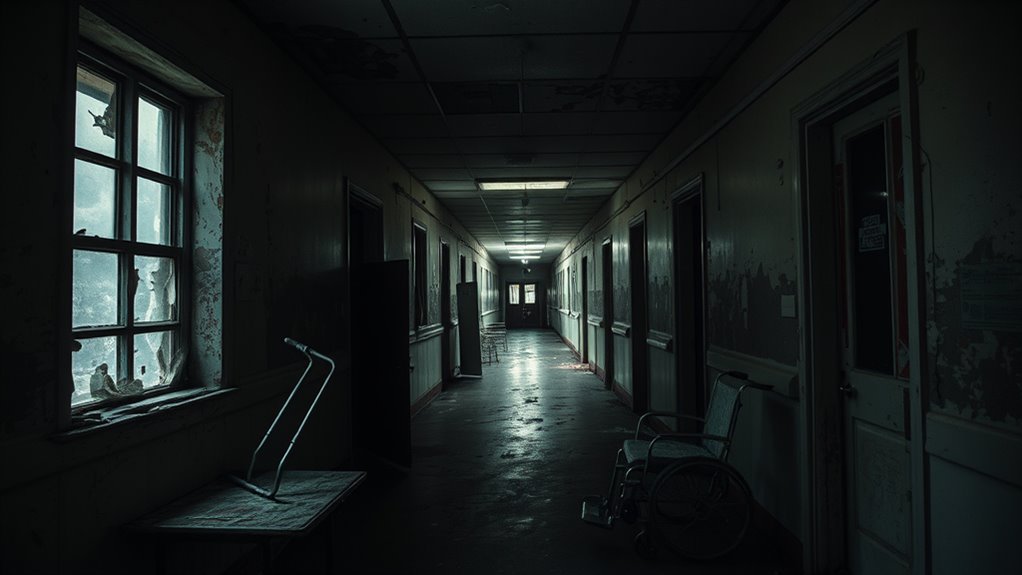
Many residents in the city whisper about the abandoned hospital on the outskirts, claiming it’s haunted by restless spirits. This local legend has persisted for decades, fueling ghost stories that send shivers down anyone’s spine. These tales don’t just pop up out of nowhere; they have deep roots in folklore origins that help explain how such stories develop and spread. When you hear about the haunted hospital, you’re hearing a story that has been shaped by generations of storytelling, blending fact, fiction, and cultural fears.
The folklore origins of these ghost stories often trace back to real events, mysterious disappearances, or tragic accidents that occurred in or near the hospital. Over time, these incidents become exaggerated and mythologized, transforming into chilling tales that serve as cautionary stories or warnings. For example, a sudden death in the hospital might become a story of a restless spirit seeking justice, or a ghostly figure seen wandering the halls might symbolize unresolved trauma. As these stories are passed down, they take on a life of their own, becoming part of the community’s collective consciousness.
These ghost stories thrive because they tap into universal fears—of death, the unknown, and losing control. When you hear about ghostly apparitions or unexplained noises, it’s easy to see how folklore origins evolve from simple anecdotes into elaborate legends. Sometimes, these stories are reinforced by local landmarks or peculiar architectural features that seem to lend themselves to supernatural explanations. The eerie silence of the abandoned hospital at night, combined with shadows cast by broken windows, fuels the imagination, making it easier for these stories to grow more vivid and persistent.
The power of these urban legends lies in their ability to adapt and endure. As new generations hear the stories, they add their own twists or sightings, keeping the legend alive. Interestingly, the architectural features of the hospital often contribute to the supernatural atmosphere, further strengthening the legend. The ghost stories surrounding the hospital often serve as a shared cultural experience, creating a sense of mystery that unites the community. Whether or not you believe in spirits, you can’t deny that these stories shape the way people see the hospital—and perhaps even influence how they behave around it.
In the end, the haunted hospital myth exemplifies how folklore origins and ghost stories blend fact and fiction, giving life to urban legends that continue to mystify and entertain. These stories reflect collective fears and curiosities, transforming an abandoned building into a symbol of the supernatural. So, next time you hear about the haunted hospital, remember that it’s more than just a spooky tale—it’s a living piece of local folklore that has grown and evolved over generations.
Frequently Asked Questions
Are There Real Cases Behind the Haunted Hospital Stories?
Yes, there are real cases behind haunted hospital stories. Many ghost stories and paranormal sightings stem from actual experiences patients and staff have reported over the years. These accounts often involve unexplained noises, apparitions, or eerie feelings, which get amplified and transformed into legends. While some stories may be exaggerated, they’re rooted in genuine experiences that keep the mystery alive and fuel the haunted hospital myth.
How Do Hospitals Contribute to Urban Legends’ Spread?
You notice how hospital folklore spreads because hospitals often become settings for strange events, sparking medical myths. Coincidences, like unexplained noises or eerie stories, fuel these tales, making them seem real. Hospitals contribute to urban legends by providing a backdrop of mystery and fear, encouraging storytelling. This natural environment of uncertainty amplifies myths, turning everyday medical facilities into haunted sites, where legends grow stronger with each retelling.
What Psychological Factors Make These Legends Convincing?
You find these legends convincing because collective fear amplifies the spooky stories, making them seem real. Suggestibility plays a big role too; when you’re open to believing, you’re more likely to accept eerie details without question. The combination of shared anxiety and your tendency to be influenced by others creates a powerful effect, making haunted hospital stories feel authentic and hard to dismiss.
Have Any Investigations Proven the Hospital Is Truly Haunted?
You might be surprised, but no investigations have proven the hospital is truly haunted. Ghost sightings and paranormal activity reports often occur alongside coincidental events, making it hard to separate fact from fiction. Despite numerous claims, scientific studies haven’t confirmed any supernatural presence. Instead, these stories thrive on coincidence, psychological factors, and sensationalism, keeping the legend alive without concrete proof of real hauntings.
Why Do People Believe in Haunted Hospitals Despite Lack of Evidence?
You believe in haunted hospitals because medical superstition and ghost stories create a compelling atmosphere that taps into your fears and curiosity. Even without concrete evidence, these tales spread through word of mouth and media, making the supernatural seem real. Your mind often fills gaps with spooky stories, reinforcing the idea that something unexplained might be happening, keeping the legend alive despite the lack of scientific proof.
Conclusion
As you walk through the shadows of this myth, remember that every legend starts with a whisper, a flicker of truth distorted by time. The haunted hospital lingers in your mind, an enigma that refuses to fade. Could it be real, or just a clever story spun to feed your curiosity? Perhaps, the scariest part isn’t the ghost stories, but what you choose to believe—because sometimes, the truth is scarier than any legend.