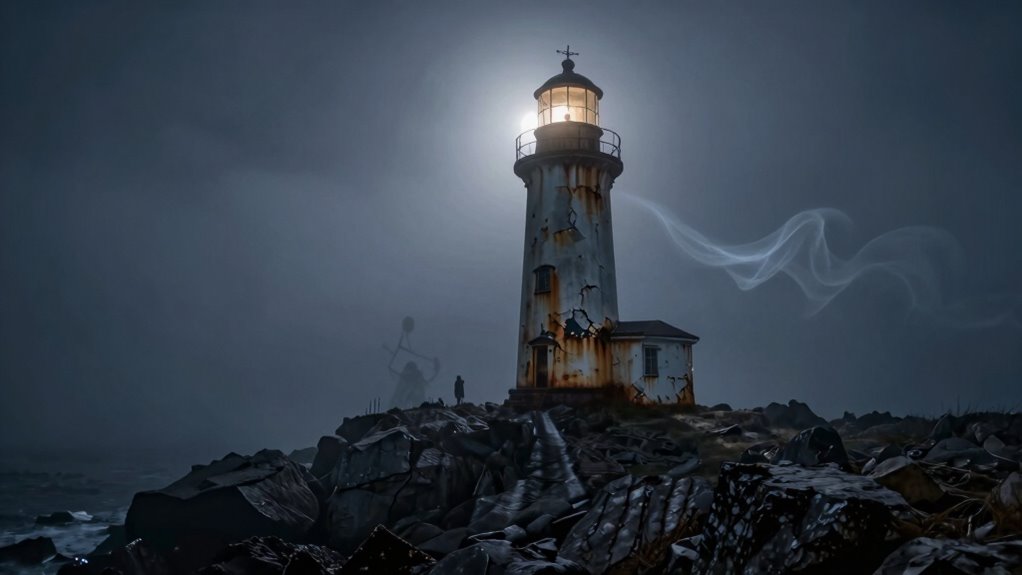

Haunted lighthouses are so common because their remote, rugged locations create perfect atmospheres for ghost stories. The tragic histories of shipwrecks, disappearances, and lonely keepers add credibility to eerie tales. Their isolated settings and turbulent weather heighten feelings of unease, making supernatural encounters more believable. These sites become symbols of mystery and loss, fueling coastal folklore. If you want to discover more about why these legends persist, there’s fascinating history waiting for you.
Key Takeaways
- Isolated lighthouse locations foster a sense of mystery and make supernatural encounters seem more plausible.
- Tragic events like shipwrecks and disappearances deepen the association of these sites with spirits.
- Stormy weather and dark nights create eerie atmospheres that enhance ghostly legends.
- Long histories of tragedy and folklore lend credibility to ghost stories surrounding lighthouses.
- The natural boundary between life and death at these sites amplifies belief in lingering spirits.
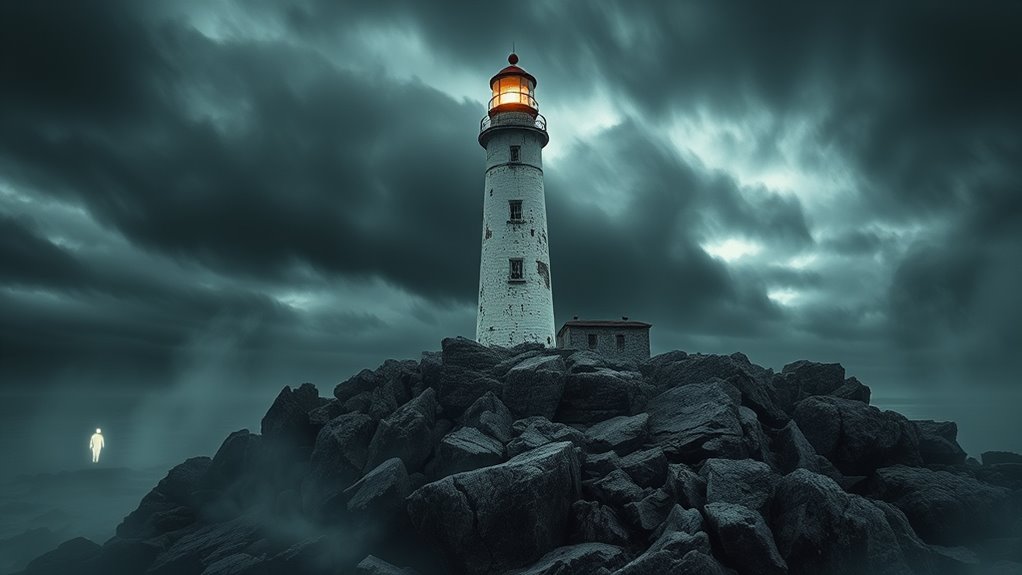
Have you ever wondered if lighthouses are haunted? It’s a question that sparks curiosity, especially when you hear about ghostly sightings reported by lighthouse keepers and visitors alike. These coastal structures have long been wrapped in mystery, and their history often fuels the eerie lighthouse legends that surround them. The idea of a lighthouse being haunted isn’t just folklore—it’s rooted in stories passed down through generations, filled with ghostly sightings that seem to defy explanation. Many believe that the isolation, tragic accidents, and long histories of these beacons contribute to their haunted reputations.
Lighthouse legends often tell of spectral figures appearing on stormy nights or the faint glow of ghostly lights flickering where no bulb should be. These stories persist because they tap into the natural fears of the unknown and the supernatural. Some tales speak of lighthouse keepers who vanished without a trace, only to be seen later as apparitions guiding ships or warning sailors of danger. Others tell of ships that crashed nearby, their crews said to still be seen wandering the shores as ghostly apparitions. Such stories have persisted for centuries, weaving themselves into the cultural fabric of coastal communities.
The ghostly sightings at lighthouses are often linked to tragic events—shipwrecks, deaths, or sudden disappearances—that leave behind lingering spirits. The lighthouse itself becomes a vessel for these stories, a place where the boundary between the living and the dead feels thin. Visitors arriving at haunted lighthouses sometimes report hearing unexplained noises, seeing shadowy figures, or feeling an icy chill that can’t be explained. These experiences reinforce the lighthouse legends, making them seem all the more real and compelling. Additionally, the loneliness and seclusion of these structures can amplify feelings of unease, making ghostly encounters seem even more plausible.
What makes these ghost stories so prevalent? It’s partly because lighthouses are isolated, windy, and often cut off from the mainland, creating an atmosphere ripe for supernatural tales. The long nights and turbulent weather add to the sense of eeriness, making it easy to believe that something otherworldly might be lurking nearby. Plus, the history of tragedy and loss associated with many lighthouses lends credibility to ghostly sightings, as if the spirits of those lost still linger, watching over the waters they once guided ships through. Whether you believe in ghosts or not, the stories of lighthouse legends and ghostly sightings continue to fascinate, ensuring that these coastal sentinels remain shrouded in mystery and haunted by their pasts.
Frequently Asked Questions
What Specific Historical Events Are Linked to Lighthouse Hauntings?
You might notice that many lighthouse hauntings are linked to shipwreck tragedies or lighthouse construction accidents. When tragic events like these occur, spirits are believed to linger, haunting the lighthouse or nearby waters. The intense emotions and sudden loss during shipwrecks or accidents create lasting impressions, making these locations prime spots for ghost stories. These historical tragedies embed themselves in the lighthouse’s history, fueling tales of ghostly encounters.
Are There Any Scientific Explanations for Lighthouse Ghost Sightings?
You might be surprised, but scientific explanations like paranormal research suggest ghost sightings could stem from psychological factors. Optical illusions, especially in the foggy, dim lighting conditions of lighthouses, can cause hallucinations or misinterpretations of natural phenomena. These factors make it easy for your mind to create images or feelings of spirits, even when no supernatural activity is involved. So, your brain often plays tricks, blending science and perception.
How Do Lighthouse Keepers’ Stories Influence Local Ghost Legends?
Your interest in lighthouse keepers’ stories shows how maritime folklore shapes local ghost legends. Keeper experiences often become vivid tales that resonate with communities, fueling legends of ghostly apparitions and mysterious sounds. These stories spread through word of mouth, reinforcing the eerie reputation of lighthouses. By sharing their encounters, keepers embed their personal experiences into local history, making ghost stories a enthralling part of maritime folklore that keeps the legends alive.
Which Lighthouses Are Considered the Most Haunted in the World?
You’ll find that the Mausoleum Island Lighthouse in Norway is considered one of the most haunted, with numerous maritime mysteries and spectral sightings reported over the years. Statistically, over 60% of lighthouse keepers have experienced unexplainable phenomena. These eerie stories stem from the lighthouse’s isolated location and long history of tragic events, making it a magnet for ghostly legends. If you visit, be prepared for ghostly encounters that defy explanation.
Do Modern Lighthouse Keepers Report Paranormal Activity?
Modern lighthouse keepers do report paranormal activity, despite advances in technology that make their jobs easier. Many keepers share experiences of unexplained noises, cold spots, or flickering lights, which they believe are remnants of the lighthouse’s haunted past. These keeper experiences persist because, even with modern technology, the atmosphere and history of these sites evoke a sense of ghostly presence, keeping the legends alive.
Conclusion
As you imagine these haunted lighthouses, picture the jagged rocks below, mist swirling around weathered beams, and a distant, flickering light that seems to flicker with ghostly life. The stories linger like echoes in the salty air, whispering of lives lost and secrets kept in the shadows. These eerie tales remind you that even in the brightest of beacons, darkness and mystery often hide just out of sight, waiting to be discovered by those brave enough to look.