The Teal Pumpkin Project helps you create an inclusive Halloween experience by offering allergy-safe treats and non-food goodies. By displaying a teal pumpkin outside your home, you signal that your door provides allergy-friendly options like stickers, toys, or glow sticks. You can choose safe treats carefully, use signage to communicate your efforts, and get your community involved. Stay tuned to discover how to select the best treats and promote a welcoming environment for all trick-or-treaters.
Key Takeaways
- Display a teal pumpkin outside your home to signal allergy-friendly, non-food treats are available.
- Offer a variety of safe, allergy-friendly treats like stickers, toys, or glow sticks to promote inclusivity.
- Read labels carefully and choose treats free of common allergens such as nuts and gluten.
- Educate the community about allergy awareness and the significance of the teal pumpkin symbol.
- Create a welcoming environment that encourages participation and ensures all children feel safe and included.
Understanding the Purpose Behind the Teal Pumpkin
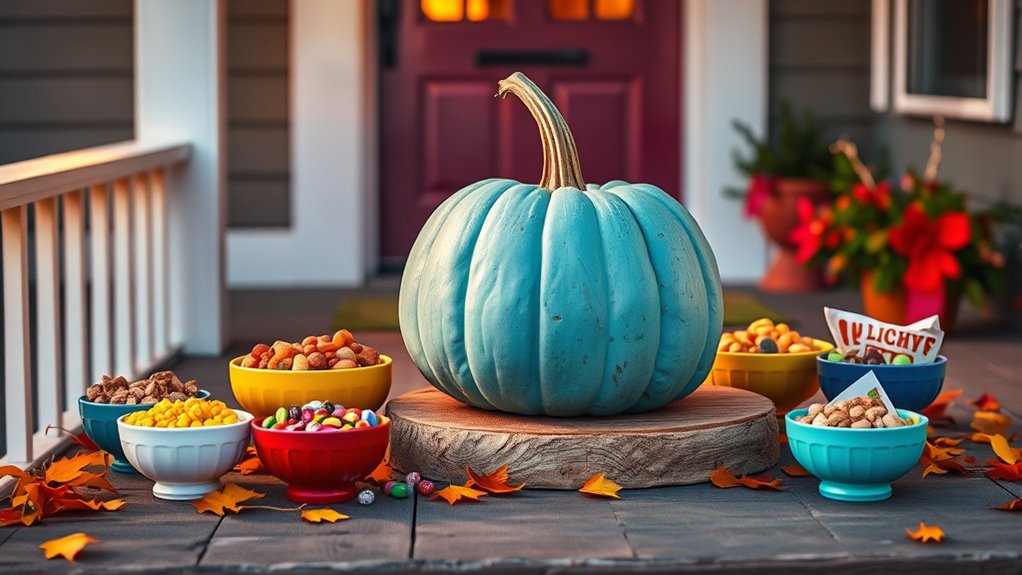
The Teal Pumpkin Project was created to promote inclusive trick-or-treating by raising awareness about food allergies. Its goal is to guarantee all children feel welcome and safe while enjoying Halloween activities, like choosing costumes or participating in pumpkin carving. By offering non-food treats, you help children with allergies avoid dangerous reactions. The teal pumpkin serves as a visible symbol for allergy-friendly treats, encouraging households to provide alternatives such as stickers, toys, or glow sticks. This project emphasizes that Halloween isn’t just about costumes or pumpkin carving; it’s about creating an environment where everyone can celebrate safely. Your participation shows that inclusivity matters, making the holiday enjoyable for children of all dietary needs and fostering a community of understanding.
How to Get Started With the Teal Pumpkin Project
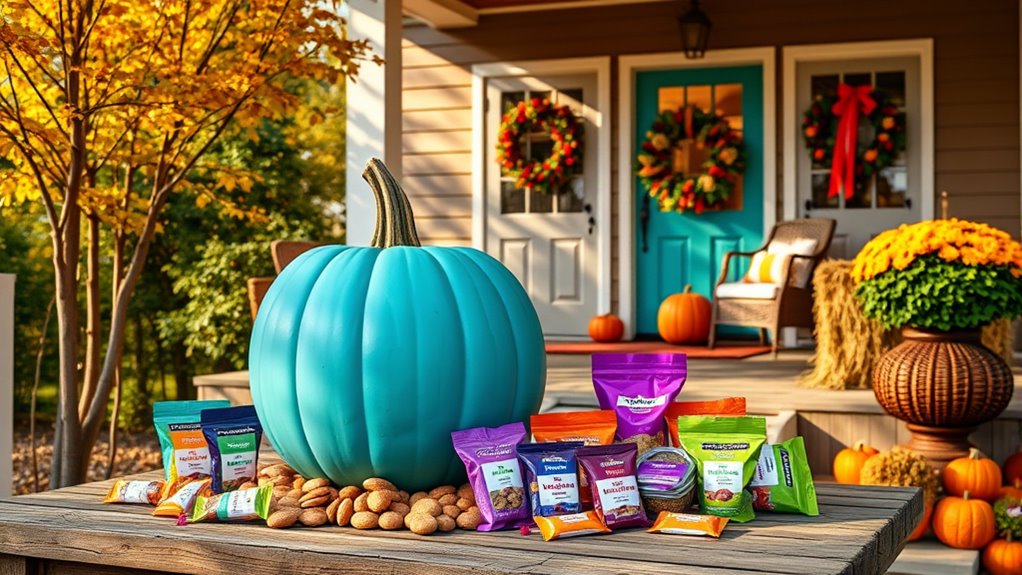
Start by finding safe, allergy-friendly treats to hand out, so everyone can enjoy the festivities. Then, display your teal pumpkin prominently to let others know you’re offering non-food options. This simple step encourages inclusivity and makes your porch welcoming to all trick-or-treaters. Additionally, consider menu development strategies to select treats that cater to various dietary restrictions and preferences.
Find Safe Options
To get started with the Teal Pumpkin Project, begin by researching safe, allergy-friendly treats that you can offer. Focus on options that address nut allergy awareness, ensuring candies or snacks are nut-free and clearly labeled. Look for gluten-free options to accommodate children with gluten sensitivities or celiac disease. You can find many allergy-friendly treats at grocery stores or specialty shops, or consider making homemade goodies tailored to dietary restrictions. Always read labels carefully and verify that packaging is free from common allergens. Offering a variety of safe treats not only promotes inclusivity but also helps children with allergies enjoy trick-or-treating without worry. Incorporating top-rated allergy-friendly treats can further enhance your options. By selecting inclusive options, you create a welcoming environment for all kids to participate safely.
Display Your Teal Pumpkin
Displaying your teal pumpkin is a simple yet impactful way to show you’re offering allergy-friendly treats. It encourages community engagement by signaling to families that safe options are available. To get started, place your teal pumpkin outside your home or on your porch so trick-or-treaters can easily see it. Make sure your teal pumpkin is visible and well-lit for Halloween safety, especially in the evening. You might also consider adding signs or notes explaining your participation in the Teal Pumpkin Project. This simple step helps foster inclusivity and reassures parents that their children can enjoy treats without allergy concerns. Recognizing Angel Number Significance can also inspire you to approach community events with more openness and positivity. By displaying your teal pumpkin, you’re actively contributing to a safer, more inclusive community celebration.
Recognizing Safe and Allergy-Friendly Treats

When you look at treats, make sure to read labels carefully to spot potential allergens. Recognizing allergy-friendly symbols can help you quickly identify safe options. Offering alternative snacks guarantees all children have fun without risking an allergic reaction. Additionally, being aware of safe and inclusive options ensures everyone can enjoy the festivities comfortably.
Reading Labels Carefully
Have you ever checked a candy label only to find ingredients that could trigger an allergy? It’s essential to practice ingredient awareness to keep everyone safe. Carefully read every label, paying attention to every ingredient listed. Look for allergy symbols or warnings that indicate potential allergens like nuts, soy, or dairy. Even if a treat looks safe, an ingredient you’re unfamiliar with could pose a risk. Don’t rely solely on brand reputation—ingredients can change. Keep an eye out for hidden sources of common allergens, such as lecithin or whey. Additionally, understanding allergen cross-contact can help prevent accidental exposures. By diligently reading labels and understanding ingredient lists, you ensure safe, allergy-friendly treats for all trick-or-treaters. This simple step makes your celebration inclusive and enjoyable for everyone involved.
Recognizing Allergy-Friendly Symbols
Many allergy-friendly treats now feature clear symbols and labels that indicate they are safe for those with food allergies. Look for icons like a peanut crossed out to identify peanut-free options, or a wheat symbol with a slash through it to find gluten-free treats. These symbols quickly communicate which treats are suitable for children with specific allergies, making your search easier during celebrations. Always double-check the packaging, even if a symbol is present, to guarantee the product meets safety standards. Recognizing these allergy-friendly symbols can help you confidently select snacks that are safe and inclusive. Being aware of the cookie categories used on packaging can further assist in identifying appropriate treats. By paying attention to these labels, you reduce the risk of accidental allergic reactions and create a welcoming environment for all children to enjoy treats safely.
Offering Alternative Snacks
Offering alternative snacks guarantees all children can participate in celebrations safely and enjoyably. By providing nut allergy awareness options and gluten-free treats, you guarantee inclusivity. When selecting snacks, consider items that are free from common allergens and clearly labeled as safe. Here are some ideas to enrich your offerings:
- Fresh fruit and vegetable trays for natural, allergy-safe options
- Nut-free granola bars and snacks with clear allergen labeling
- Gluten-free baked goods or candies to accommodate dietary needs
- Regularly reviewing allergen information ensures the snacks remain safe as ingredients or formulations change.
These choices help create a welcoming environment where children with allergies or intolerances feel included. Offering safe and allergy-friendly treats not only promotes awareness but also fosters a positive, inclusive celebration for everyone.
Creative Ideas for Non-Food Halloween Goodies
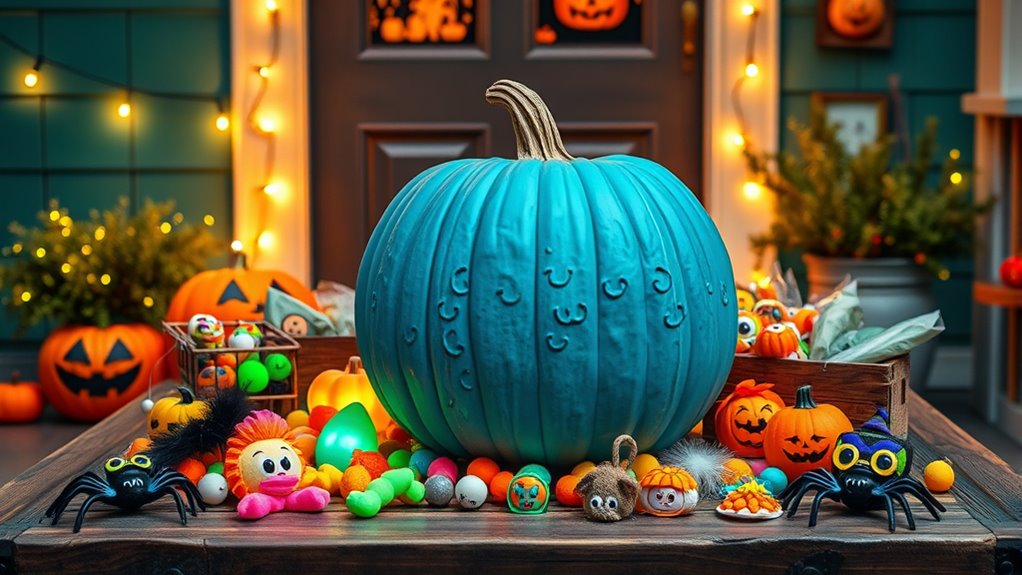
If you’re looking to make Halloween inclusive for all trick-or-treaters, consider swapping out traditional candies with creative non-food goodies. You can include small toys, stickers, glow sticks, or mini puzzles to surprise kids. To make your porch inviting, add DIY decorations like painted pumpkins or spooky banners that set a fun, festive atmosphere. Think about incorporating costume ideas into your treats, such as themed stickers or accessories that match popular costumes. These options encourage participation without relying on food and show you’re thoughtful about allergy safety. Plus, non-food goodies can be just as exciting as candy, making Halloween enjoyable for everyone. Incorporating ergonomic considerations into your decorations and setup can also help create a comfortable environment for visitors. With a little creativity, your home can become a welcoming, inclusive space for all trick-or-treaters.
Tips for Communicating Your Allergy-Friendly House

Clear communication is key to guaranteeing trick-or-treaters with allergies feel safe and welcome at your house. When you set clear expectations, you promote positive trick or treat etiquette and help children enjoy the night safely. To do this effectively:
- Clearly display allergy-friendly signs or teal pumpkin markers outside your home to indicate safe treats.
- Verbally communicate with parents about your allergy-friendly options, especially if you’re giving non-food items.
- Ensure your decorations, including costumes, are safe and don’t obscure your face or eyes, promoting costume safety and easy recognition.
- Consider using an air purifier in your home to improve indoor air quality and create a healthier environment for all guests.
Making the Most of Community Involvement

Getting your community involved can markedly enhance the impact of the Teal Pumpkin Project. Reach out through community outreach efforts like flyers, social media, and local events to spread awareness about inclusive trick-or-treating. Educate neighbors about the importance of safety awareness, especially for children with allergies or sensitivities. Encourage local businesses and organizations to participate by offering allergy-friendly treats or supporting the initiative. When the community rallies together, it creates a safer, more inclusive environment for everyone. Your efforts can inspire others to join, making a lasting difference. Remember, clear communication and active engagement are key. By fostering a sense of shared responsibility, you help build a community where all kids can enjoy Halloween safely and confidently. Promoting understanding about food allergies and sensitivities can further strengthen community support for the cause.
Encouraging Kids to Embrace Inclusive Trick-or-Treating

Encouraging kids to embrace inclusive trick-or-treating starts with helping them understand the importance of kindness and empathy. Teach children that respecting others’ differences and following trick or treat etiquette creates a friendly, welcoming atmosphere for everyone. To deepen their understanding, consider these points:
Foster kindness and empathy to ensure inclusive, welcoming trick-or-treating for all children.
- Model respectful behavior by including children with diverse needs and practicing patience.
- Discuss costume safety and comfort, emphasizing that inclusive costumes should be safe and considerate of others’ sensitivities.
- Encourage open communication about their experiences, so they learn to ask permission and share kindness during the holiday.
- Teaching children about electric dirt bikes and their features can also foster curiosity and respect for different types of transportation and technology.
Frequently Asked Questions
How Does the Teal Pumpkin Project Impact Children With Food Allergies?
The Teal Pumpkin Project boosts allergy awareness and fosters community inclusion by encouraging you to offer non-food treats, making trick-or-treating safer and more inclusive. When you participate, you help children with food allergies feel welcomed and cared for, reducing their fear and isolation. This project promotes understanding and kindness, ensuring that all kids can enjoy Halloween festivities without risking allergic reactions.
Are There Specific Materials Recommended for Creating Teal Pumpkin Signs?
You should use durable, weather-resistant materials like decorative paint or printable signs to create teal pumpkin signs. These materials guarantee your signs stay vibrant and intact throughout the festivities, catching everyone’s eye. Imagine the impact of a bright, well-crafted sign guiding children toward inclusive treats. By choosing the right materials, you make a powerful statement of inclusion and care, encouraging others to follow your lead in creating a welcoming environment.
How Can Schools Participate in the Teal Pumpkin Project?
You can encourage schools to participate in the Teal Pumpkin Project by incorporating classroom activities that promote awareness and inclusivity. Organize lessons on food allergies and sensitivities, and host student engagement events like allergy-friendly treat exchanges. Display teal pumpkins on school grounds to show support, and involve students in creating signs and awareness campaigns. This active participation fosters understanding and inclusivity, making every child’s Halloween experience safe and fun.
What Are Some Budget-Friendly Non-Food Treat Ideas?
Looking to impress kids without draining your wallet? Skip the candy and opt for budget-friendly non-food treats like DIY crafts and small toys. You’ll become the hero of the neighborhood, transforming your porch into a treasure trove of creative surprises. Plus, these treats last longer than a sugar crash and give kids something fun to remember. It’s a win-win—less sugar, more smiles, and plenty of crafty charm!
How Can Neighbors Coordinate for a Community-Wide Inclusive Halloween?
You can coordinate for a community-wide inclusive Halloween by organizing neighborhood outreach events and setting up a shared plan. Reach out to neighbors through flyers or social media to discuss ideas and assign roles. Create a list of inclusive treats and non-food options, like small toys or craft supplies, and establish designated areas for allergy-friendly treats. Working together guarantees everyone feels welcomed and safe during the festivities.
Conclusion
By embracing the Teal Pumpkin Project, you’re planting seeds of kindness that bloom into a vibrant patch of inclusion. Your home becomes a welcoming lighthouse, guiding all trick-or-treaters safely and joyfully through a night of shared celebration. With creative treats and open hearts, you’re weaving a colorful tapestry of community and understanding. Together, you’re turning Halloween into a garden where every child’s smile blossoms, and everyone feels truly seen and loved.