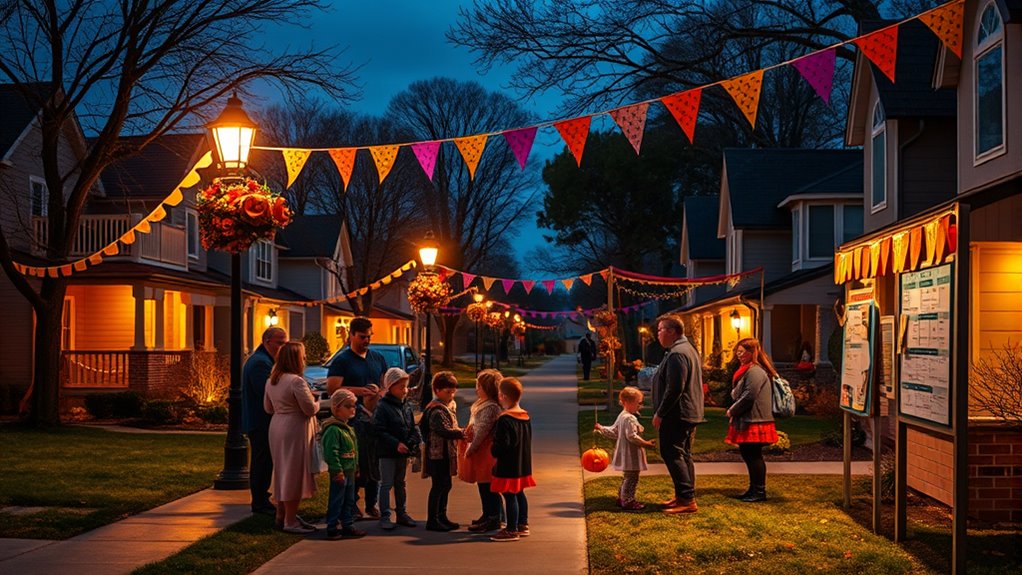

Communities decide trick-or-treat hours based on local traditions, safety guidelines, and input from residents and officials. They consider factors like neighborhood preferences, weather, and daylight hours to establish suitable times. Law enforcement also suggests safe hours and may assist with community patrols. Many places coordinate with schools and events to avoid conflicts and guarantee safety. If you want to understand how all these pieces come together, there’s more to learn below.
Key Takeaways
- Communities often set specific trick-or-treat hours based on local traditions, safety concerns, and community input.
- Neighborhood surveys and feedback help residents and organizers determine the most suitable timing.
- Coordination with schools, law enforcement, and community events ensures consistent scheduling and safety.
- Local policies and regulations, such as curfews or street closures, influence the designated trick-or-treat periods.
- Considerations of weather, daylight hours, and visibility lead communities to adjust or specify trick-or-treat times.
Community Traditions and Cultural Norms
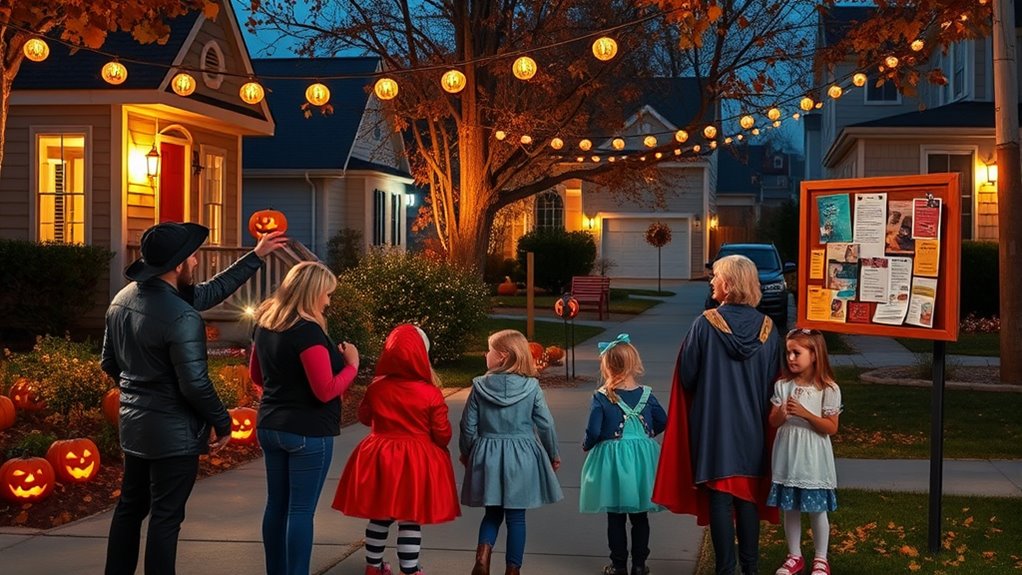
Community traditions and cultural norms play a significant role in shaping when and how trick-or-treating takes place. These cultural rituals influence the timing of events, often reflecting local history or shared values. Festive customs vary from one community to another, with some neighborhoods adopting specific hours to honor longstanding practices. For example, certain areas may hold trick-or-treating on October 31st evening, while others might prefer the weekend before or after Halloween. These traditions help maintain a sense of identity and continuity within the community. By respecting local customs, residents ensure that celebrations align with collective expectations, making the experience enjoyable and meaningful for everyone involved. Additionally, understanding sound design techniques can help communities create engaging and safe Halloween events through themed audio and sound effects. Ultimately, these cultural rituals reinforce community bonds and preserve the festive spirit.
Safety Considerations and Local Policies
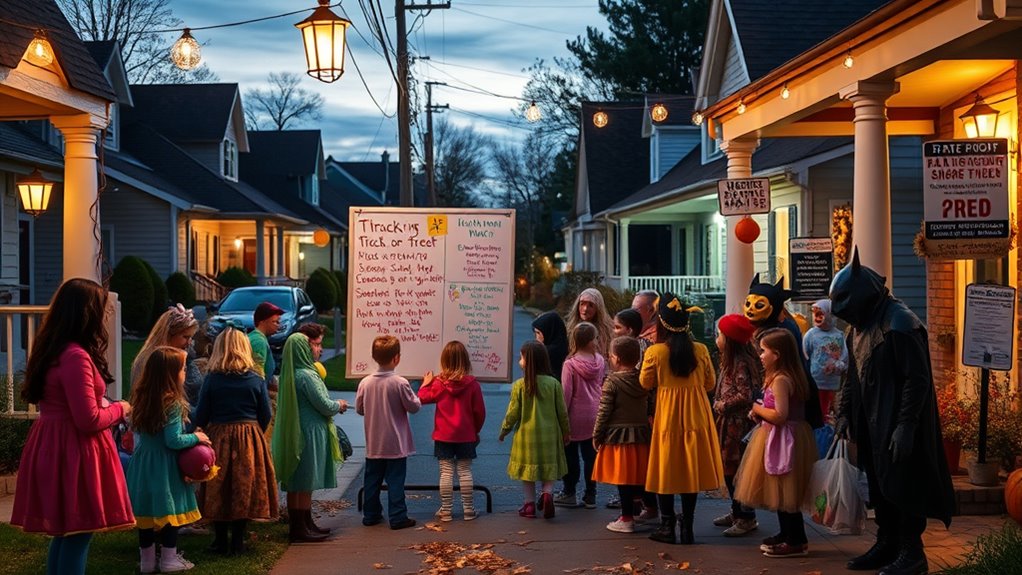
As families plan their trick-or-treat outings, prioritizing safety and adhering to local policies becomes increasingly important. Venue restrictions may limit where you can go, such as avoiding busy streets or private property without permission. Check if neighborhoods have designated trick-or-treat zones or specific hours to reduce risks. Costume guidelines also matter; choose masks and accessories that don’t obstruct vision or cause tripping hazards. Reflective clothing or glow sticks can enhance visibility at night. Follow local regulations related to curfews or street closures to keep everyone safe. Being aware of industry trends can help you stay informed about new safety practices and community guidelines. By respecting these policies and guidelines, you help create a fun, secure environment for all trick-or-treaters. Staying informed and cautious ensures a memorable night without unnecessary dangers.
Recommendations From Law Enforcement Agencies
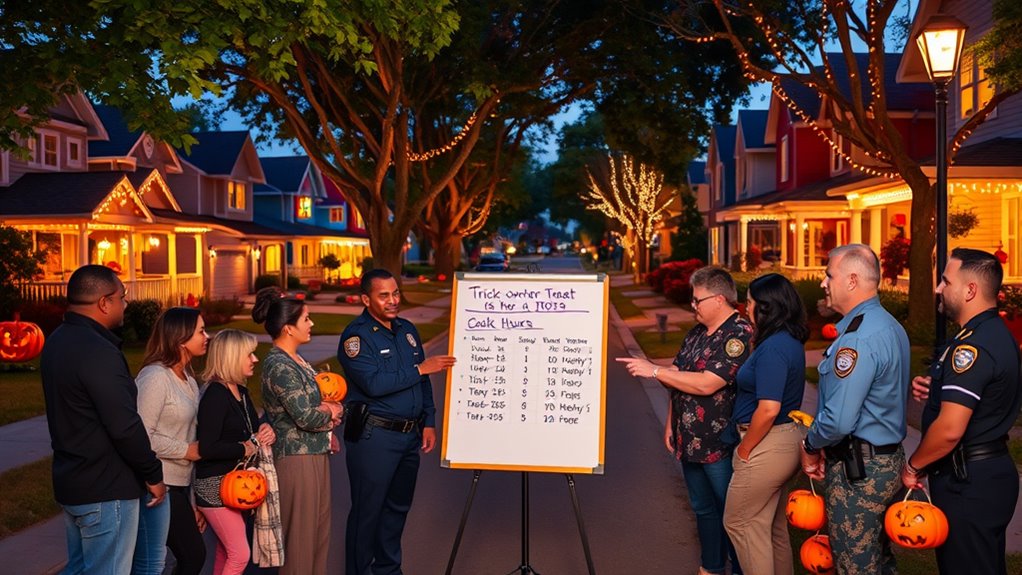
Law enforcement agencies recommend prioritizing safety measures to keep everyone secure during trick-or-treating. They also suggest coordinating community events to promote a fun and safe environment. Following these guidelines can help you create a memorable and worry-free Halloween night. Additionally, educating children about stranger safety and responsible candy consumption can further enhance community safety.
Prioritize Safety Measures
To guarantee a safe Halloween night, it’s essential to follow safety recommendations from law enforcement agencies. Make sure your child’s Halloween costumes are bright, reflective, and free of loose parts to enhance visibility. When choosing trick or treat venues, stick to well-lit areas with familiar neighbors and avoid short cuts through dark alleys or unfamiliar areas. Supervise children at all times, especially near busy roads, and encourage them to stay together in groups. Remind everyone to carry flashlights or glow sticks to improve visibility. Avoid masks that obstruct vision; instead, opt for face paint. Proper costume safety is also crucial to prevent accidents and injuries during festivities. These safety measures help reduce risks and ensure everyone can enjoy Halloween festivities without incident. Prioritizing safety creates a fun, worry-free experience for all.
Coordinate Community Events
Organizing community events for Halloween can considerably enhance safety and enjoyment for everyone involved. Law enforcement agencies recommend coordinating these events to improve trick or treat timing and ensure smooth event scheduling. By planning activities together, you minimize confusion about when kids should go door-to-door and reduce crowding in certain neighborhoods. Community-wide scheduling helps residents and parents understand the designated hours, making trick or treat hours clearer and more manageable. Additionally, coordinating events allows local authorities to provide police support or patrols, boosting safety. You can also incorporate neighborhood contests, festivals, or parades to keep children engaged and reduce the rush to collect treats. Proper event planning and safety considerations, such as clear communication and crowd control, are essential for a successful Halloween night. Overall, collaborative event planning creates a safer, more enjoyable Halloween experience for all residents.
Input From Parents and Neighborhood Associations
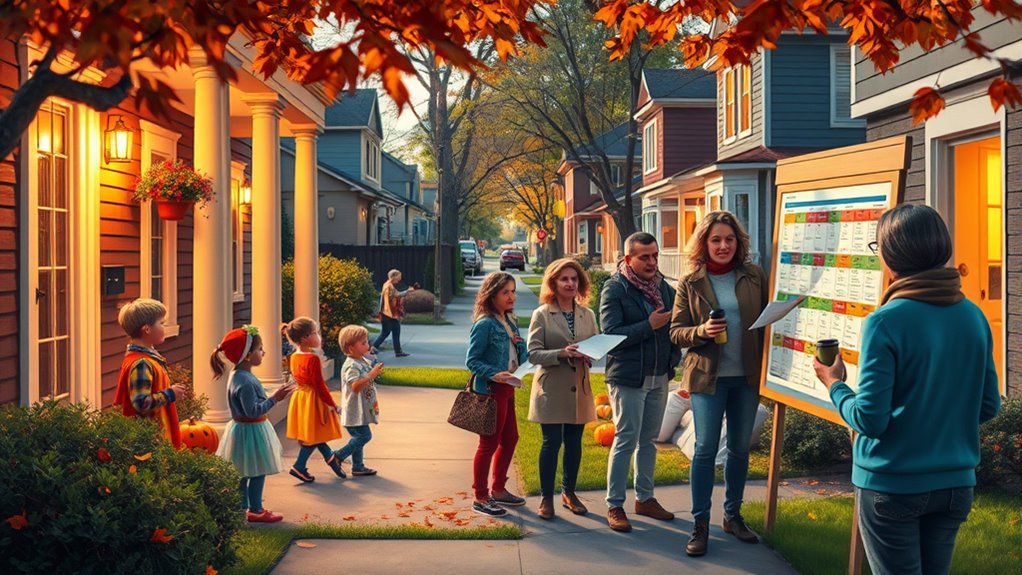
Gathering input from parents and neighborhood associations is essential for setting trick-or-treat hours that everyone can enjoy. You can start by conducting neighborhood surveys to understand residents’ preferences and identify common concerns. Parent surveys help you gauge suitable times for children, ensuring safety and convenience. Listening to community feedback allows you to balance varying opinions and create a schedule that respects everyone’s needs. It’s helpful to share survey results openly, fostering transparency and trust. When you involve parents and neighborhood groups, you’re more likely to reach a consensus that promotes safety and fun. This collaborative approach also encourages community engagement, making trick-or-treating a positive experience for all residents involved. Additionally, understanding projector technology can inspire creative ways to enhance community events and gatherings during the holiday.
State and Local Regulations or Guidelines
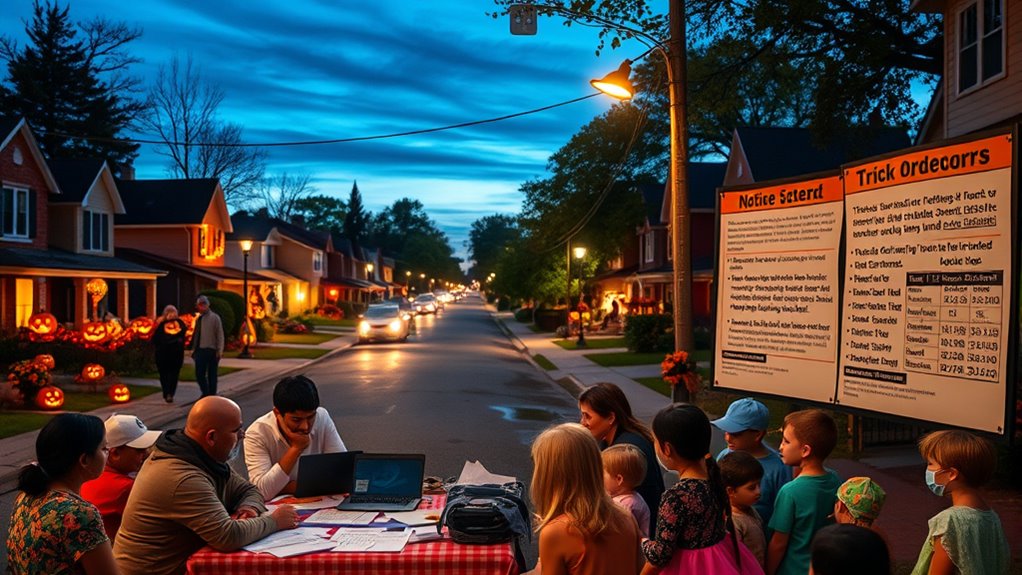
Understanding and adhering to state and local regulations is essential when setting trick-or-treat hours. Many communities have specific rules that govern trick or treat timing, which can vary by city or county. These regulations ensure safety and help coordinate Halloween scheduling across neighborhoods. Before finalizing your plans, check with local government websites or law enforcement agencies for any guidelines or restrictions. Some areas may specify a particular window for trick-or-treating, while others leave it more flexible. Following these regulations helps prevent confusion and ensures a safe, enjoyable experience for everyone. Additionally, security zone info highlights the importance of community awareness and compliance to maintain safety during festivities. Keeping these guidelines in mind will help ensure a smooth and enjoyable Halloween for all participants.
Historical Practices and Community Feedback
Historical practices and community feedback have shaped how trick-or-treating has evolved over the years. In many communities, tradition dictated trick or treat timing, often starting early evening on October 31st. Over time, residents shared their opinions, influencing local customs and policies. Community feedback revealed preferences for earlier hours, especially for younger children, to guarantee safety and comfort. Some neighborhoods maintained long-standing schedules, while others adapted to new concerns, like traffic or noise. These collective experiences created patterns that communities still follow today. Your community’s approach to trick-or-treat timing often reflects a blend of historical practices and residents’ input, balancing tradition with safety considerations. Listening to community feedback helps ensure that trick-or-treating remains enjoyable and safe for everyone involved. Additionally, some communities consider developmental benefits for children when setting trick-or-treat hours, ensuring activities are age-appropriate and inclusive.
Adjustments for Weather Conditions and Daylight Hours
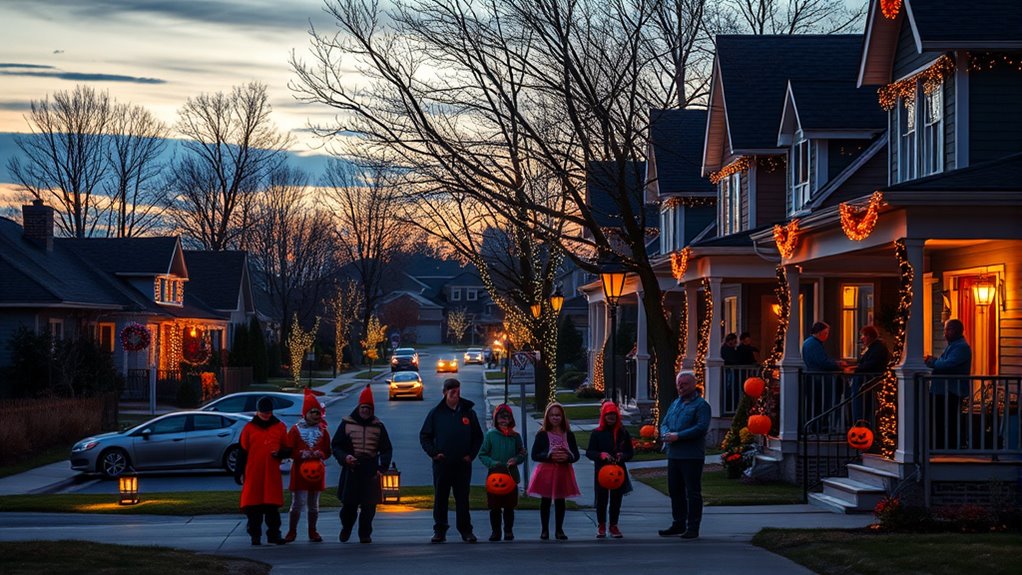
Weather conditions and daylight hours often influence when communities decide to hold trick-or-treating. If the forecast predicts heavy rain or strong winds, communities may move the event earlier or later to guarantee safety. Shorter daylight hours mean trick-or-treating might start at dusk, aligning with holiday decorations glowing in the dark. Consider these key points:
- Adjust start times based on weather forecasts, prioritizing safety.
- Encourage costumes suited for the weather, like waterproof or layered outfits.
- Use holiday decorations to guide trick-or-treaters in dim lighting.
- Communicate changes early to accommodate families’ costume preferences and plans.
- Recognizing how creative practice can inspire innovative ways to decorate and organize festivities enhances community engagement.
These adjustments help keep the tradition fun and safe, even when weather or sunlight shifts unexpectedly.
Coordination With Schools and Community Events
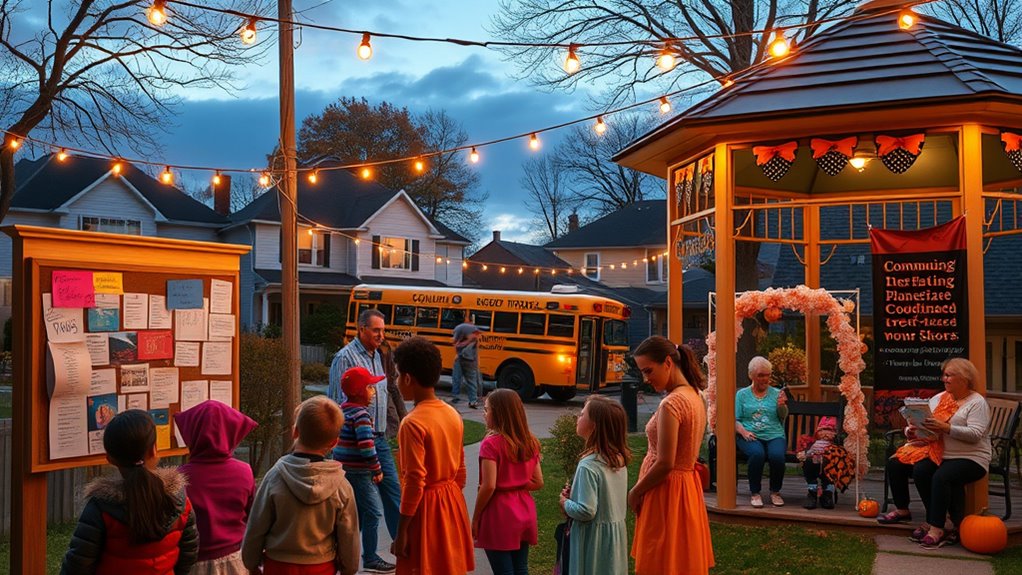
Coordinating trick-or-treat hours with local schools and community events guarantees a smoother holiday experience for everyone involved. By aligning trick or treat timing with school schedules and community activities, you help prevent conflicts and overcrowding. Reach out to schools and organizers early to discuss neighborhood scheduling and find the most convenient hours for families. This coordination ensures kids can enjoy festivities without rushing or missing out, and it minimizes traffic and safety concerns. When communities communicate their plans, it creates a unified approach that benefits residents, parents, and event organizers alike. Clear, consistent timing helps everyone plan ahead, making trick-or-treating fun and safe for all participants. Ultimately, thoughtful coordination fosters a positive holiday atmosphere throughout your neighborhood.
Frequently Asked Questions
How Do Communities Handle Last-Minute Changes to Trick-Or-Treat Hours?
When communities face last-minute changes to trick-or-treat hours, they rely on community engagement and emergency protocols to inform residents quickly. You’ll see authorities or community groups use social media, local alerts, and neighborhood networks to spread the update. This approach guarantees everyone stays informed and safe. By actively communicating and following established protocols, communities manage last-minute adjustments smoothly, keeping the event fun and secure for all trick-or-treaters.
Are There Specific Guidelines for Inclusive or Accessible Trick-Or-Treating?
Think of inclusive policies and accessible events as the guiding stars for a fun, safe Halloween. You’re encouraged to check if your community offers accessible trick-or-treating options, like sensory-friendly hours or wheelchair-friendly routes. Many communities now promote inclusive events by providing clear signage, ramps, and quiet spaces. You should also ask local organizers about accommodations, ensuring everyone can enjoy the festivities regardless of ability, making Halloween truly for all.
How Is Technology Used to Communicate Trick-Or-Treat Hours Effectively?
You can use digital signage and social media to communicate trick-or-treat hours effectively. Digital signage in public spaces displays clear, real-time updates, while social media posts quickly reach residents and visitors. By combining these tools, you guarantee everyone stays informed about specific hours, weather changes, or special instructions. This approach helps create a safe, inclusive, and well-organized Halloween experience for all community members.
Do Communities Consider Environmental Sustainability When Setting Hours?
Yes, communities consider environmental sustainability when setting trick-or-treat hours. They aim to reduce environmental impact by encouraging shorter, more efficient events that minimize waste and energy use. Some communities promote sustainable practices like using reusable decorations and LED lighting, which lessen the ecological footprint. By aligning trick-or-treat hours with these goals, they help protect the environment while ensuring everyone enjoys a fun, safe Halloween night.
How Do Communities Balance Tradition With Modern Safety Concerns?
You balance tradition with safety concerns by involving community engagement, like local meetings where residents share ideas. For example, some neighborhoods hold costume contests during daylight hours, maintaining the fun while ensuring safety. They implement safety protocols such as well-lit streets and adult supervision. This way, you honor Halloween customs and prioritize everyone’s safety, fostering a sense of community while adapting to modern safety standards.
Conclusion
Ultimately, choosing trick-or-treat hours balances tradition with safety. You honor your community’s customs, yet prioritize protection for everyone. While historic practices may influence your decision, local policies and law enforcement provide guidance. Weather and daylight remind you to adapt, ensuring fun remains safe. By working with neighbors and schools, you create a seamless experience. In the end, it’s about celebrating together, blending the old and new, to make Halloween memorable and secure for all.