At night, trees in haunted forests seem alive with secrets because our minds are naturally uneasy in darkness and unfamiliar environments. Shadows and shifting shapes trick our brains into seeing faces or figures, fueling fears and stories passed down as urban legends. These tales tap into primal fears of the unknown, creating a cycle of exaggerated sightings and sounds. If you look closer, you’ll discover why these myths persist and what makes forests so spooky after sunset.
Key Takeaways
- Darkness causes trees to appear alive, triggering primal fears and pareidolia, making them seem eerie or ghostly.
- Human anxiety heightens awareness of shadows and sounds, leading to perceptions of supernatural activity in forests at night.
- Stories exaggerate unexplained noises and movements, reinforcing the haunted forest myth through cultural and media influences.
- Forest darkness symbolizes mystery and danger, tapping into deep-seated fears of the unknown and unseen threats.
- Collective storytelling and urban legends amplify the fear, making trees seem more frightening during nighttime encounters.
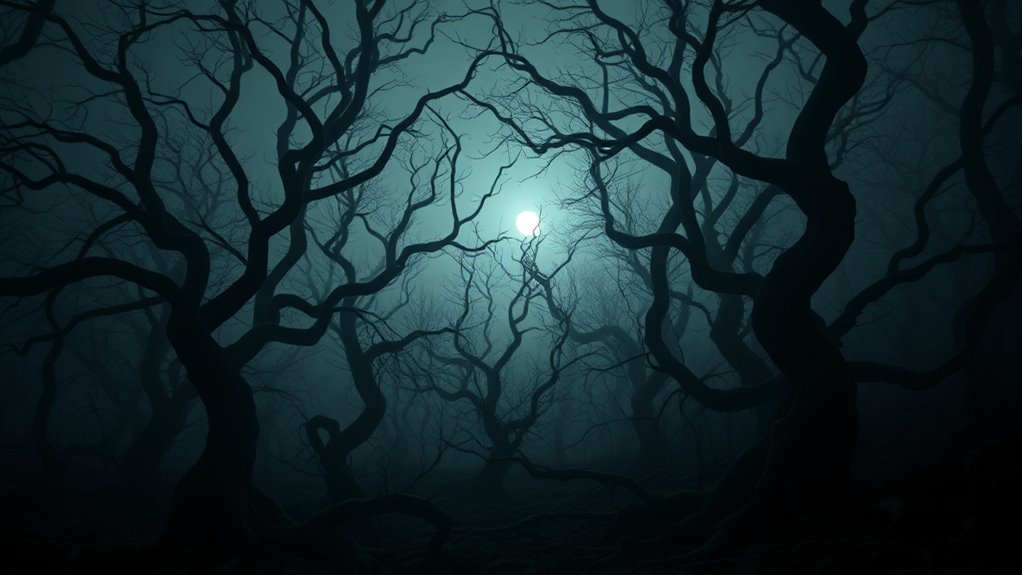
Have you ever wondered if haunted forests truly exist or if they’re just stories to scare people? Many believe these eerie woods hide spirits or strange phenomena, but there’s more to the myth than just ghost stories. Haunted forests have become a staple of urban legends, passed down through generations to both entertain and terrify. These stories often describe dark, dense woods that seem to breathe with an unsettling life of their own. When night falls, the trees appear to whisper and shift, fueling fears that something supernatural lurks behind every shadow.
Haunted forests whisper secrets and stir fears of unseen supernatural forces lurking within shadows.
You might think that these tales are just made-up ghost stories designed to keep people away or to add a spooky thrill to camping trips. But there’s a reason why haunted forests persist in folklore: humans are naturally uneasy in unfamiliar, shadowy environments. Trees in the dark can seem alive, their shapes resembling figures or faces that aren’t really there. This phenomenon, called pareidolia, tricks your brain into seeing patterns, especially when you’re already on edge. It’s exactly this mental trickery that fuels ghost stories surrounding these woods, making them seem haunted even when no one is around. Over time, these stories grow and morph, turning into urban legends that get passed along as if they’re real. The idea of a haunted forest becomes a collective myth, reinforced by sightings, strange sounds, or unexplained phenomena that get exaggerated with each retelling.
You may also notice how these stories serve a purpose beyond mere entertainment. They act as cautionary tales, warning people to stay away from certain areas, or they tap into primal fears of the unknown. Whether it’s the ghostly figures said to haunt the trees or the inexplicable noises heard on a lonely night, the myth persists because it taps into deep-seated human anxieties. Sometimes, these stories are inspired by real events—perhaps a tragic accident or mysterious disappearance—yet they get blown out of proportion over time. The darkness of the forest becomes a symbol of mystery and danger, making it the perfect setting for ghost stories that captivate your imagination and keep you wondering what’s really lurking in the shadows.
Additionally, the allure of haunted forests is often amplified by modern media and urban legends, which spread stories quickly and contribute to their mystique. The darkness of the forest becomes a symbol of mystery and danger, making it the perfect setting for ghost stories that captivate your imagination and keep you wondering what’s really lurking in the shadows.

Haunted Hill Farm Soul Sucker Demon Reaper with Child by Tekky, Motion-Activated Talking Halloween Animatronic for Creepy Indoor or Covered Outdoor Halloween Decorations, Plug-in or Battery Operated
Premium Life-size Animatronic: Soul Sucker is perfect for indoors or a covered outdoor area so place our evil...
As an affiliate, we earn on qualifying purchases.
Frequently Asked Questions
Are There Real Haunted Forests Around the World?
Yes, there are real haunted forests around the world. Many forest legends involve stories of tree spirits and strange occurrences, making these places seem haunted. For example, Japan’s Aokigahara is known for its eerie reputation, while the Hoia Forest in Romania has a history of mysterious sightings. These forests often become part of local legends, fueled by stories that make them feel haunted, even if no supernatural activity is proven.
How Do Cultural Stories Influence Haunted Forest Myths?
Cultural stories heavily shape haunted forest myths by influencing folklore and storytelling impact. You’ll notice that local legends, passed down through generations, embed specific fears and supernatural elements tied to trees and forests. These stories reflect cultural beliefs, fears, and values, making the myth more vivid and convincing. As you listen to or share these tales, you see how folklore influences perceptions, creating an eerie atmosphere that fuels our fear of the unknown at night.
What Psychological Factors Make Trees Seem Spooky at Night?
Have you ever wondered why trees seem so spooky at night? Darkness-induced fear plays a big role, triggering your evolutionary caution to stay alert for threats. Shadows and rustling leaves mimic signs of danger, making you interpret trees as mysterious or even menacing. Your mind fills in gaps with fear because, historically, caution around unfamiliar sounds and shapes was essential for survival, making nighttime forest scenes instinctively unsettling.
Do Animals Behave Strangely in Haunted Forests?
Yes, animals often behave strangely in haunted forests. You might notice unusual animal behavior, especially during nocturnal activity, as creatures become more active at night. Some animals may appear more agitated, make strange noises, or act unpredictably, adding to the eerie atmosphere. This strange behavior is natural for nocturnal animals, but it can heighten the spooky feeling you experience when you’re in a haunted forest at night.
Can Exposure to Haunted Forests Affect Mental Health?
Exposure to haunted forests can indeed affect your mental health, especially if you already have a tree phobia or suffer from night anxiety. The eerie atmosphere, shadowy trees, and strange sounds can heighten fears and cause stress. Over time, this may lead to increased anxiety or even panic attacks. If you feel uneasy in such environments, it’s best to avoid them or seek support to manage your fears effectively.
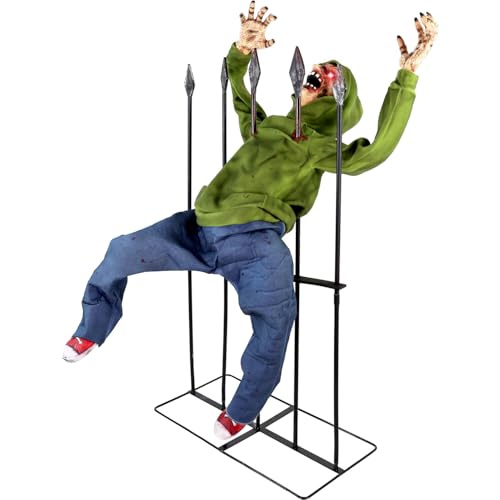
Haunted Hill Farm 4.4-Ft Animatronic Impaled Zombie, Halloween Animatronic, Creepy Party Decoration, Spooky Décor, Macabre Gift for Horror Movie Lovers, Voice-Activated Lights & Sound, Life-Size
Premium Life-Size Animatronic: Frighten guests and trick-or-treaters with this premium quality spine-chilling Halloween decoration
As an affiliate, we earn on qualifying purchases.
Conclusion
So, next time you find yourself trembling at the edge of a dark, creaking forest, remember: those eerie shadows and whispering branches aren’t just the stuff of myths. It’s funny how trees, silent and still by day, seem to come alive at night, fueling our fears. Ironically, it’s not ghosts lurking among the leaves, but our own minds playing tricks on us, turning harmless trees into spooky sentinels guarding the unknown.

Spirit Halloween 4 Ft 6 In Scary Sitting Scarecrow Animatronic, Multicolor
Bring any Halloween display to life by adding this Scary Sitting Scarecrow Animatronic to your home decor. This...
As an affiliate, we earn on qualifying purchases.

TW SHINE Halloween Doll Decorations Outdoor Animatronics, 40" Crawling Scary Groundbreaker Zombie Sound Activated with Lighted Eyes and Voice for Outside Yard Graveyard Haunted House Prop Decor
Animated Clawing Zombie: Dressed in a white gown, this terrifying zombie features a lifelike face with realistic cracks....
As an affiliate, we earn on qualifying purchases.