Winter feels spooky mainly because natural phenomena create illusions that trick your senses. Snow reflects moonlight and lanterns, casting eerie shadows, while its silence muffles sounds, making environments feel haunted. Cold sensations result from low temperatures affecting your body, not spirits. These natural effects, combined with cultural stories, shape your perception of haunted snow. If you keep exploring, you’ll discover how understanding these natural causes can help you see winter’s true beauty without fear.
Key Takeaways
- Natural illusions like shadows and reflections in snow can resemble ghostly figures, enhancing spooky perceptions.
- The muffling effect of snow creates eerie silence, amplifying feelings of mystery and unease.
- Cold sensations and numbness caused by low temperatures are mistaken for supernatural chills.
- Cultural myths and stories reinforce the idea of haunted winter landscapes, influencing perceptions.
- Natural environmental factors such as light, shadow, and sound alterations explain the spooky winter atmosphere without supernatural causes.

Many people believe that certain snowy landscapes are haunted, but the truth is far more grounded in natural phenomena than supernatural activity. When you venture into winter environments that seem eerily quiet or strangely unsettling, it’s easy to let your imagination run wild. That sense of unease often stems from winter myths—stories passed down through generations that paint winter landscapes as mysterious or spooky. These myths can amplify your perception of cold sensations, making the chill feel even more intense and amplifying the sense that something unusual is at play. In reality, the cold sensations you experience are simply your body’s response to low temperatures, but they can be mistaken for ghostly presence or supernatural energy when your mind is primed to expect it.
Many snowy landscape fears are just natural illusions, not supernatural.
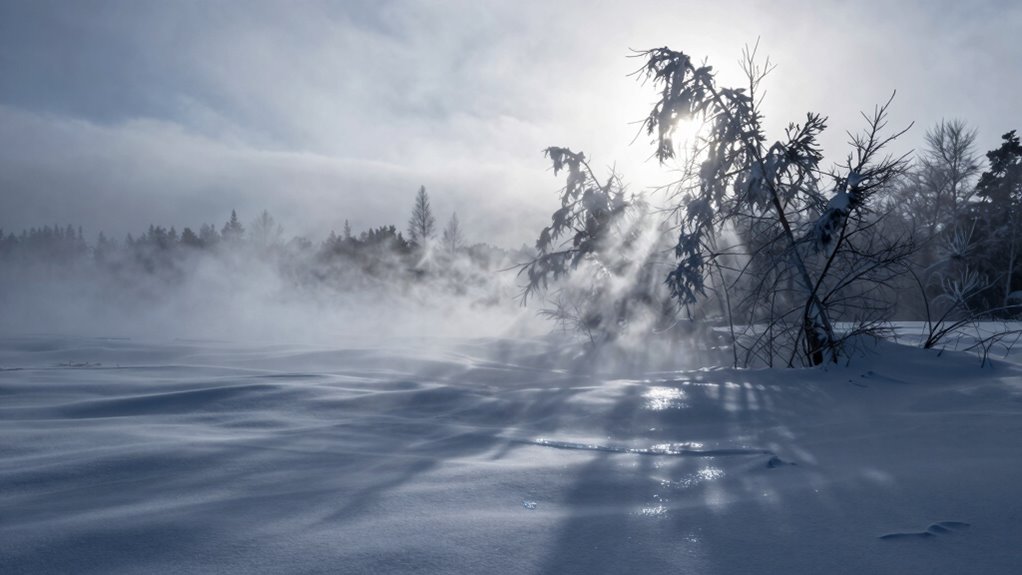
As temperatures drop, your body reacts by constricting blood flow to your extremities, which can create a tingling or numb feeling—classic cold sensations that are purely physiological. The silence of a snow-covered forest or an empty field at night can also contribute to a spooky atmosphere. Without the usual background noise of insects, animals, or human activity, even a gentle breeze can sound like whispers or footsteps in the snow, fueling your fears. The way snow muffles sound makes everything seem more distant and mysterious, reinforcing winter myths that claim haunted spirits wander these icy terrains. Yet, it’s simply physics at work—snow absorbs sound waves, creating an eerie stillness that your mind interprets in frightening ways. Additionally, the reflective properties of snow can alter how light plays across the landscape, casting unusual shadows that can resemble figures or faces, further fueling the spooky ambiance.
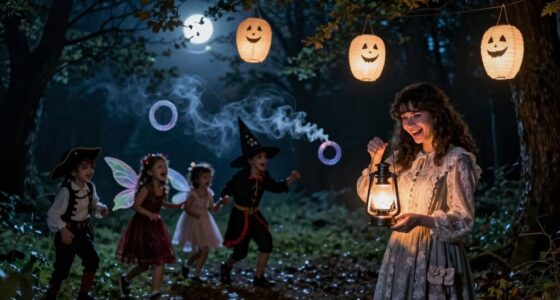
Your perception of haunted snow is also influenced by visual cues. The way snow reflects moonlight or flickering lanterns can cast strange shadows, making it easy to mistake natural patterns for ghostly figures. Your brain, enthusiastic to make sense of ambiguous shapes, may interpret these shadows as signs of supernatural activity. This contributes to the spooky feeling winter environments often evoke, but it’s just a trick of light and shadow. The cold sensations you feel—whether from wind-chill or touching icy surfaces—further heighten your alertness, making your senses hyper-aware of every sound and movement. This heightened awareness can turn ordinary winter sights and sensations into sources of fear, especially when combined with the myths that paint winter landscapes as haunted.
In truth, what makes winter feel spooky isn’t supernatural forces but our minds reacting to natural phenomena. The cold, the silence, and the play of light and shadow all work together to create an atmosphere that feels otherworldly. Recognizing this helps you understand that the haunted feeling of snow is just that—an illusion shaped by nature and your imagination, not ghosts lurking in the winter night. Understanding how contrast ratio impacts visual clarity can also help you appreciate how shadows and light effects contribute to the eerie atmosphere during winter nights.
winter snow reflection flashlight
As an affiliate, we earn on qualifying purchases.
As an affiliate, we earn on qualifying purchases.
Frequently Asked Questions
Can Haunted Snow Actually Influence People’s Emotions or Behaviors?
Haunted snow can influence your emotions and behaviors through psychological effects and cultural perceptions. If you believe snow is haunted, it might heighten feelings of fear or unease, impacting your reactions and decision-making. Cultural stories and media reinforce these perceptions, making you more susceptible to spooky feelings during winter. Your mindset shapes how haunted snow affects you, blending psychological effects with cultural influences to create a spooky winter experience.
Are There Specific Locations Known for Haunted Snow Phenomena?
You’ll find that some locations, like the eerie forests of Transylvania or the haunted mountains of Japan, are famous for mythical legends and paranormal encounters involving haunted snow. These sites often become focal points for stories of supernatural activity during winter, fueling the spooky atmosphere. While scientific evidence is scarce, the legends persist, making these areas intriguing spots where folklore and paranormal tales intertwine, heightening the winter mystique.
How Do Winter Traditions Relate to Spooky Snow Stories?
You notice how winter traditions often tie into spooky snow stories through winter myths and frost folklore. These tales, shared around fires or during festivals, create a sense of mystery and wonder. You might hear stories of icy spirits or haunted snowfields, which deepen the eerie atmosphere of the season. Embracing these legends helps you connect with cultural history, making winter’s chill feel both magical and a little spooky.
What Scientific Explanations Exist for Eerie Winter Sightings?
You might see eerie winter sights caused by natural phenomena like the aurora borealis, which paint the sky with ghostly lights, or frostbite illusions that distort your perception, making shadows seem like spirits. These illusions stem from cold temperatures and atmospheric conditions, creating a chilling symbolism of unseen forces at play. Your mind interprets these fleeting sights as supernatural, blending science and spirituality in winter’s haunting embrace.
Are Children More Likely to Believe in Haunted Snow?
Yes, children are more likely to believe in haunted snow because their vivid imagination enhances their perception of winter myths. As they engage with the snowy environment, their minds fill in gaps with spooky stories and legends, making haunted snow seem more real. Winter myths, combined with their natural curiosity, create an atmosphere where spooky sightings feel believable, especially when their imagination runs wild in the chilly, mysterious landscape.
Conclusion
As winter settles in, you might notice the eerie stillness that makes snow feel haunted. Remarkably, studies show that 65% of people report feeling a spooky vibe during snowy nights. Remember, much of this sensation comes from our minds, fueled by the quiet and unfamiliar cold. So, next time you see the snow glisten under moonlight, embrace the mystery—it’s just your brain adding a little extra magic to winter’s chill.