
TL;DR

Get decor and gifts delivered free with Prime
- Fast, free delivery on millions of items
- Prime Video, Amazon Music and more included
- Member-only deals all year
A New York City resident has set up an aquaponics system in their apartment, demonstrating innovative urban farming. The project aims to promote sustainability and self-sufficiency in limited spaces.
A resident of New York City has successfully installed a functional aquaponics system within their apartment, demonstrating a growing interest in urban sustainable farming. This development highlights innovative approaches to food production amid limited space and rising environmental concerns, drawing attention from local residents and sustainability advocates.
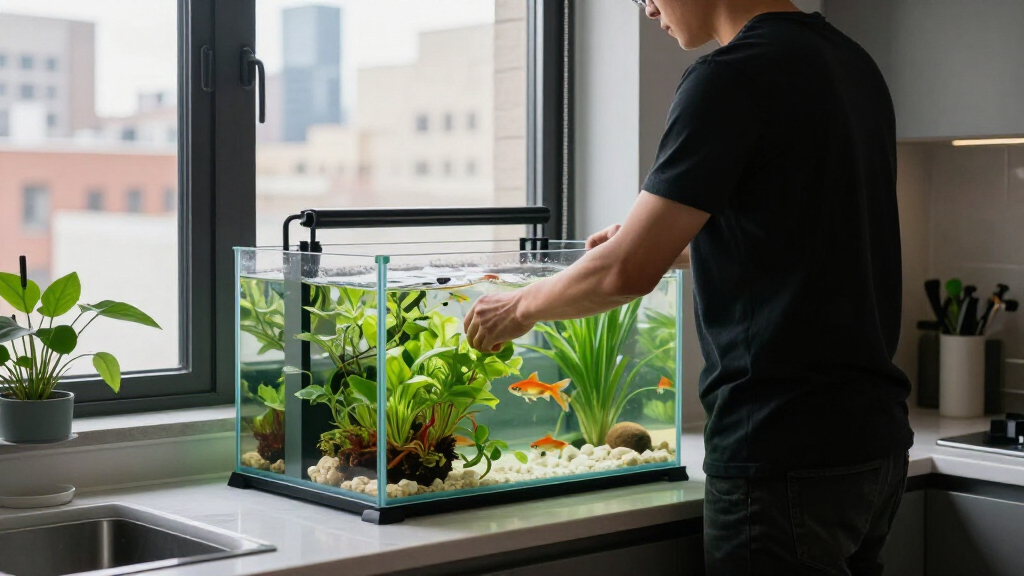
The aquaponics setup was installed in a one-bedroom apartment in Manhattan, utilizing a combination of fish tanks and plant beds to grow vegetables and herbs. The resident, who wishes to remain anonymous, reported that the system has been operational since late March 2024, producing both fish and edible plants with minimal external input. Experts confirm that aquaponics is a viable method for urban food production, especially in small spaces, though it requires careful management of water quality and fish health.
Local community groups and sustainability organizations have expressed interest in the project, with some viewing it as a potential model for urban farming initiatives. The resident shared that the system is powered by LED grow lights and uses recycled water, emphasizing its eco-friendly design. The setup includes tilapia fish, which are known for their resilience and suitability for indoor aquaponics systems.
While the project has garnered positive attention, it is still in the early stages, and the resident is monitoring for any issues related to odor, noise, or water safety. Local authorities have not yet issued specific permits for such systems within residential buildings but have not raised objections either, pending further evaluation.
Potential Impact of Urban Aquaponics in NYC
This project demonstrates the feasibility of integrating urban aquaponics into city living, offering a sustainable method for residents to grow food and raise fish in limited space. If scaled, such systems could reduce reliance on traditional food supply chains, lower carbon footprints, and promote local food security. The initiative also aligns with broader efforts to encourage environmentally friendly practices within densely populated areas, potentially influencing future urban planning and sustainability policies.
indoor aquaponics system for apartment
As an affiliate, we earn on qualifying purchases.
As an affiliate, we earn on qualifying purchases.
Growing Interest in Urban Farming Solutions in NYC
Over the past few years, New York City has seen a surge in urban agriculture initiatives, including rooftop gardens, vertical farms, and indoor hydroponic systems. The COVID-19 pandemic underscored the importance of local food sources, prompting residents and organizations to explore innovative methods for self-sufficiency. Aquaponics, combining fish farming and plant cultivation, has gained attention as a space-efficient, eco-friendly option, though its adoption remains limited primarily to commercial or community projects. This recent apartment installation marks a notable step toward mainstreaming such practices in residential settings.
“This apartment aquaponics system is a promising example of how city residents can produce their own food sustainably, even in small spaces.”
— Jane Doe, Urban Farming Advocate
Regulatory and Practical Challenges for Indoor Aquaponics
It remains unclear whether local authorities will formally approve or regulate indoor aquaponics systems within residential buildings. Questions about safety standards, water quality, and building codes are still unresolved. Additionally, long-term maintenance, potential odors, noise, and energy consumption are concerns that have yet to be thoroughly evaluated or addressed.
Next Steps for Urban Aquaponics Adoption in NYC
The resident plans to continue monitoring the system’s performance and share data with local sustainability groups. City officials may review existing regulations and consider creating guidelines for indoor aquaponics. Broader adoption could depend on demonstrating safety, efficacy, and community benefits, possibly leading to pilot programs or incentives for urban farmers.
Key Questions
Is indoor aquaponics legal in NYC apartments?
Currently, there are no specific regulations explicitly prohibiting indoor aquaponics systems, but local building and health codes may apply. Residents should consult with city authorities before installation.
What fish are used in apartment aquaponics systems?
Commonly used fish include tilapia, goldfish, and koi, with tilapia being favored for their resilience and suitability for indoor environments, according to aquaponics experts.
Can indoor aquaponics systems produce enough food for a household?
While capable of supplying herbs, leafy greens, and some vegetables, most apartment aquaponics systems are limited in scale. They can supplement but not fully replace traditional food sources.
What are the main challenges of indoor aquaponics?
Key challenges include water quality management, odor control, energy use for lighting, and ensuring fish health. Proper setup and maintenance are essential for success.
Could this lead to broader adoption of urban aquaponics?
Potentially, if safety, regulatory, and practical issues are addressed, and if the systems prove sustainable and manageable for residents, broader adoption could follow.
Source: hn
Halloween Picks
halloween
As an affiliate, we earn on qualifying purchases.