TL;DR

Get decor and gifts delivered free with Prime
- Fast, free delivery on millions of items
- Prime Video, Amazon Music and more included
- Member-only deals all year
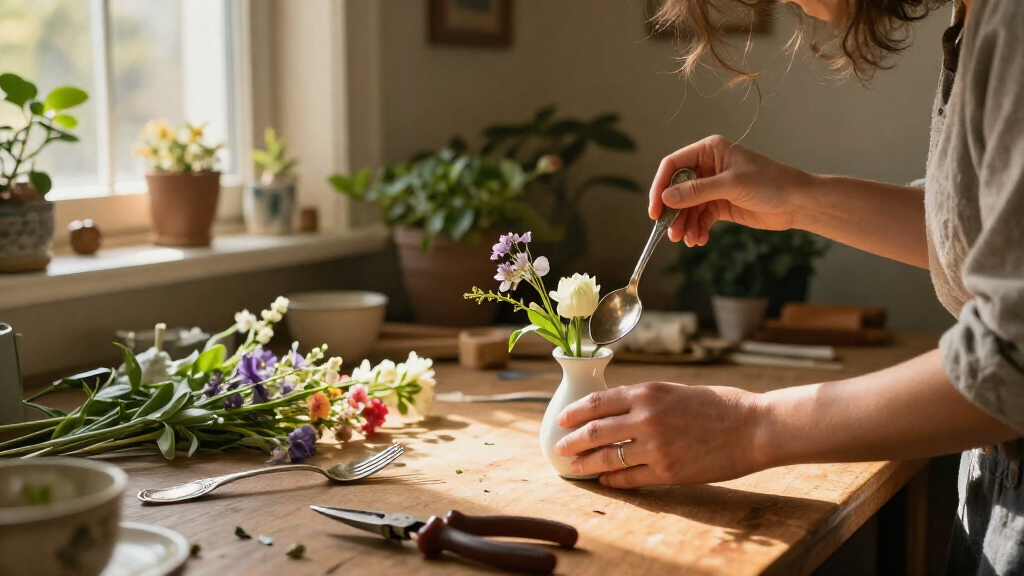
A DIY project featured by Hunker shows how creator ThriftyandChicDecor turns hollow-handled silverware, including knives, into magnetic bud vases. The process involves cutting and sanding the handle, then attaching magnets; the report says the finished holders can display flowers or serve other small household uses.
DIY creator ThriftyandChicDecor is turning hollow-handled thrift-store silverware into magnetic bud vases, according to a project report by Hunker. The small holders are made by cutting and sanding a utensil handle, then gluing magnets to its back, offering a way to reuse worn pieces as compact home decor.
The project calls for hollow-handled silverware, a Dremel tool fitted with a metal disk cutter and sanding attachment, super glue, small magnets, and optional ribbon or jute. The creator uses knives, but Hunker says other silverware may work if the handles are hollow. The report recommends tapping a piece or knocking utensils together to distinguish a hollow handle from a solid one.
In the process described, the top of the handle is cut off about 3 centimeters below its top, and the cut edge is sanded smooth. Two small magnets are then glued to the back. Once the adhesive has set, the handle can hold a small flower or other item, and ribbon or jute can be added for decoration. Hunker says the handle is sealed unless it has cracks, and that water can be added in that case-free condition.
The creator also shows different silverware patterns on her ThriftyandChic YouTube channel, according to Hunker. The report suggests mixing designs rather than limiting the project to matching pieces, so the finished set can include both plain and ornate handles.
A Small-Scale Route to Reuse
The project gives old silverware a practical second use instead of treating worn pieces only as scrap or tableware. Its small size also makes it suited to displaying a single stem or a modest cutting, while the attached magnets allow it to be placed on a magnetic surface rather than taking up a shelf or tabletop.
Hunker describes several possible uses beyond fresh flowers, including dried flowers, small air plants and plant cuttings. The report also proposes using one as a holder for a pen or small herb scissors. These are suggested applications, not tested performance claims; the article does not provide measurements for capacity, magnet strength or long-term durability.
Popular right now

Roborock Q7 M5+ Robot Vacuum and Mop with Self-Emptying Dock

Ninja Foodi 8-Qt DualZone 6-in-1 Air Fryer, Grey, DZ201

Ninja Foodi DZ550 10-Qt DualZone Smart XL Air Fryer, 6-in-1, Black
As an affiliate, we earn on qualifying purchases.
Choosing Silverware and Finishing It
The key material requirement is the utensil’s hollow handle. A solid handle will not provide the cavity described for holding a flower or water. Hunker says the creator uses knives, while noting that shoppers may find other hollow-handled pieces. The suggested sound test is a screening method rather than a guarantee: the report does not provide a specific test standard or list which brands and designs are suitable.
Decoration is optional. Hunker mentions adding ribbon or jute, pressing dried botanical material onto a handle and sealing it with Mod Podge, or using dark antiquing wax after roughing up the surface so it adheres. For a more contemporary finish, the report suggests dipping part of the handle in liquid enamel paint. These are optional variations; the basic vase relies on the cut handle and magnets.
“The pieces of silverware need to have hollow handles.”
— Hunker, describing the creator’s project
Material and Safety Details
The report does not identify the silverware’s metal composition, the exact models that work, or the size and holding strength of the magnets. It also does not specify the type of glue cure time, how long the finished piece can hold water, or whether different handle interiors require additional sealing. The statement that water is suitable applies only to handles that are sealed and have no cracks, as described by Hunker.
Because the project uses a powered rotary tool and a metal cutting disk, cutting can create sharp edges and debris. Hunker’s account lists the tool and says users should know how to operate it, but does not detail protective equipment or safe work setup. Anyone attempting the cut should follow the tool manufacturer’s directions, wear appropriate eye and hand protection, secure the utensil, and seek help from someone experienced if unfamiliar with metal cutting.
More Designs and Uses to Explore
The next step for readers interested in the project is to check the creator’s ThriftyandChic channel for the additional patterns and process detail referenced by Hunker. Before cutting, they can inspect thrifted pieces for hollow handles and cracks, then decide whether to keep the finish plain or add decoration.
Hunker presents the vase as a DIY idea rather than a product launch or formally tested home item. It does not report sales, a scheduled follow-up or independent testing. Whether the project becomes a lasting reuse option will depend on the condition of each utensil and the strength of its magnets and adhesive.
Key Questions
What silverware works for the bud vase?
Hunker says the utensil needs a hollow handle. The creator uses knives, but other pieces may work if their handles are hollow and in suitable condition.
How is the vase made?
The handle is cut near its top, the cut edge is sanded, and two small magnets are glued to the back. Ribbon or jute can be added, and the hollow handle can hold a small flower.
Can the finished holder contain water?
Hunker says water is acceptable when the handle is sealed and has no cracks. The report does not provide details about how to test a particular piece for leaks or how long it will hold water.
What can the holder be used for besides flowers?
The report suggests using it for small plant cuttings or air plants, as well as a pen or small herb scissors. These are proposed uses, and the source gives no load or durability testing.
What tools are involved?
The listed supplies include a Dremel with a metal disk cutter and sander, super glue and small magnets. Metal cutting requires care; users should follow the tool instructions and use appropriate protective equipment.
Source: hunker.com