
TL;DR

Get decor and gifts delivered free with Prime
- Fast, free delivery on millions of items
- Prime Video, Amazon Music and more included
- Member-only deals all year
Livingetc’s SS27 Style Pulse report highlights the “decorative gesture”: one ornamental or unexpected detail placed in an otherwise contemporary room. Designers quoted in the report say contrast and a carefully chosen finishing touch can give a space more personality, though the trend is a design perspective rather than a measured finding.
Livingetc’s SS27 Style Pulse report is highlighting the “decorative gesture” — a single ornamental or unexpected detail in an otherwise modern room — as a way to add contrast without changing a home’s overall style. The report presents the idea through examples including a tassel on a light, fringe on a sofa or a gilded frame in a minimalist space, alongside comments from interior designers and decorative-arts specialists.
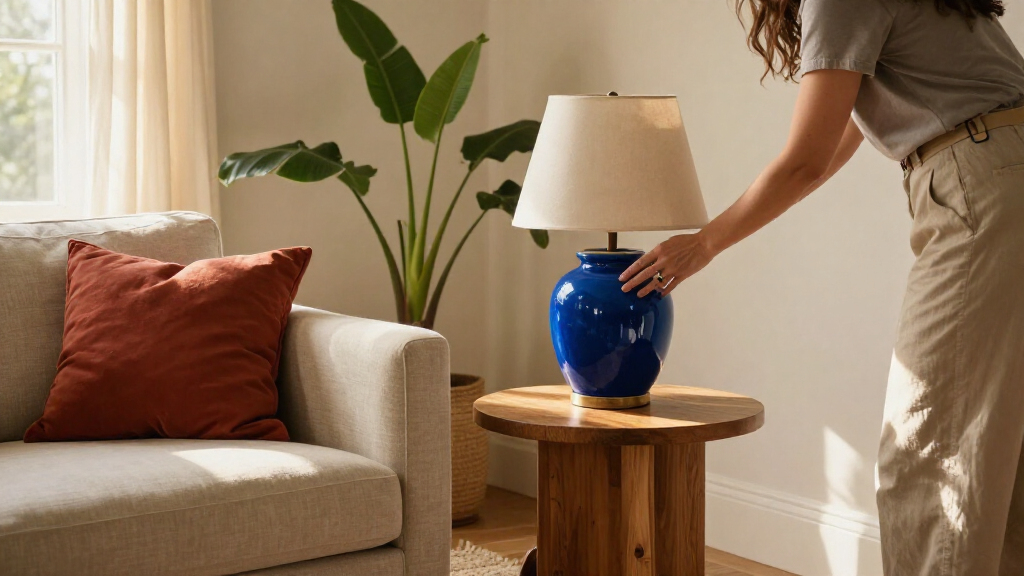
The approach is built around one focused accent, rather than filling a room with traditional ornament. The report suggests that a deliberately different detail can draw attention and make a restrained interior feel more layered. Its examples include an ornate brass handle against veined marble, a standalone frill on upholstery, and vintage glass lighting in a contemporary living room.
Los Angeles-based designer Ryan Saghian describes contrast as a way to keep a room from feeling too coordinated. He says he looks for an element that challenges its surroundings, which might be an antique, an ornate feature or something unexpected. His view is that an object that seems out of place at first can become the detail that brings a room together.
Marisa Gutmacher, senior vice president of design at Samuel & Sons, frames the idea as a finishing touch. She says a room can have the right components and still feel unresolved; a final detail can add visual weight or connect upholstery to the surrounding space. The report also points to passementerie — decorative trimmings such as tassels, cords and braids — appearing in contemporary interiors, including as a single graphic accent on lighting or mirrors.
A Small Detail, A Different Mood
The report’s practical point is that adding character need not mean replacing furniture or committing a room to a fully traditional look. A small, contrasting accent can introduce texture, age or ornament into an otherwise pared-back space. For readers updating a room gradually, the idea offers a relatively contained way to experiment with its overall feel.
That is a design recommendation, not a guarantee that one accessory will improve every interior. The examples and expert comments make the case for intentional contrast, while the effect depends on the object, its placement and the room around it. The central distinction is between a purposeful interruption and an unrelated addition: the report argues for a detail that feels surprising but still works with its surroundings.
Popular right now

LG C2 Series 65-Inch OLED evo 4K Smart TV (OLED65C2PUA, 2022)

Dreame L50 Ultra Robot Vacuum and Mop

Bose QuietComfort True Wireless Earbuds with Active Noise Cancellation, Black
As an affiliate, we earn on qualifying purchases.
From Traditional Trim To Modern Rooms
The article places the trend against a broader return to ornament and traditional details in interiors, which can feel at odds with contemporary minimalism. Its proposed response is not to abandon a modern aesthetic, but to borrow one detail from a more decorative vocabulary. That might mean a tassel or fringe, or a single vintage or gilded object.
Passementerie has historically involved skilled decorative work, including the making of tassels, braids and trimmings. The report quotes maker Elizabeth Ashdown, who argues that these details can be designed for an individual room. The article presents this craft background as part of the appeal of personalized accents, rather than claiming that the trend is a new invention or a universal shift in home design.
“I think the best interiors have a little contradiction in them.”
— Ryan Saghian, Los Angeles-based interior designer
How Far The Trend Will Travel
The report identifies a design direction, but it does not provide sales figures, survey results or other measurements showing how widely homeowners are adopting decorative gestures. It is also unclear how the SS27 forecast will translate into specific products, prices or availability. The examples are editorial and expert-led; they do not establish that a single accent works in every room or budget.
The article discusses trend activity in 2026 as well as the SS27 forecast, but the supplied material does not give a detailed publication date or a precise schedule for each trend. Readers should treat the recommendations as design guidance and forecast, not as a confirmed account of consumer behavior.
More SS27 Details To Watch
Livingetc says the article is part of its Style Pulse SS27 report, a biannual look at interior design trends for the upcoming season. The publication points readers to the rest of that report for further trend coverage. The supplied material does not specify when additional stories will appear or identify a next release date.
For now, the report’s suggested next step for a homeowner is modest: look at a room’s existing palette and materials, then consider whether one contrasting detail would add the texture or personality it lacks. Whether that means a tassel, a framed object or an ornate fitting remains a matter of taste and how the individual piece works in the space.
Key Questions
What does “decorative gesture” mean in this report?
It means one distinctive ornamental or unexpected detail added to a room whose overall style may be modern or minimal. Examples include a tassel on a light, a fringe on a sofa or a gilded frame in a restrained space.
Does this trend require a traditionally decorated room?
No. The report presents the detail as a way to add ornament to contemporary interiors without changing their overall style. It emphasizes a limited accent rather than a full traditional makeover.
What is passementerie?
Passementerie is decorative trimming, including tassels, cords, braids and fringes. The report discusses its use as a craft detail in modern settings, including on lighting and mirrors.
Is there evidence that this is a widespread homeowner trend?
The supplied report describes it as a design trend and forecast, but gives no survey data, sales figures or adoption measurements. Its examples and statements come from the publication and the design specialists it quotes.
Source: livingetc.com