TL;DR

Get decor and gifts delivered free with Prime
- Fast, free delivery on millions of items
- Prime Video, Amazon Music and more included
- Member-only deals all year
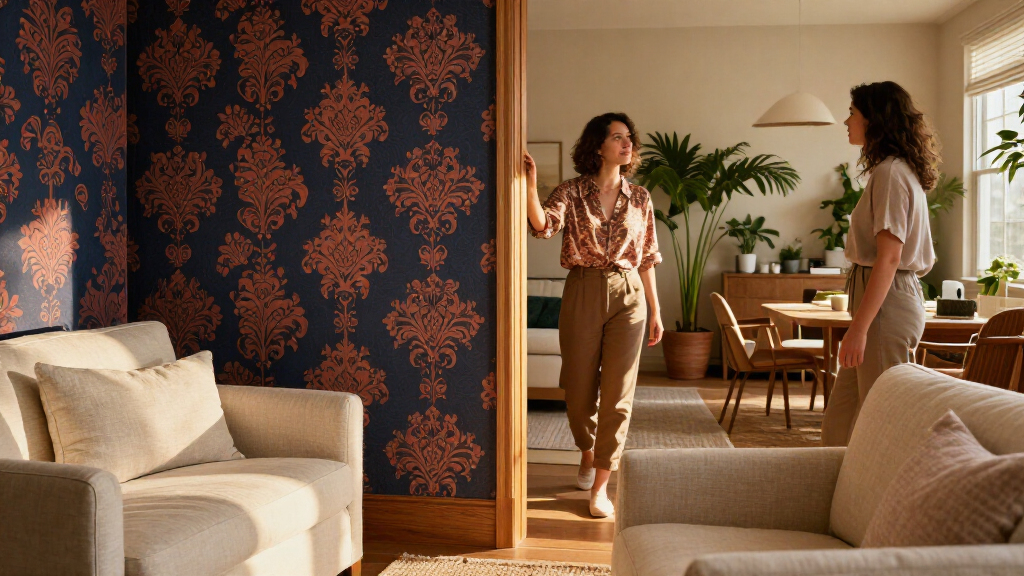
House Beautiful reports that designers are using marbling across interiors, from large-scale murals and wallpaper to resin chairs, lampshades and textiles. The report describes growing interest in handmade-looking surfaces, but provides no market data proving that marbling is replacing beige walls broadly.
Interior designers are bringing marbling, a decorative technique with centuries-old roots, into contemporary homes through wall murals, wallpaper, furniture and accessories, according to a 2026 report by House Beautiful. The examples show how designers are using irregular, flowing patterns as an alternative to plain surfaces, although the report does not establish that marbling is replacing beige walls across the wider market.
The designers interviewed describe marbling as adaptable rather than confined to traditional paper or a single period style. Cara Woodhouse told House Beautiful that clients want more distinctive surfaces after years of greige interiors, and said marbling can appear painterly, graphic or soft depending on its colors. Sasha Bikoff said the central feature is the movement and unpredictability of the pattern, which can be applied to wallpaper, furniture, textiles and decorative objects.
Examples in the report range from large installations to smaller accents. Designer Michelle Fahmy used a marbled wallpaper mural in a Culver City pied-à-terre, extending it across a stairwell wall into the living room. Bikoff selected flowing, liquid-effect wallpaper for a project in a Zaha Hadid-designed building, and also used patterned resin chairs in another interior. Marta St. Amour of Braswell Design + Build drew a bathroom palette from Lee Jofa’s Taplow wallpaper, coordinating its amber, blue and sandy tones with stone and tile.
Marbling also appears in lampshades and fabric. Jo Plant, chief creative officer at lighting brand Pooky, points to hand-marbled shades as a smaller way to introduce the effect. Analisse Taft-Gersten, cofounder of the 1818 Collective, used marbled silk for a powder-room sink skirt. The report also notes studios experimenting with floral fabrics whose forms resemble vines, showing that the influence can extend beyond conventional swirling designs.
Why Designers Are Choosing Marbling
The appeal described by designers is partly practical: marbling can add color, texture and visual movement without requiring a repeated motif across a surface. Woodhouse told House Beautiful that each pass differs, making a marbled wall feel more like artwork than conventional wallpaper. That quality gives designers a way to make a room feel individually composed rather than finished with a uniform, mass-produced look.
The range of applications also gives homeowners different levels of commitment. A mural or full-room wallpaper makes the pattern a focal point; a lampshade, chair or textile offers a smaller introduction. As the examples show, the pattern can be matched with architectural forms, used to pull together a room’s palette, or contrasted with materials such as resin. These are designers’ stated uses and preferences, not evidence that every homeowner is moving away from neutral interiors.
Popular right now

Bose QuietComfort Wireless Noise-Cancelling Over-Ear Headphones, Black

Roborock F25 GT Set Cordless Wet Dry Vacuum Cleaner and Mop with 2 Brushes

De'Longhi 15-Bar Pump Espresso Machine with Milk Frother & Temperature Control
As an affiliate, we earn on qualifying purchases.
A Pattern With Long Roots
Paper marbling has a history that predates its current use in residential design. The House Beautiful report traces an early form to 10th-century Japan, where artisans placed ink on water and manipulated it to create what it describes as “floating ink” designs. By the 15th century, the practice was known in Turkey as “the art of clouds,” before reaching Venetian and Florentine bookbinders.
Today’s examples do not depend on reproducing historical methods or using paper. Bikoff said marbling is about organic color movement and can be translated across materials. The report’s projects include wallpaper, silk, resin and lighting, while Jo Plant says the effect appeals partly because its undulating lines feel expressive without harsh edges. This blend of historical reference and varied materials helps explain why designers can use the motif in both traditional and contemporary settings.
““People are tired of flat, safe walls.””
— Cara Woodhouse, interior designer
How Broad Is the Trend?
The report offers designer interviews and project examples, not sales figures, consumer surveys or other data showing how common marbling is in homes. Its headline frames the pattern as replacing flat beige walls, but the reporting supports a narrower conclusion: some designers are using marbling as an expressive alternative in selected projects. It does not show that neutral walls are disappearing or that marbling is a dominant market trend.
The article also does not quantify how many projects use the technique, compare its popularity with other patterns, or say how long the current interest may last. The specific materials and products cited are examples from individual interiors; their presence in the report does not establish broader adoption or indicate that all are available to every buyer.
More Uses, No Market Measure
House Beautiful’s report presents marbling as a design option that can be adapted to different rooms and budgets, from a statement wall to a small accessory. Designers quoted in the article point to further applications in wall coverings, upholstery, textiles and decorative objects. The next development for readers to watch is whether future reporting or industry data measures wider consumer demand; the source material provides no sales forecast or follow-up timetable.
For now, the clearest takeaway is about how designers are applying the motif, not a confirmed shift in the whole home-design market. Homeowners considering it can look at scale, color and material: a smaller marbled accent can add movement without making the pattern the room’s dominant feature, while a mural or wallpaper can create a more immersive effect.
Key Questions
What is marbling in interior design?
Marbling is a decorative effect built around flowing, irregular patterns that resemble colors moving through liquid. Designers use it on surfaces and objects, including wallpaper, fabric, resin furniture and lampshades.
Is marbling actually replacing beige walls?
The House Beautiful report describes designers choosing marbling as an alternative to plain or neutral surfaces, but it does not provide market data showing that the pattern is broadly replacing beige walls.
Where are designers using marbled patterns?
The examples include a stairwell-to-living-room mural, wallpaper, resin chairs, a hand-marbled lampshade and a silk sink skirt. The report also describes marbled patterns influencing floral textiles.
Can marbling work in a contemporary interior?
Yes. Designer Sasha Bikoff described using flowing, liquid-effect wallpaper and patterned resin chairs in contemporary settings. The report presents marbling as a motif that can be adapted through its colors, scale and materials.
What does the source say about the trend’s popularity?
Designers quoted by House Beautiful say they are seeing renewed interest in craft, texture and character. The report does not include sales figures or survey results to measure how widespread that interest is.
Source: housebeautiful.com