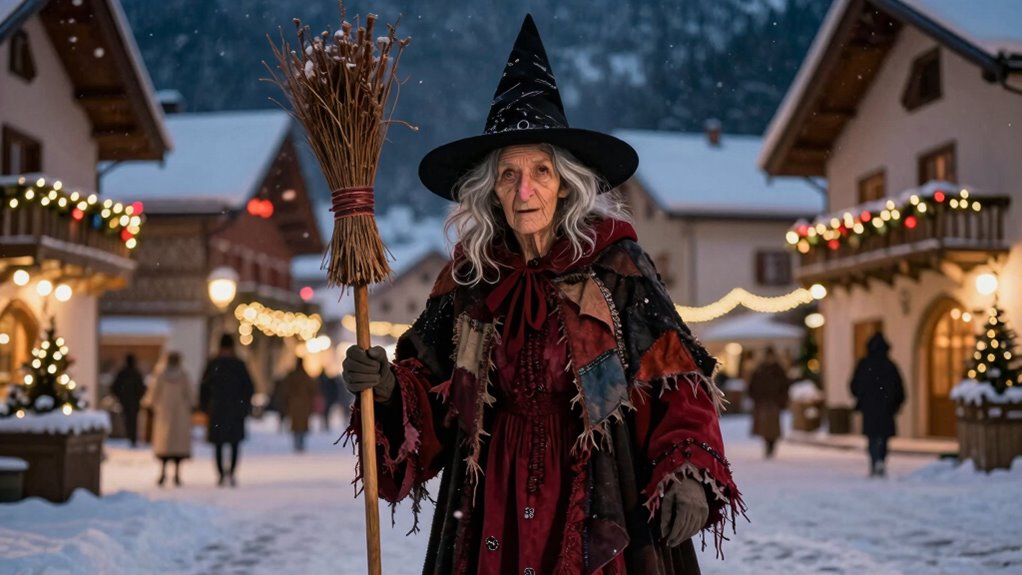

La Befana is a cherished figure in Italian tradition who appears on the night of January 5th, just after Christmas. As an old witch with a broomstick, she delivers gifts, sweets, or coal to children, depending on their behavior. Her legend is rooted in ancient folklore and Christian customs, symbolizing kindness, generosity, and community spirit. If you look closer, you’ll discover more about her fascinating history and the lively celebrations that bring her story to life.

Get decor and gifts delivered free with Prime
- Fast, free delivery on millions of items
- Prime Video, Amazon Music and more included
- Member-only deals all year
Key Takeaways
- La Befana is a legendary Italian figure who delivers gifts on January 5th, the night before Epiphany.
- She is depicted as an old woman with a pointy hat, broomstick, and a symbol of kindness and generosity.
- La Befana’s tradition merges ancient pagan and Christian customs, celebrating the end of winter and the arrival of the Magi.
- The festivities include street parades, children hanging stockings, and community events honoring her legend.
- Her story highlights themes of charity, joy, and community spirit, maintaining a beloved cultural tradition in Italy.
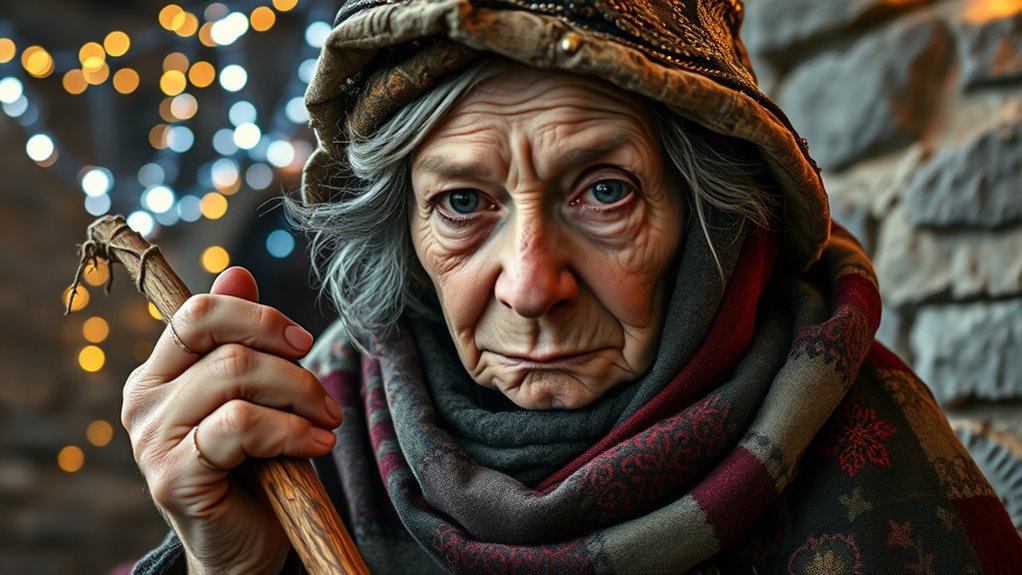
Have you ever wondered who the mysterious figure of La Befana is and why she’s celebrated in Italy? The story of La Befana dates back centuries and is rooted in a blend of historical origins and traditional festivities. According to legend, she’s an old woman who delivers gifts to children on the night of January 5th, the eve of Epiphany. The origins of this beloved figure can be traced to ancient pagan traditions celebrating the end of the winter solstice, which later merged with Christian customs. Over time, La Befana became a symbol of generosity and the magic of childhood, embodying the spirit of giving during the holiday season. Her story has been preserved through traditional folklore, which keeps her legend alive in Italian culture.
Historically, her story evolved from various folk tales and religious narratives. Some believe she was a wise woman or a witch, while others see her as a symbol of the journey of the Magi seeking the newborn Jesus. According to the most popular tale, she was approached by the Wise Men, who invited her to join them in visiting the Christ child. She declined at first, but later felt remorse and set out to find the Holy Family. She never caught up with the Magi but continues to search for the Christ child, bringing gifts to children along her way as a way of spreading kindness and hope. This legend has persisted for centuries, passed down through generations, and has become an integral part of Italy’s cultural heritage.
During the traditional festivities, towns and villages host lively celebrations that highlight her significance. On the night of January 5th, children enthusiastically hang their stockings or shoes, hoping La Befana will fill them with sweets, small toys, or coal—symbolic of good and bad behavior. The festivities are marked by colorful parades, street performances, and community gatherings, all emphasizing themes of generosity, family, and joy. In many places, people dress up as La Befana, with her iconic pointy hat, broomstick, and wrinkled face, creating a festive atmosphere that captures the imagination of both young and old. These celebrations serve as a reminder of the importance of kindness and the magic of giving, making La Befana’s story timeless and beloved across Italy. So, each year, as January 6th approaches, you can expect the streets to come alive with excitement, echoing centuries of tradition that honor this enchanting Christmas figure.
As an affiliate, we earn on qualifying purchases.
Frequently Asked Questions
How Did La Befana Become Associated With Epiphany?
You might find that La Befana became associated with Epiphany through historical origins and regional legends. Over time, stories emerged that connect her to the visit of the Three Wise Men, blending pagan traditions with Christian celebrations. These legends, passed down through generations, helped embed her into Epiphany customs. As a result, La Befana now symbolizes the holiday, bringing gifts and sweets to children, much like the Wise Men’s gift-giving.
What Are Traditional Treats Children Leave for La Befana?
Did you know that children leave out traditional treats like wine and bread for La Befana? These customs stem from historical origins and vary regionally across Italy. In some areas, kids leave sugar or biscuits, while others leave a small gift or a carrot for her broom. These regional variations reflect Italy’s rich traditions, making the tradition of leaving treats for La Befana a cherished and diverse part of Epiphany celebrations.
Is La Befana Celebrated Outside Italy?
Yes, La Befana is celebrated outside Italy through international customs and cultural adaptations. You might find Italian communities abroad organizing special events or gift exchanges inspired by her tradition. People embrace her story, especially during the holiday season, as a way to share Italian culture. While not as widespread as other Christmas figures, La Befana’s charm encourages cultural exchange and helps keep her legacy alive worldwide.
How Does La Befana’s Costume Vary Across Regions?
You’ll find that La Befana’s costume varies widely across Italy’s regions, reflecting local iconography variations. In some areas, she wears a simple shawl and carries a broom, while in others, her outfit includes colorful scarves and elaborate masks. Notably, about 60% of regions emphasize traditional elements like soot-stained clothes or a pointy hat, highlighting how regional costumes celebrate local culture and folklore, making her a uniquely regional figure.
Are There Modern Festivals Honoring La Befana Today?
Yes, you can see modern festivals honoring La Befana today. People wear customized costumes, often blending traditional and contemporary styles, making each celebration unique. Regional parades are common, where communities showcase their local traditions and honors for La Befana. These festivals often include lively processions, music, and sweets, creating festive atmospheres that keep the legend alive and engaging for all ages.
Conclusion
So, next time La Befana visits, remember she’s more than just a witch delivering gifts. Some believe her legend dates back to ancient pagan traditions celebrating winter solstice, blending myth with history. Whether you see her as a kind-hearted spirit or a symbol of old beliefs, she reminds us of Italy’s rich cultural tapestry. Embrace her story, and you’ll appreciate how myths evolve, connecting past and present in fascinating ways.
Halloween Picks
halloween
As an affiliate, we earn on qualifying purchases.