
To prevent battery leaks from ruining your props, regularly inspect and clean your batteries and terminals, using a baking soda solution or contact cleaner. Disconnect batteries carefully, dry contacts thoroughly, and apply dielectric grease or corrosion inhibitors to prevent buildup. Store batteries in cool, dry places and replace old or damaged batteries promptly. Creating a routine maintenance schedule will extend their lifespan. Keep your gear safe—discover more tips to keep corrosion at bay.
Key Takeaways
- Regularly inspect batteries for swelling, corrosion, or leaks to catch issues early.
- Clean battery contacts with baking soda solution and apply dielectric grease for protection.
- Store batteries in a cool, dry environment away from direct sunlight to prevent leakage.
- Disconnect and properly dispose of leaking or damaged batteries promptly to avoid damage.
- Maintain a routine maintenance schedule, adjusting frequency based on environmental conditions.

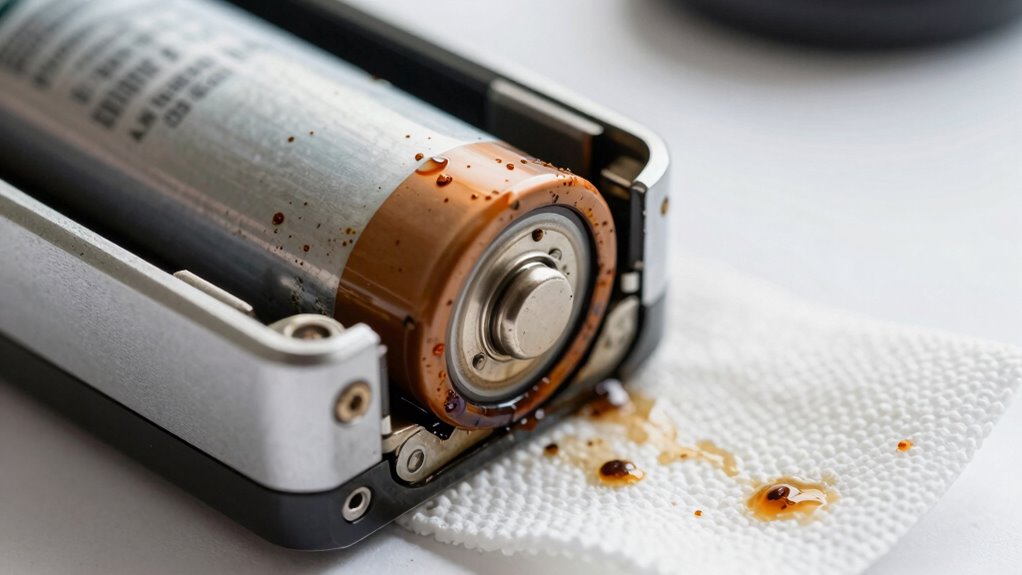
Battery leakage can cause serious damage to your devices and pose safety hazards if not properly managed. When batteries leak, the corrosive substances can eat away at delicate components, leading to costly repairs or even rendering your props unusable. To prevent this, establishing a thorough corrosion prevention routine is essential. Starting with a solid maintenance checklist helps you stay on top of every necessary step. Regular inspections are vital—check your batteries frequently for signs of swelling, corrosion, or leaks. Look for any white or bluish residue around terminals, which indicates corrosion starting to form. Addressing these issues early can save your equipment and reduce safety risks.
Your maintenance checklist should include cleaning the battery contacts regularly. Use a mixture of baking soda and water or a specialized electronic contact cleaner to neutralize any corrosion. When cleaning, make sure to disconnect the batteries carefully, wear gloves, and work in a well-ventilated area. After cleaning, dry the contacts thoroughly before reinserting the batteries. Applying a small amount of dielectric grease or corrosion inhibitor on battery terminals can also help prevent future corrosion buildup. This simple step forms a protective barrier against moisture and corrosive elements, extending the lifespan of your batteries and props. Additionally, understanding the importance of Free Floating design elements can help you better plan for maintenance and reduce the risk of leaks.
Regularly clean battery contacts with baking soda solution or contact cleaner to prevent corrosion buildup.
Creating a routine schedule is key to effective corrosion prevention. Depending on usage, inspect your batteries weekly or monthly. For devices exposed to humid environments or frequent use, more frequent checks are advisable. Keep a detailed maintenance checklist to track each inspection and action taken. This helps guarantee nothing slips through the cracks and keeps your props in prime condition. Remember to store batteries in a cool, dry place away from direct sunlight or extreme temperatures, as heat accelerates corrosion.
When replacing batteries, always dispose of old ones responsibly and in accordance with local regulations. Never leave dead or leaking batteries in your equipment, as they can cause further damage or safety issues. Always use the correct battery type and brand recommended by the manufacturer to avoid compatibility problems that could lead to leaks. Properly handling and maintaining your batteries, combined with a disciplined routine, minimizes the risk of leakage and prolongs the life of your props. By sticking to your maintenance checklist and practicing good corrosion prevention techniques, you safeguard your investments and ensure safer, more reliable operation of your equipment.

Halloween Ghost Figurine with Pumpkin Bucket, Resin Polished Cute Ghost Statue, Small Tabletop Halloween Decoration for Home, Office, Tiered Tray, Fall Spooky Party Ornament
Halloween Ghost Figurine with Pumpkin Bucket, Resin Polished Cute Ghost Statue, Small Tabletop Halloween Decoration for Home, Office,...
As an affiliate, we earn on qualifying purchases.
Frequently Asked Questions
How Long Can Batteries Typically Last Before Leaking?
Batteries usually last between 3 to 5 years before the risk of leakage increases, but this depends on the battery type and storage conditions. The leakage timeline can start as early as a few months after manufacturing if stored improperly or if the battery is of poor quality. To prevent damage, check your batteries regularly, replace them before they reach the end of their lifespan, and store them in a cool, dry place.
Are There Specific Brands Less Prone to Leakage?
Certain brands are known for better reliability and are less prone to leakage, especially with their alkaline and lithium battery types. Brands like Duracell and Energizer have a solid reputation, but you should always check product reviews for recent performance. Opt for high-quality batteries from trusted brands, and avoid cheap, generic options. Regularly inspecting and removing batteries when not in use also helps prevent leaks, regardless of brand.
How Do Temperature Changes Affect Battery Leakage?
Temperature changes can considerably impact battery leakage. When it gets too hot or cold, thermal expansion occurs, stressing the battery’s seals and increasing the risk of electrolyte evaporation. Conversely, extreme cold can cause the electrolyte to contract, leading to cracks and leaks. To prevent this, avoid exposing your batteries to rapid temperature fluctuations and store them in a stable environment, reducing the chances of leakage and damage to your props.
Can Rechargeable Batteries Leak More Than Disposable Ones?
Yes, rechargeable batteries can leak more than disposables because their chemistry often involves more complex reactions, which increase leakage risks. To prevent leaks, always follow proper leakage prevention routines, like storing batteries at room temperature and removing them when not in use. Regularly check for signs of corrosion or swelling, and avoid overcharging, which can accelerate chemical breakdown and leakage, regardless of battery type.
What Are the Signs of Early Battery Leakage?
You’ll notice early battery leakage signs like corrosion around the terminals, a strange smell, or a cloudy, discolored substance. To prevent this, focus on corrosion prevention by storing batteries in a cool, dry place and removing them if unused for a long time. Regularly check your batteries and clean terminals gently. Proper storage tips can save your props from damage and extend battery life.

JULEASEL Glow-in-The-Dark Ghost Campfire Gathering, Cute & Cozy Halloween Ghost Figurine Set | 2 Ghosts, Ghost Dog, Ghost Cat and Tea Light Holder | Resin Ghost Statue for Home, Mantel, Shelf, Desk
Glowing Ghost Campfire Scene: Two friendly ghosts (Ben & Emma) sit on realistic logs around a campfire, softly...
As an affiliate, we earn on qualifying purchases.
Conclusion
So, next time you blindly toss in that fresh battery without a second thought, remember—you’re just inviting a slow-motion explosion of corrosion and chaos. Keep your props pristine and your sanity intact by sticking to this routine. After all, it’s only your equipment, your project, and maybe your reputation on the line—no big deal, right? Stay vigilant, stay leak-free, and avoid turning your workspace into a chemical disaster zone. Your props—and your pride—will thank you.

Halloween Decorations,Light Up Ghost Pumpkin Decorations Set of 3,Cute Halloween Decor Indoor for Kitchen Tabletop Mantel Party Home Decor
🎃 Easy to Use:The warm bulbs emit a soft,inviting glow that enhances the eerie Halloween atmosphere.3 different sizes...
As an affiliate, we earn on qualifying purchases.

InoKraft D1 LVLP Air Spray Gun Premium Kit, Easy to Use, Paint Gun for Cars & House DIY Painting, 1.3/1.5/1.7mm Nozzles, with Paint Sprayer Accessories
Spray Like a Pro with Ease: Drizzle D1 LVLP spray paint gun is designed for easy use, with...
As an affiliate, we earn on qualifying purchases.